Anka Leśniak
works
biography texts contact
2026
2025
2024
2023
2022
2021
2020
2019
2018
2017
2016
2015
2014
2013
2012
2011
2010
2009
2008
2007
2006
2004
WORKS 2026
Divoženki or stitching to the end of the world
performance
Performance Feast
Studio Hronov
Hronov, Czech Republic
The performance highlighted the local context of Hronov, Czech Republic, focusing on both the city and the stories associated with it. It began with local legends featuring female figures, such as the Divoženki and the Stone Princess of Bor, as well as the stories of two influential women in Hronov's history: Hedwig Spiegler and Friedl Dicker-Brandeis.
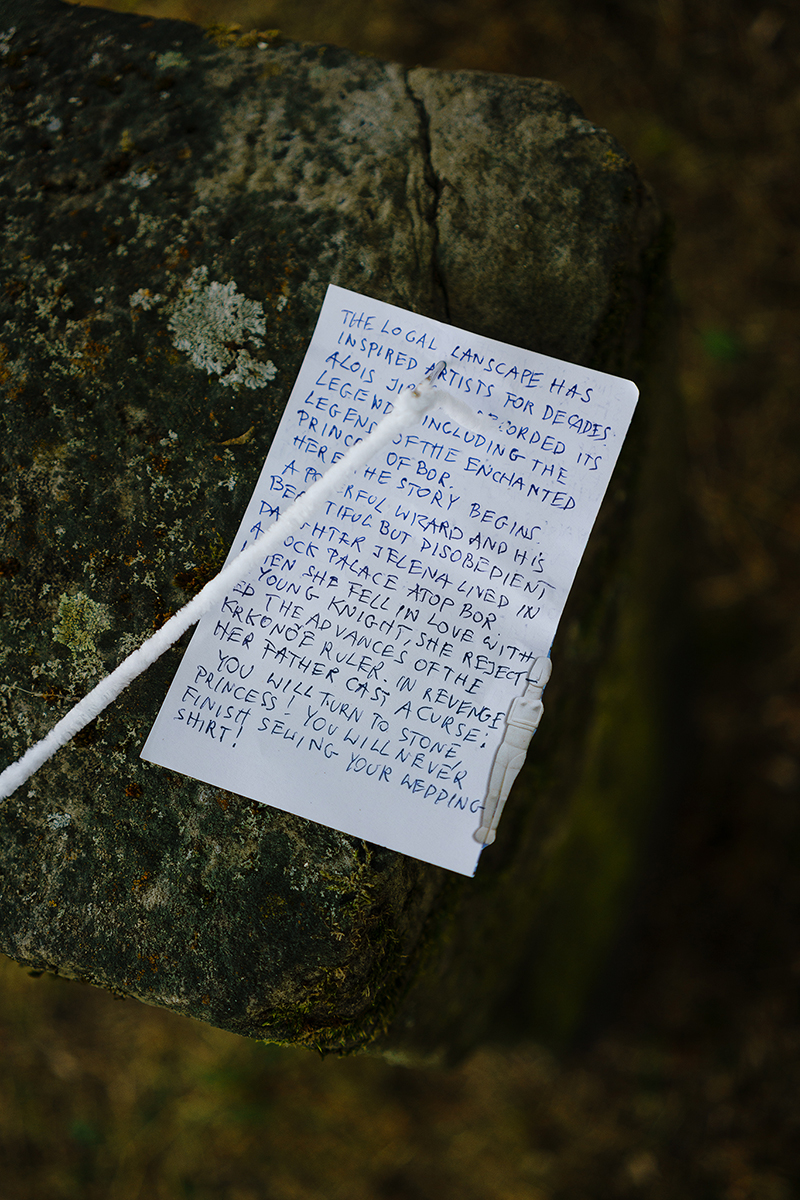
Divoženki are wild women who inhabit forests and undergrowth, nymphs that haunt human homes to seek food. The belief in these “free women,” unbound by social constraints, once expressed a desire for alternative models of femininity to patriarchal norms. However, opposing a male-dominated world, where women were often treated as objects of exchange, was – and still is in some places – severely punished. This was the fate of the daughter of a sorcerer from a castle in nearby Bór. She fell in love with a young knight and refused to marry the ruler of the Karkonosze Mountains, whom her father had chosen as her husband. As a result, he cast her into stone while she was sewing a wedding gown. According to legend, the princess comes to life once a year on Good Friday to sew another stitch. When she completes her work, the end of the world will come.
The themes related to women and textiles are embodied in the city’s history through the figures of women associated with the textile factory founded in Hronov in the late 19th century by Viennese businessman Ludwig Spiegler. After his death, the factory passed to his wife, Hedwig, who employed Friedl Dicker-Brandeis, an avant-garde artist affiliated with the Bauhaus, as a pattern designer. During World War II, both women were persecuted for their Jewish origins and forced to leave the city. Hedwig fled to Palestine, while Friedl was deported to a concentration camp.
After the war, the factory was nationalised, and following the fall of the Soviet regime, it was sold to a foreign company with private capital. Production ceased over a decade ago, and the property, located almost in the heart of the city, is now overgrown with weeds and falling into disrepair due to the owner's neglect. From a post-anthropocentric perspective, one might say it is being reclaimed by nature.
The performance began near the family home and buildings that once belonged to Alois Jirásek, a writer from Hronov who recorded local legends. The festival dedicated to his work, occurring simultaneously, provided an intriguing context.
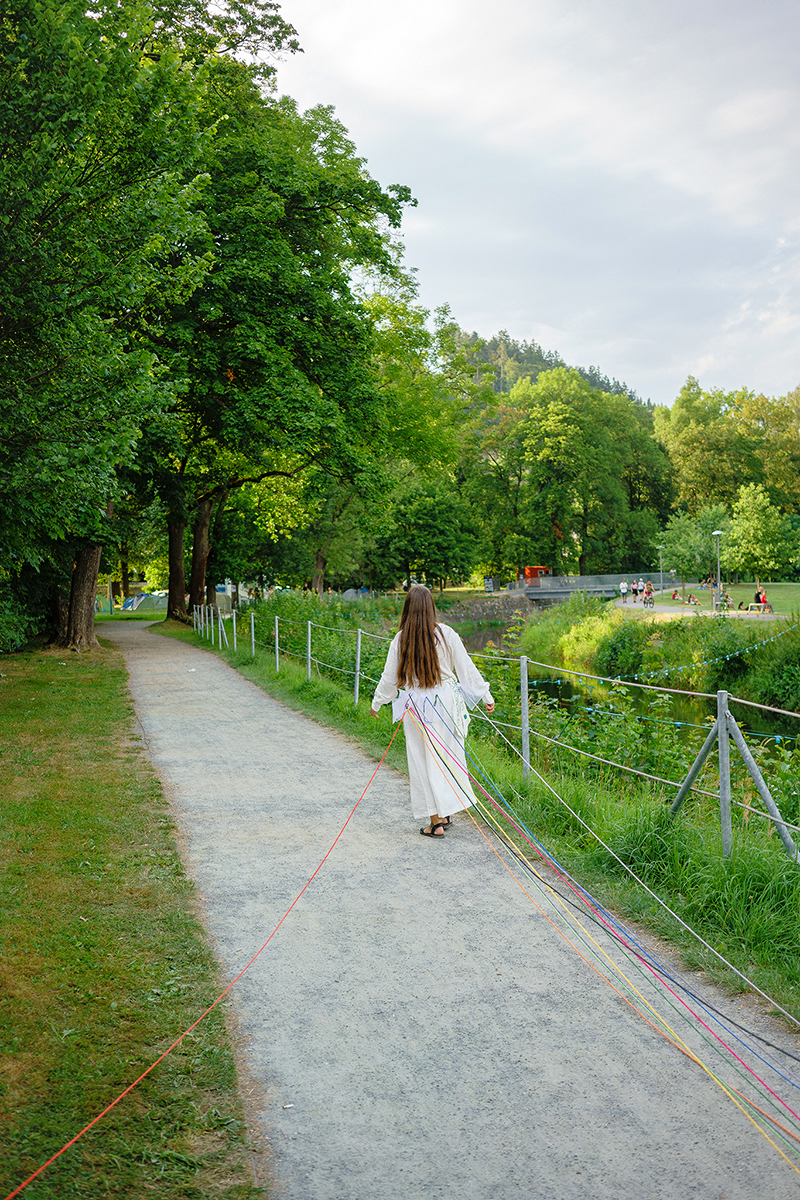
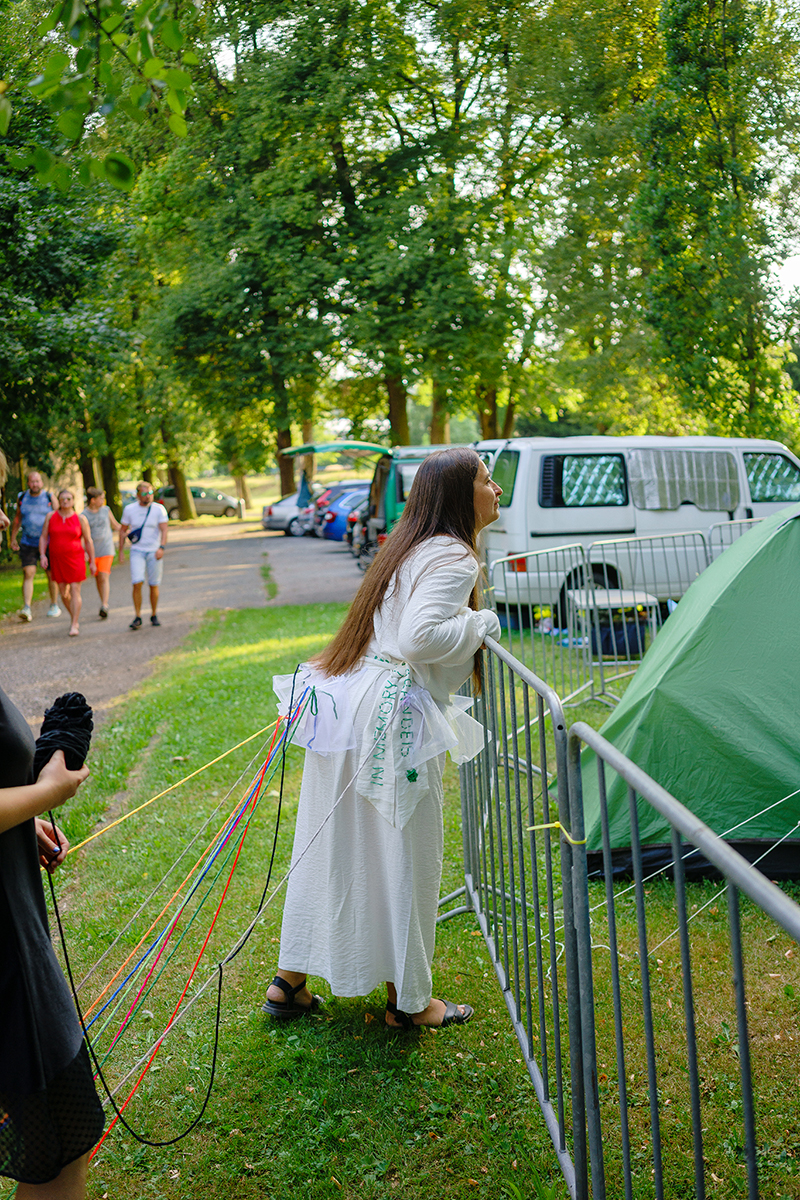
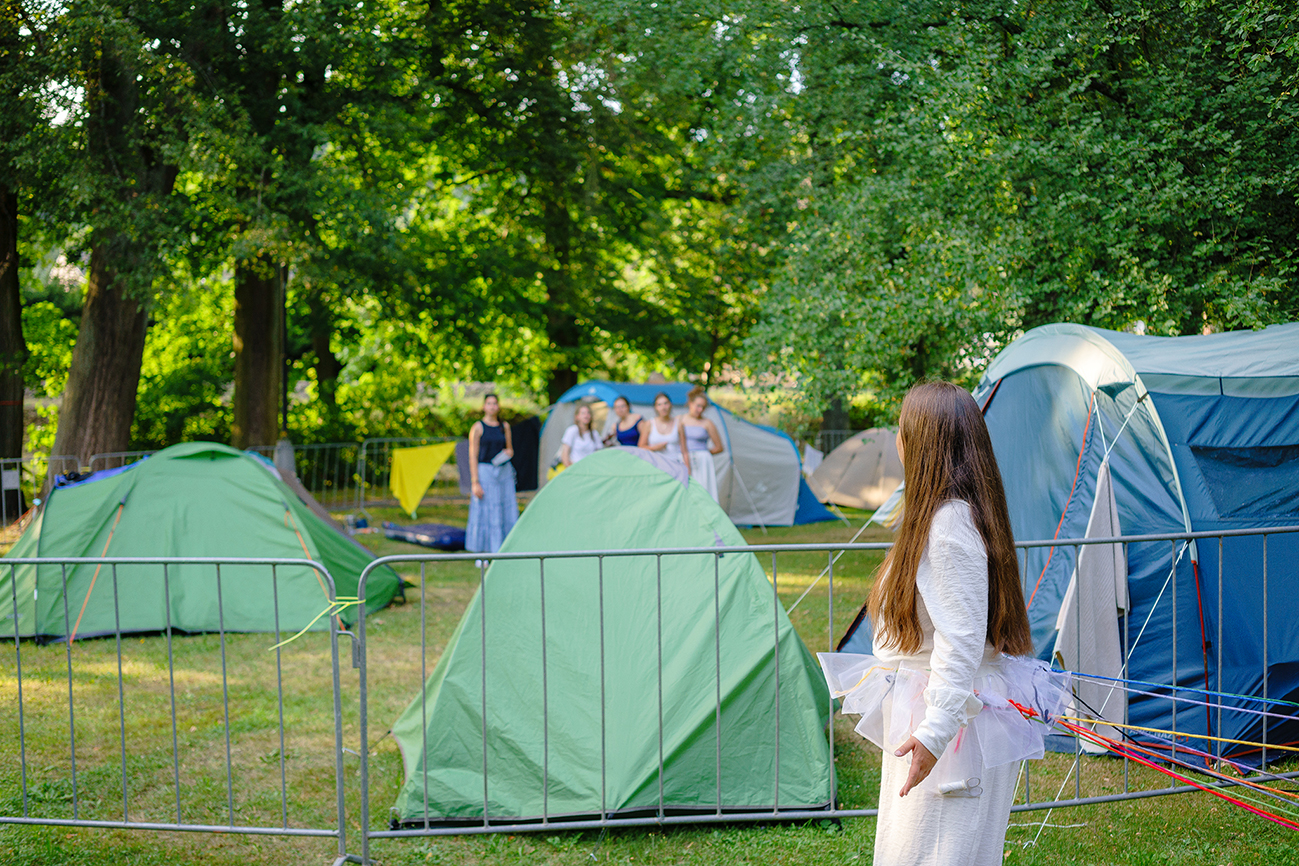
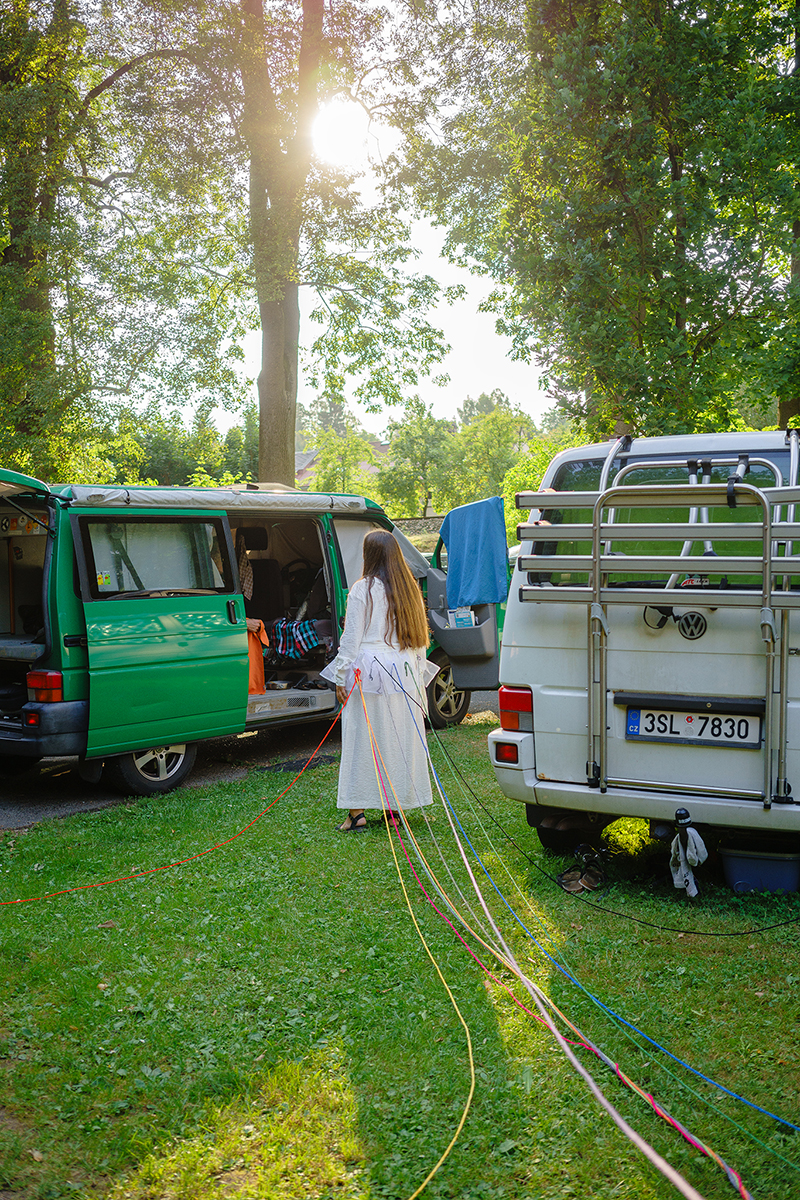
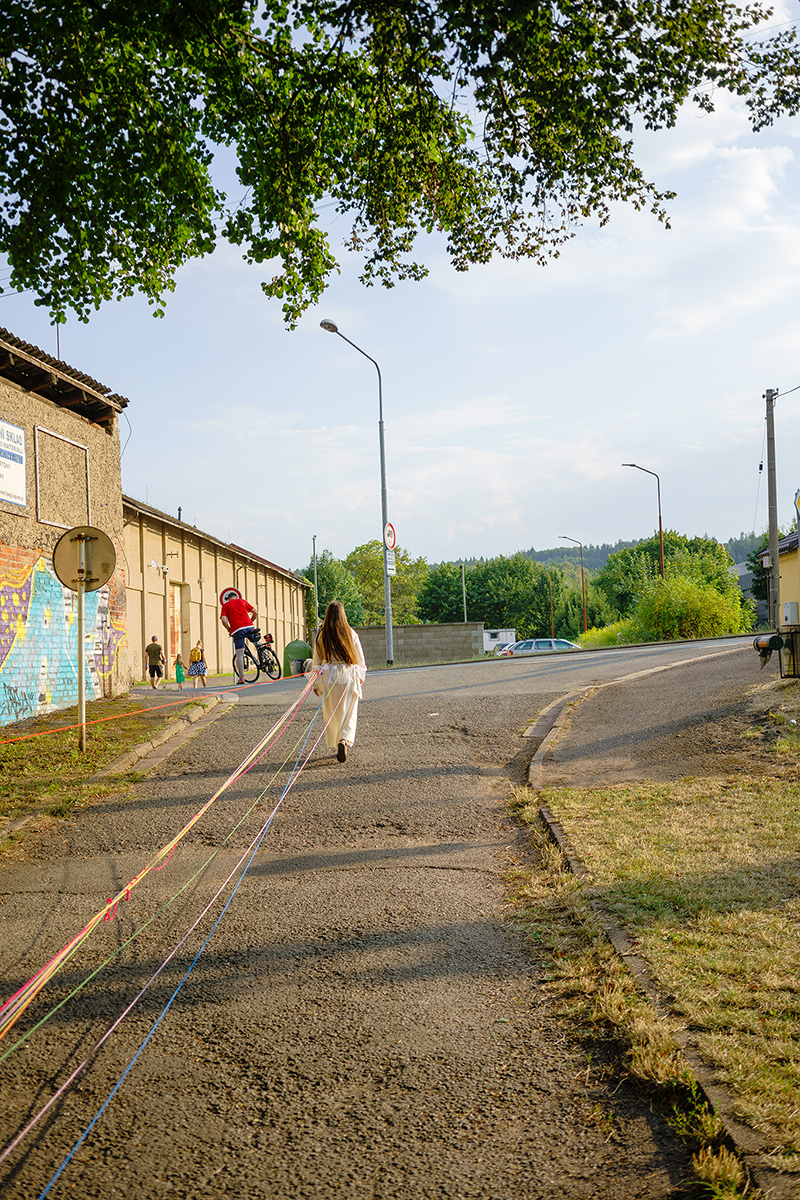
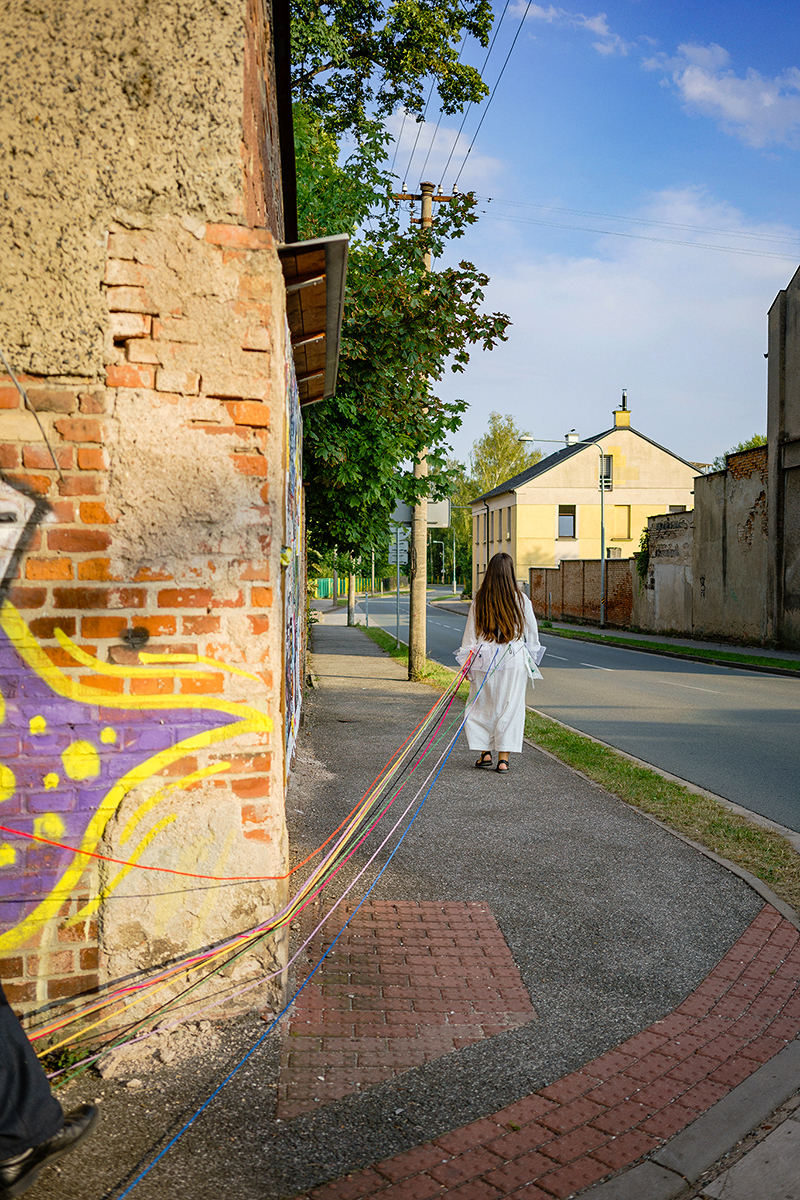
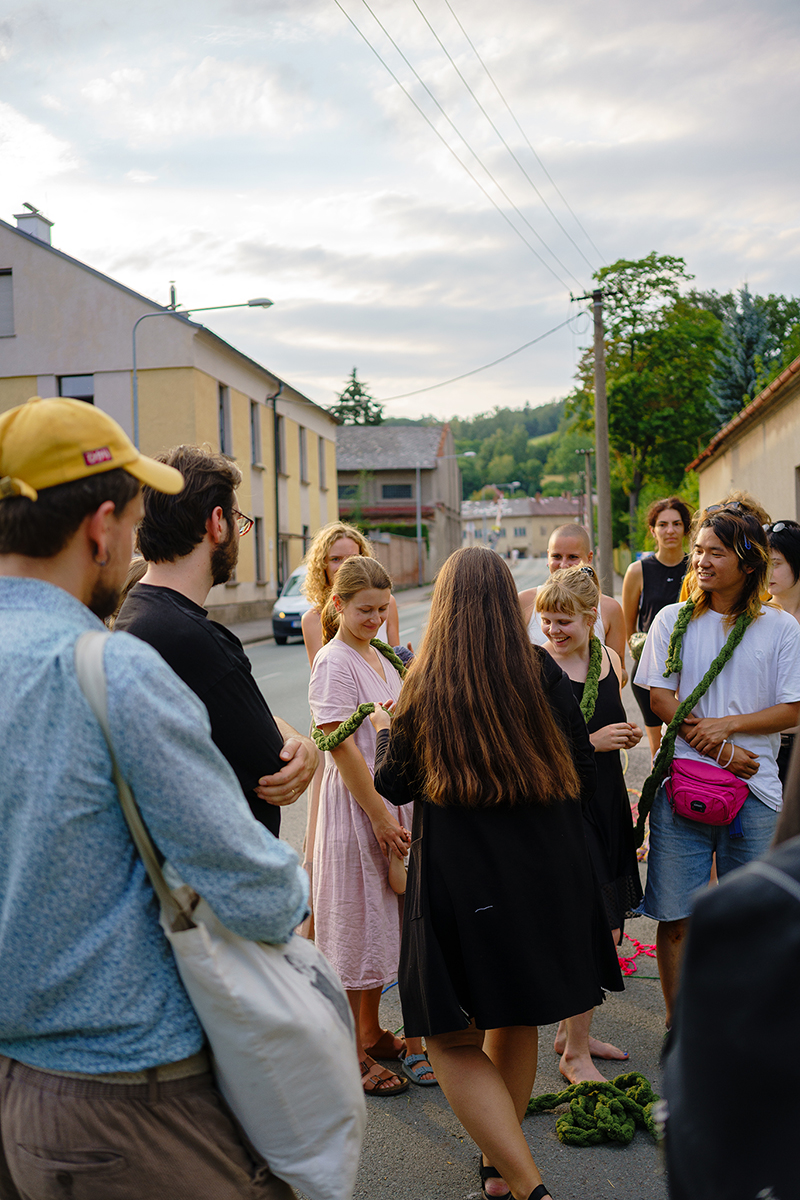
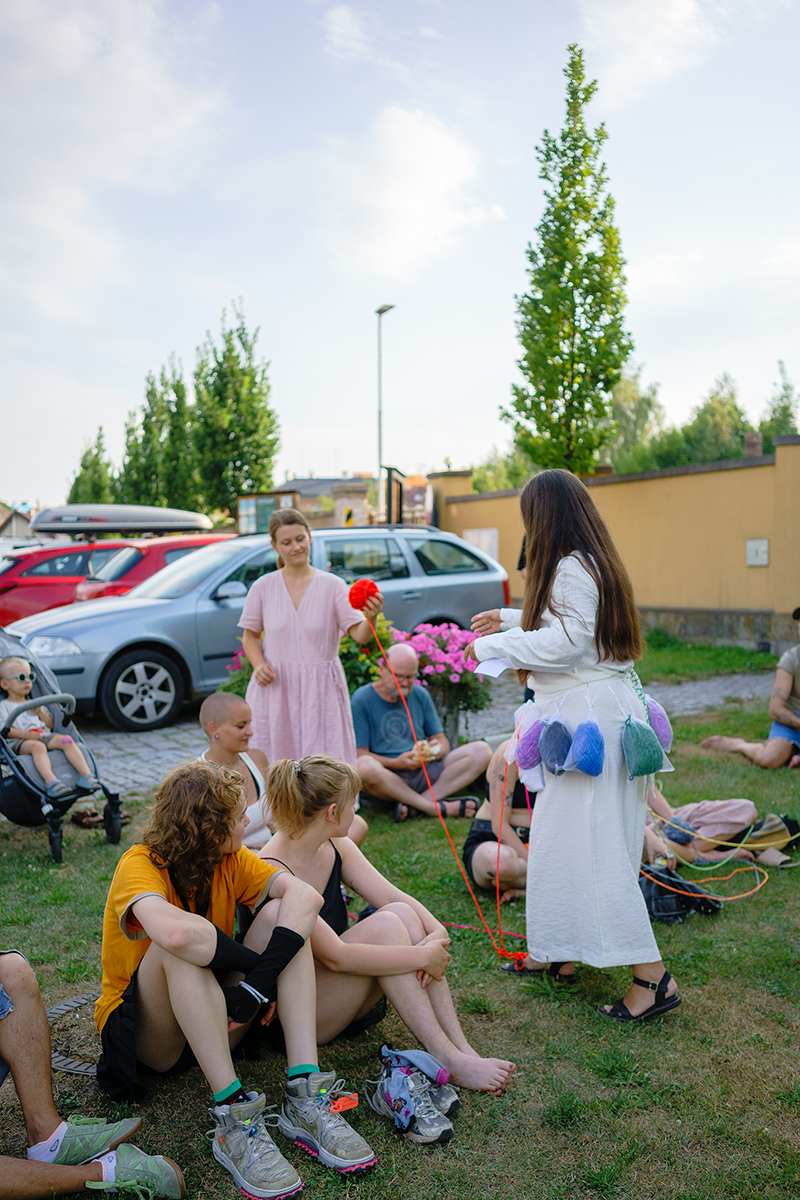
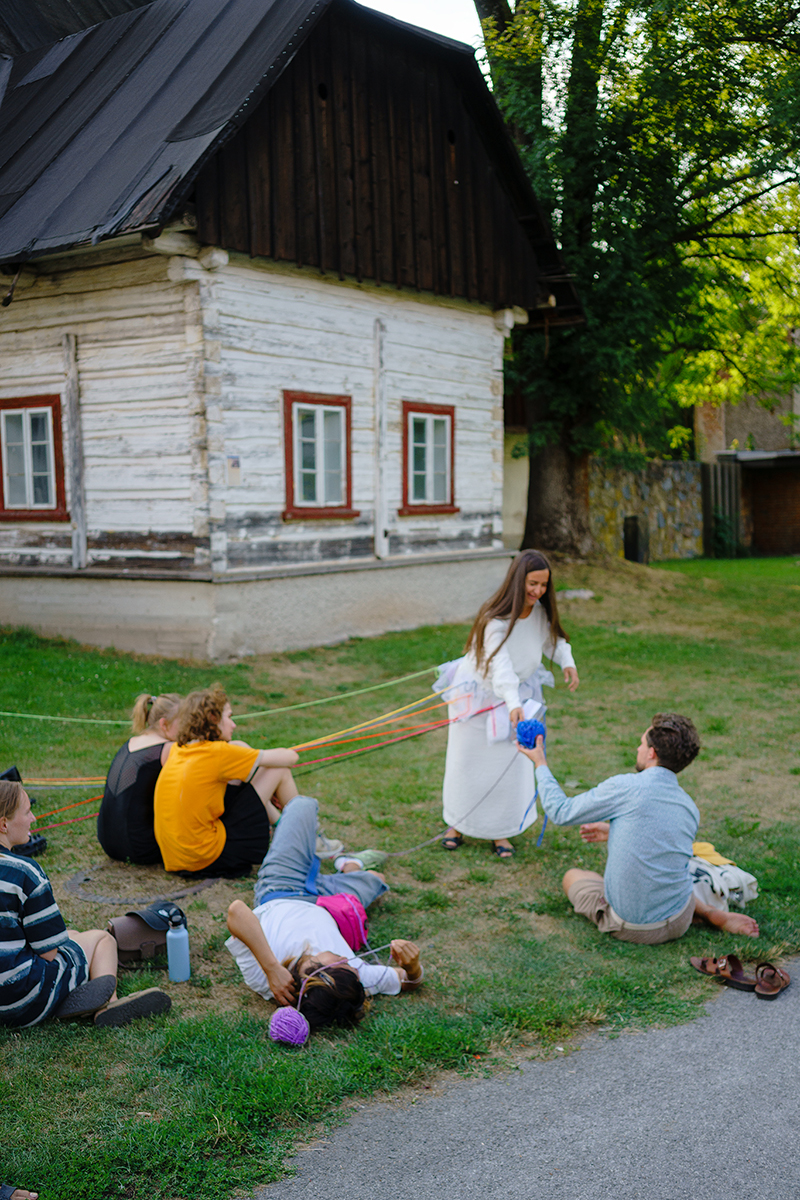
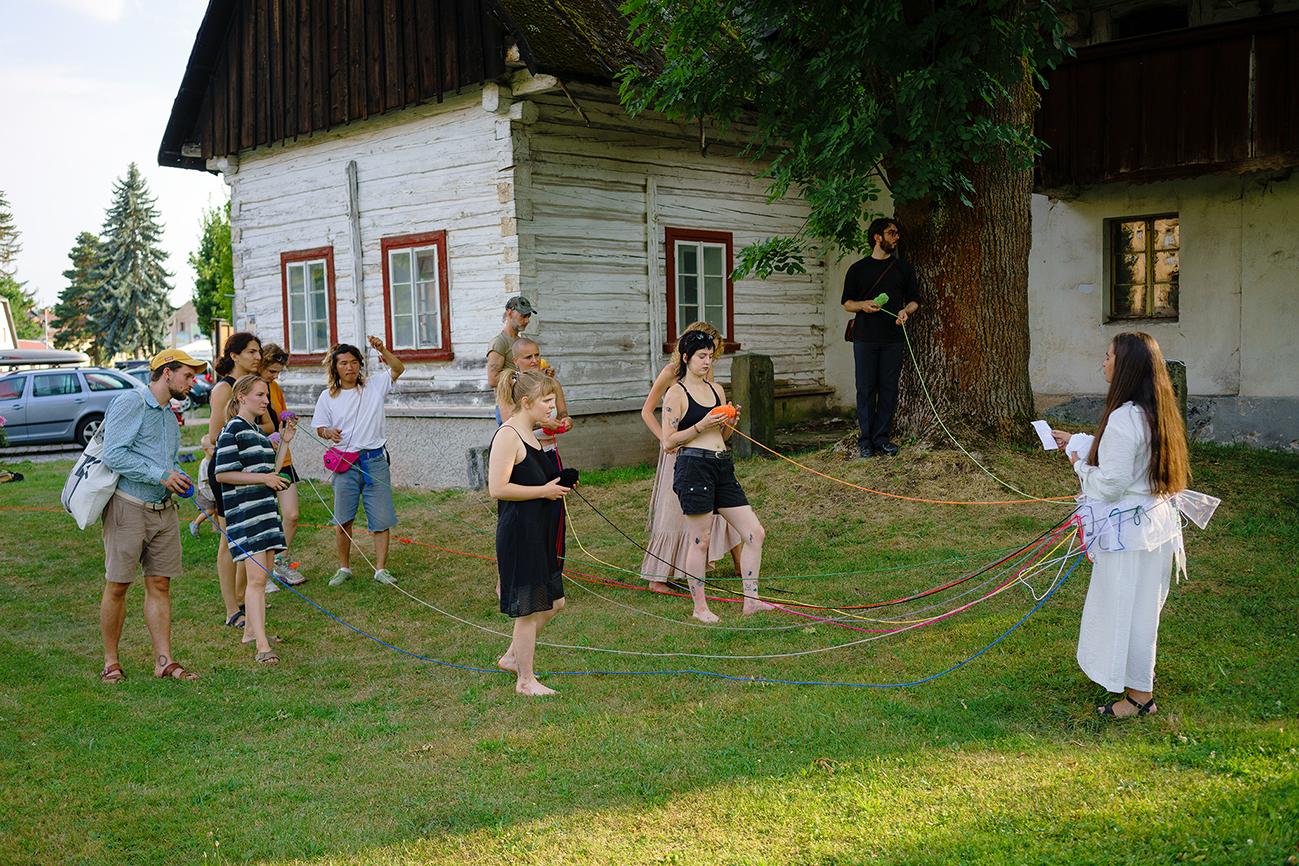
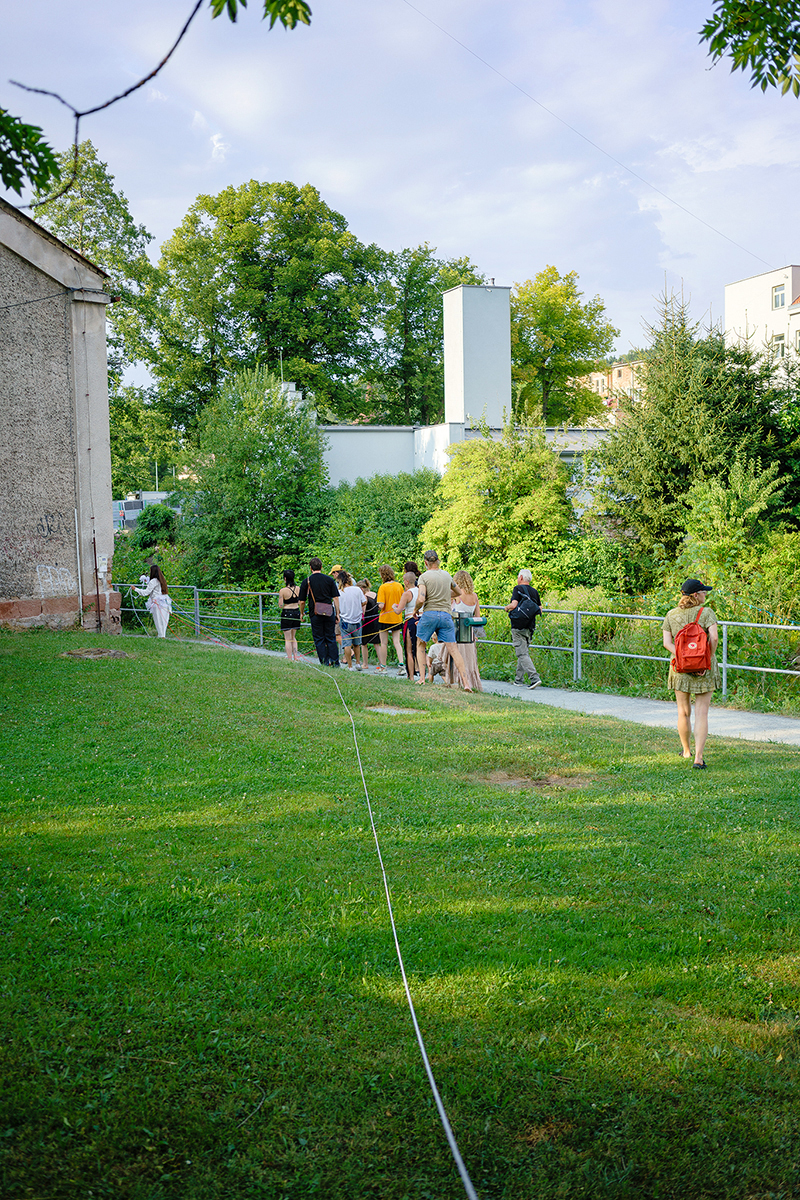
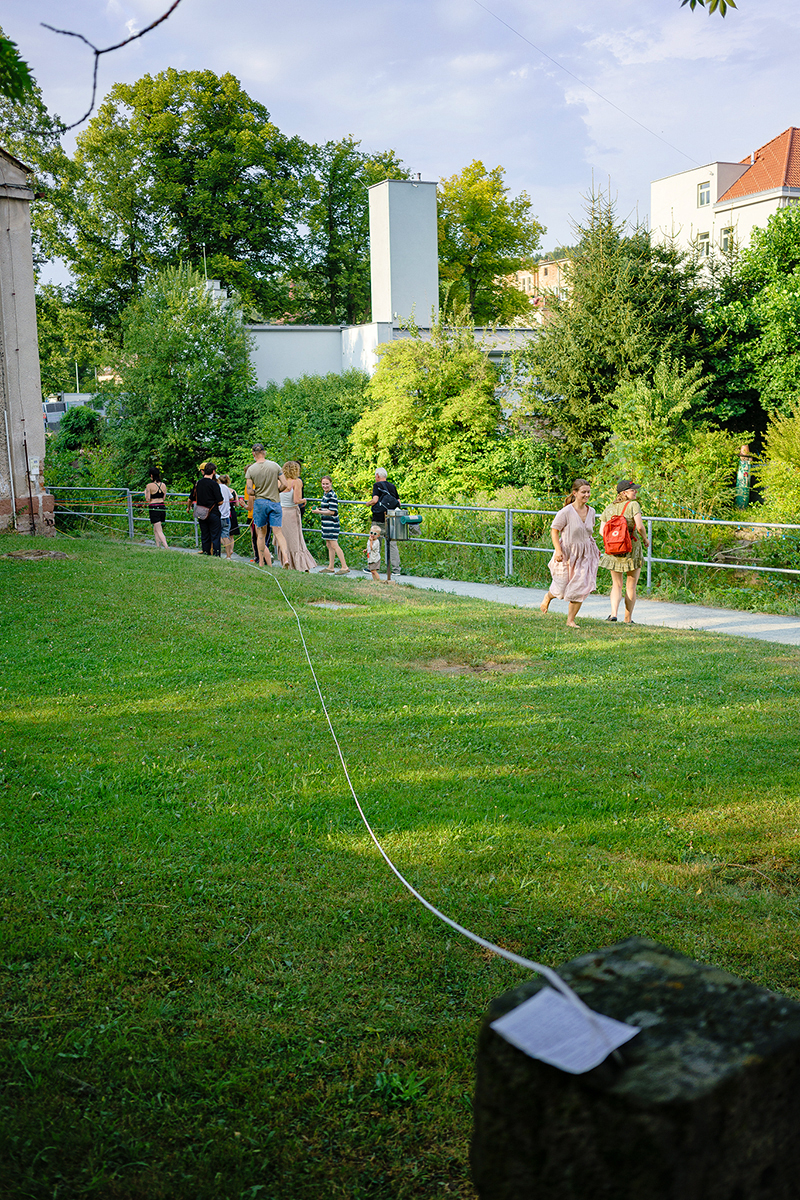
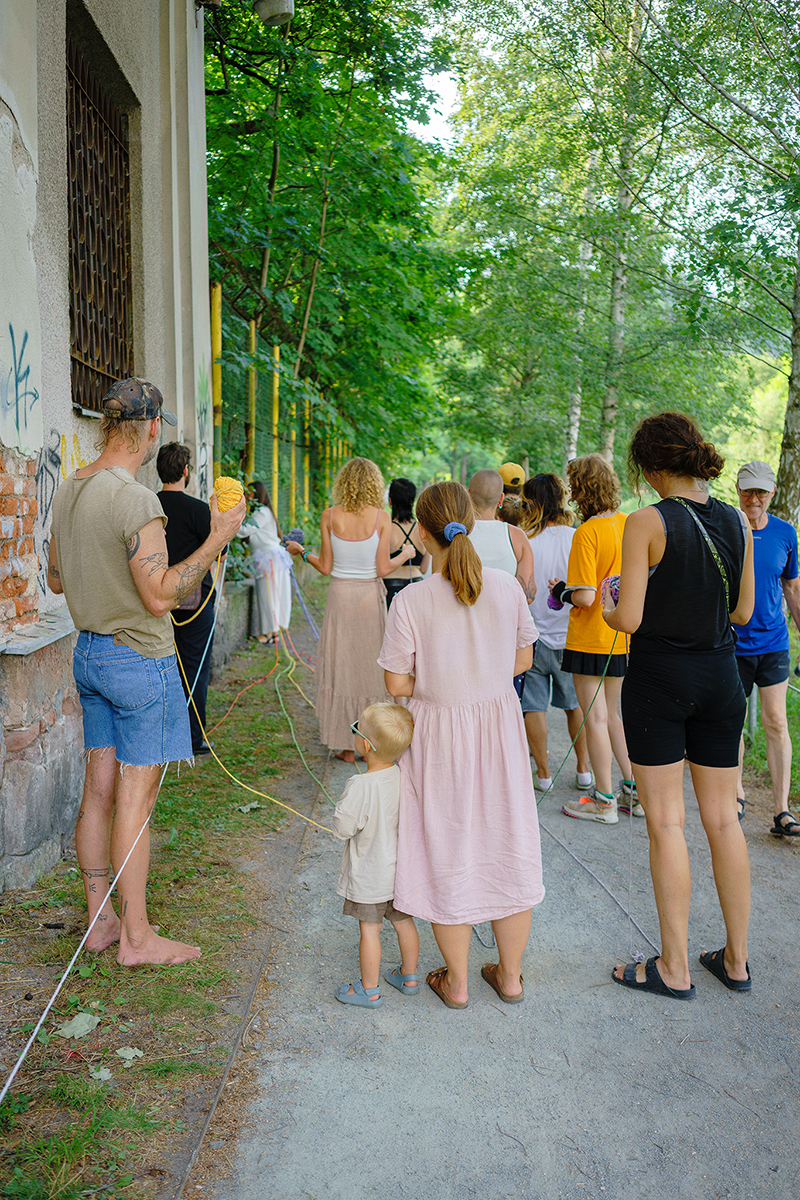
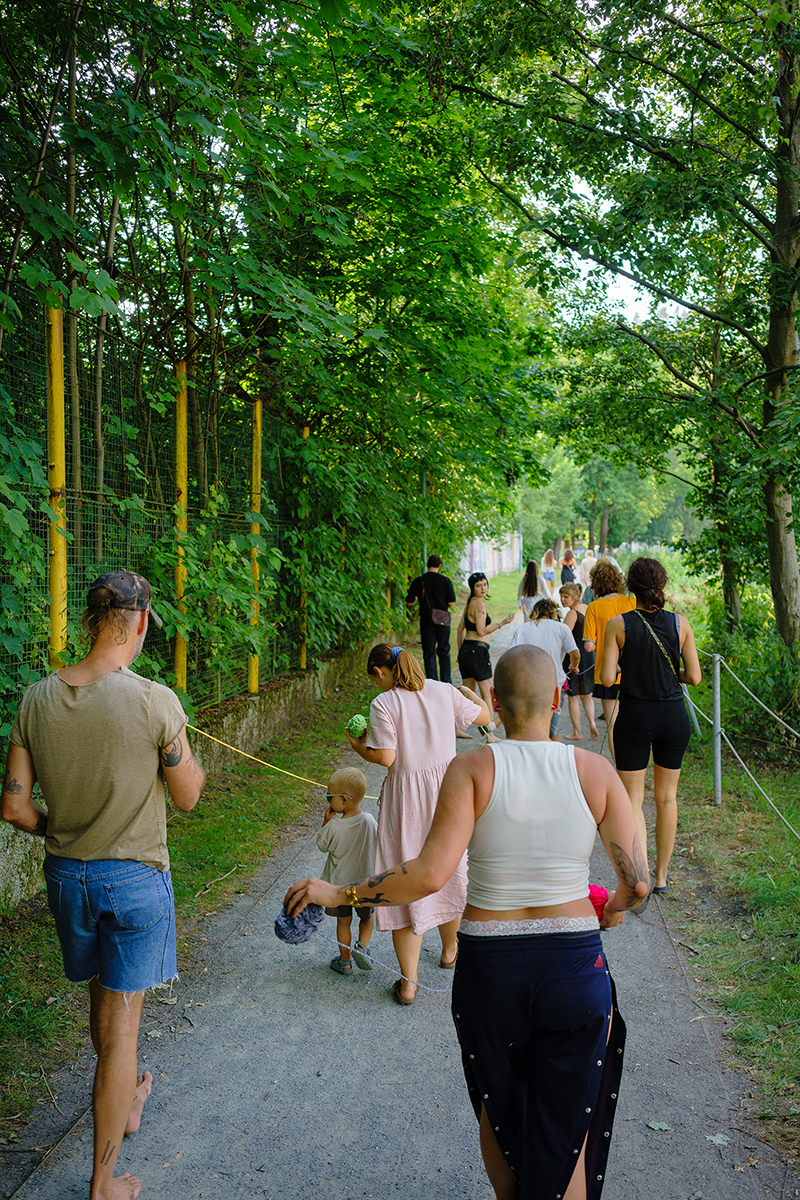
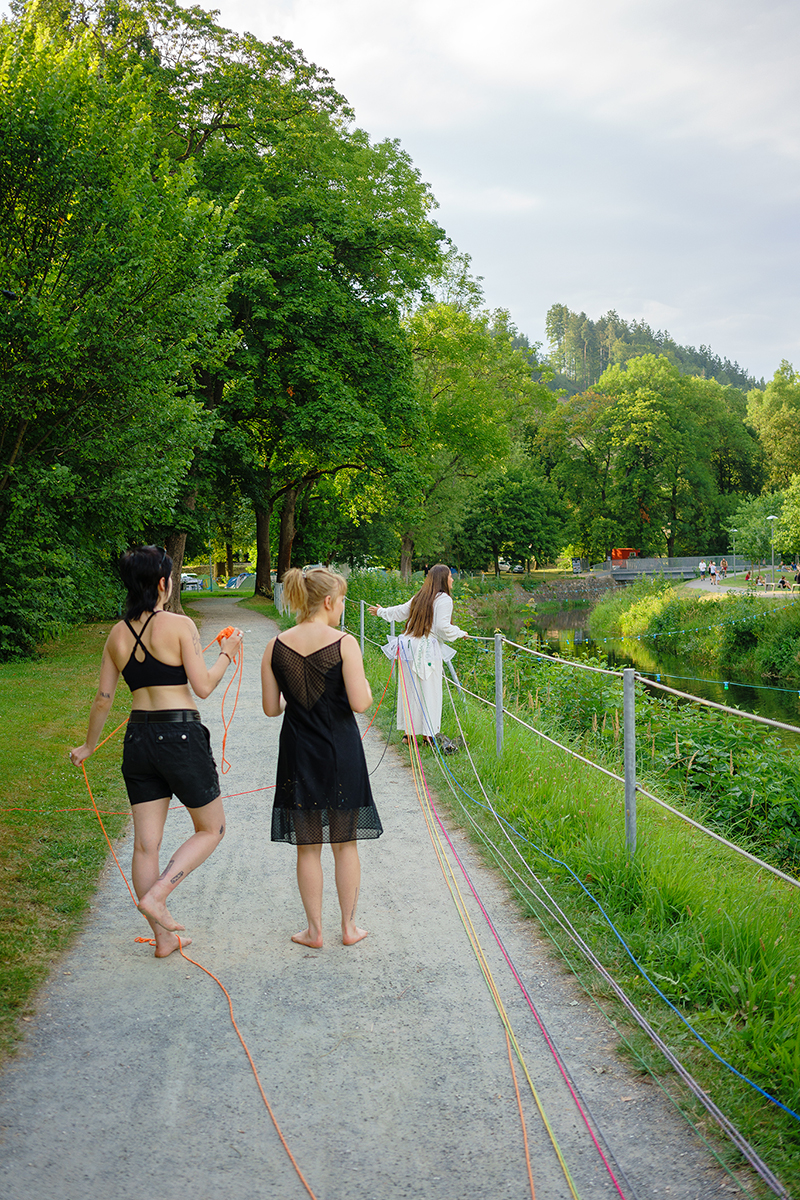
I started by distributing skeins of thread in various colors to the audience and reading a text about local legends and the women connected with the factory's history. Next, I inserted a needle threaded with white thread into a stone, leaving behind a note with the text. As I walked through the park toward the factory entrance, I unraveled the thread. The participants followed me, holding the skeins I distributed. Along the way, I called out the names of Friedl and Hedwig, as if searching for them, and asked passersby if they knew or had seen them.
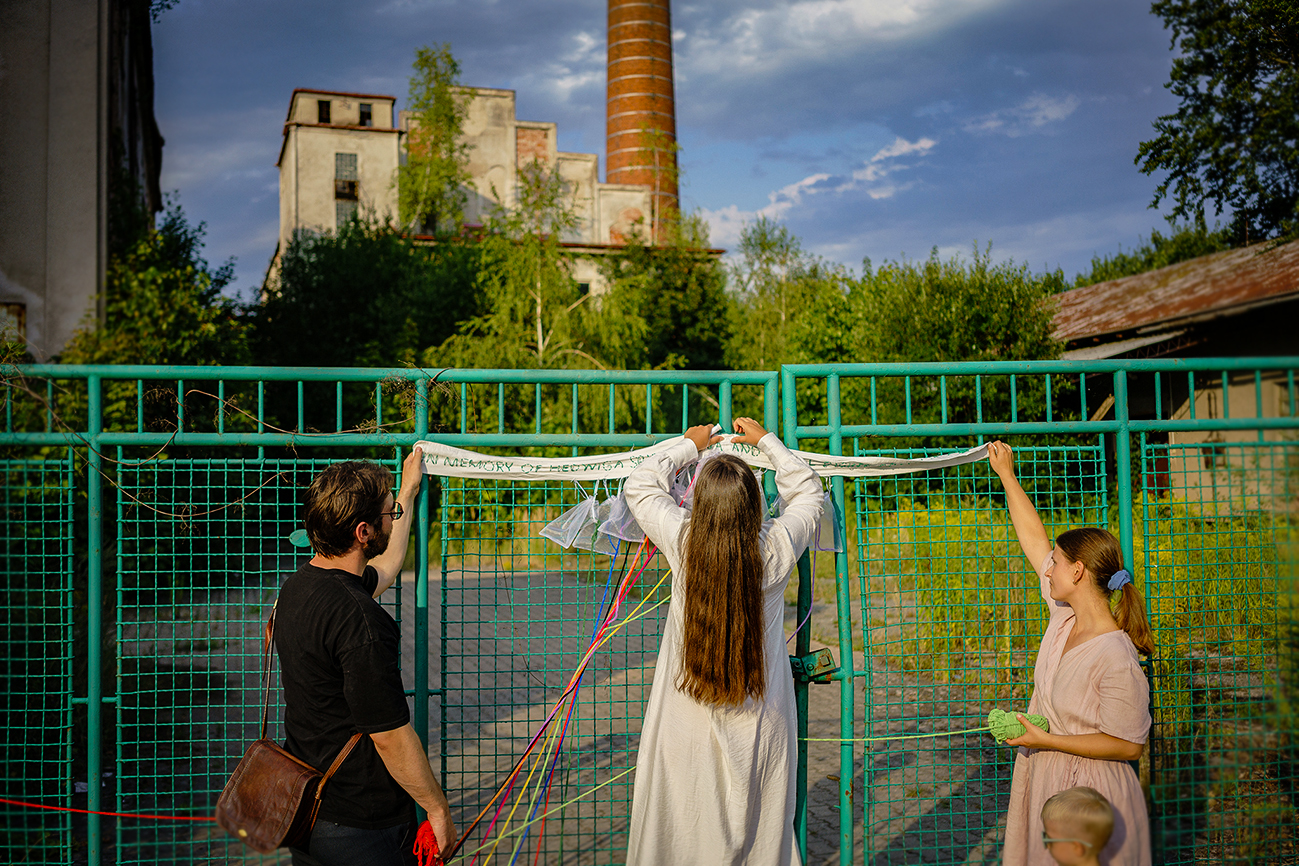
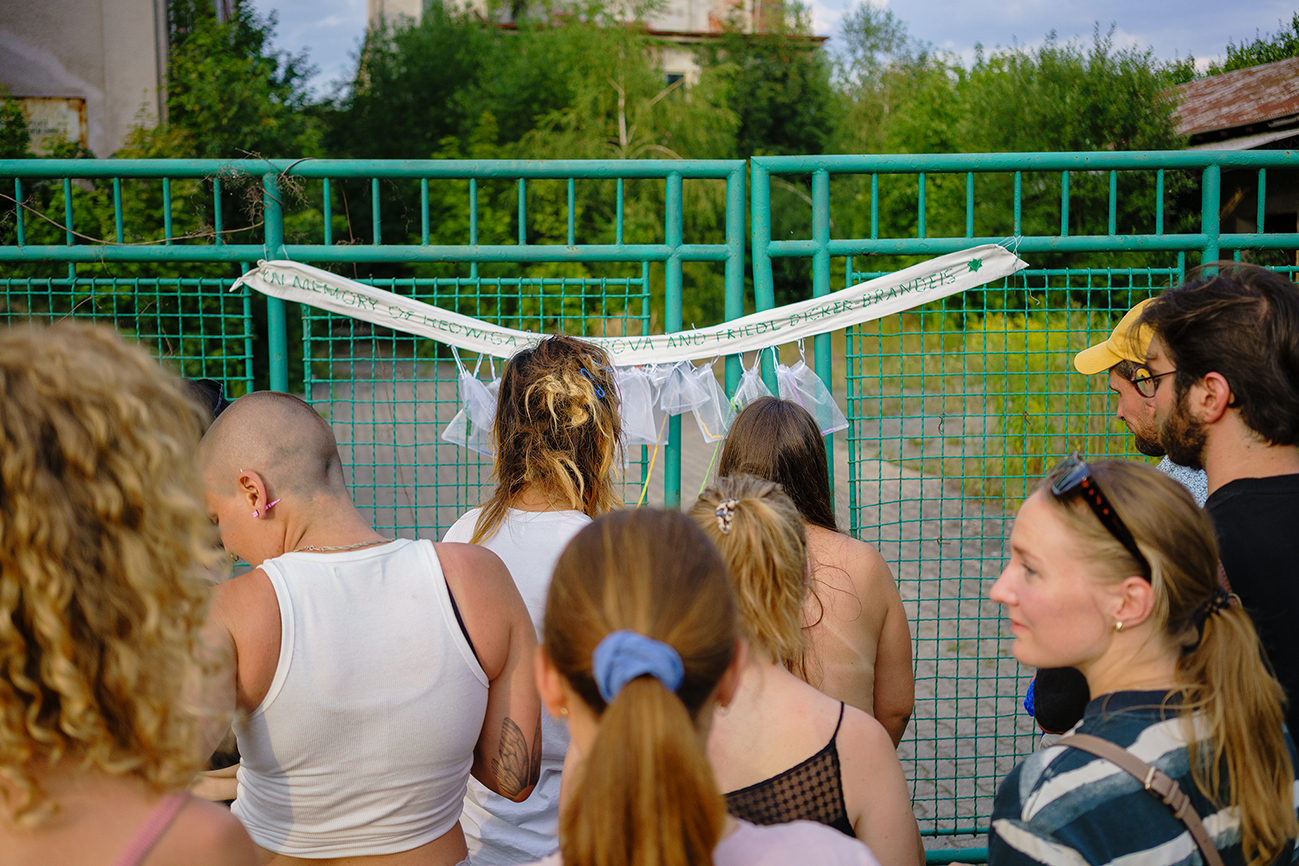
Upon reaching the factory gate, I, with the help of the participants, attached the belt from my dress to the gate, transforming it into a banner sash inscribed with "In memory of Hedwig Spieglerová and Friedl Dicker-Brandeis." The performance concluded with a song by Věra Špinarová, a Czech pop star from the 1970s and 1980s, who remained active until the end of her life and gave one of her last concerts in Hronov.
The inscribed sash and the skeins of thread became part of an installation—a site-specific intervention on the factory gate that referenced both its history and raised questions about its future and the consequences of choices made under specific political and socio-cultural conditions.
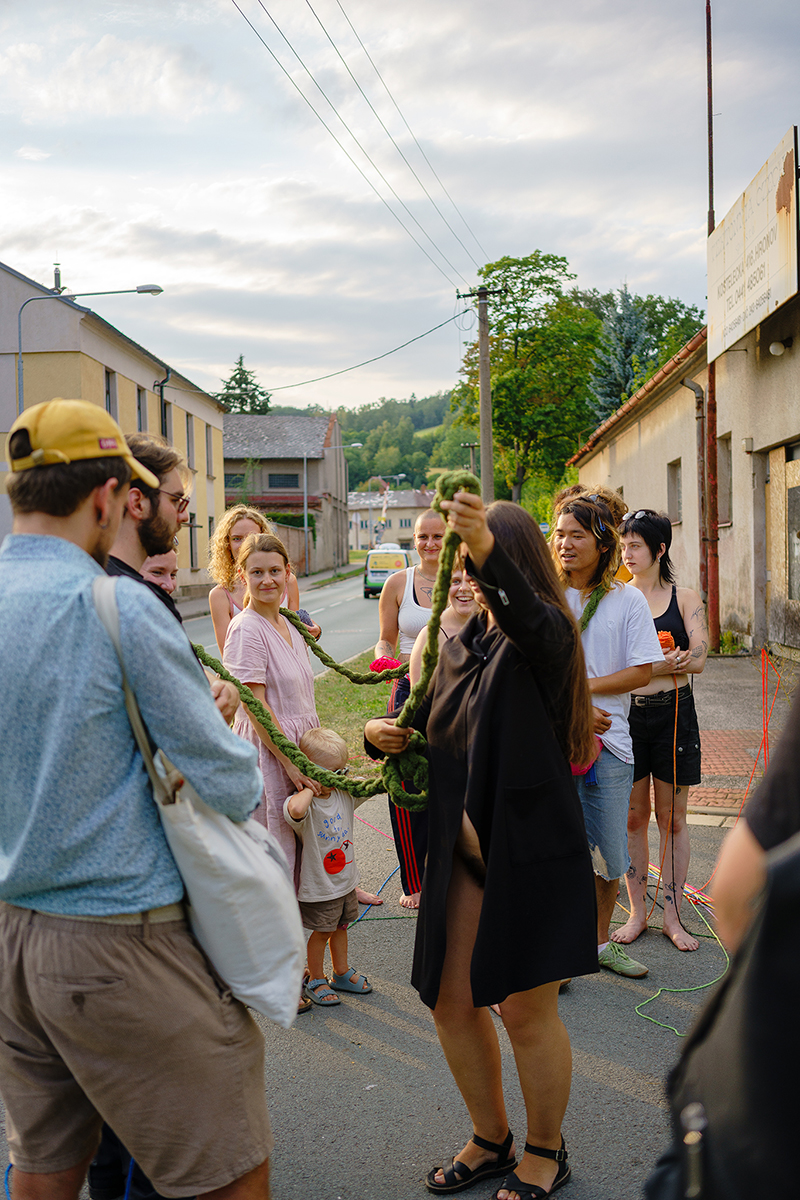
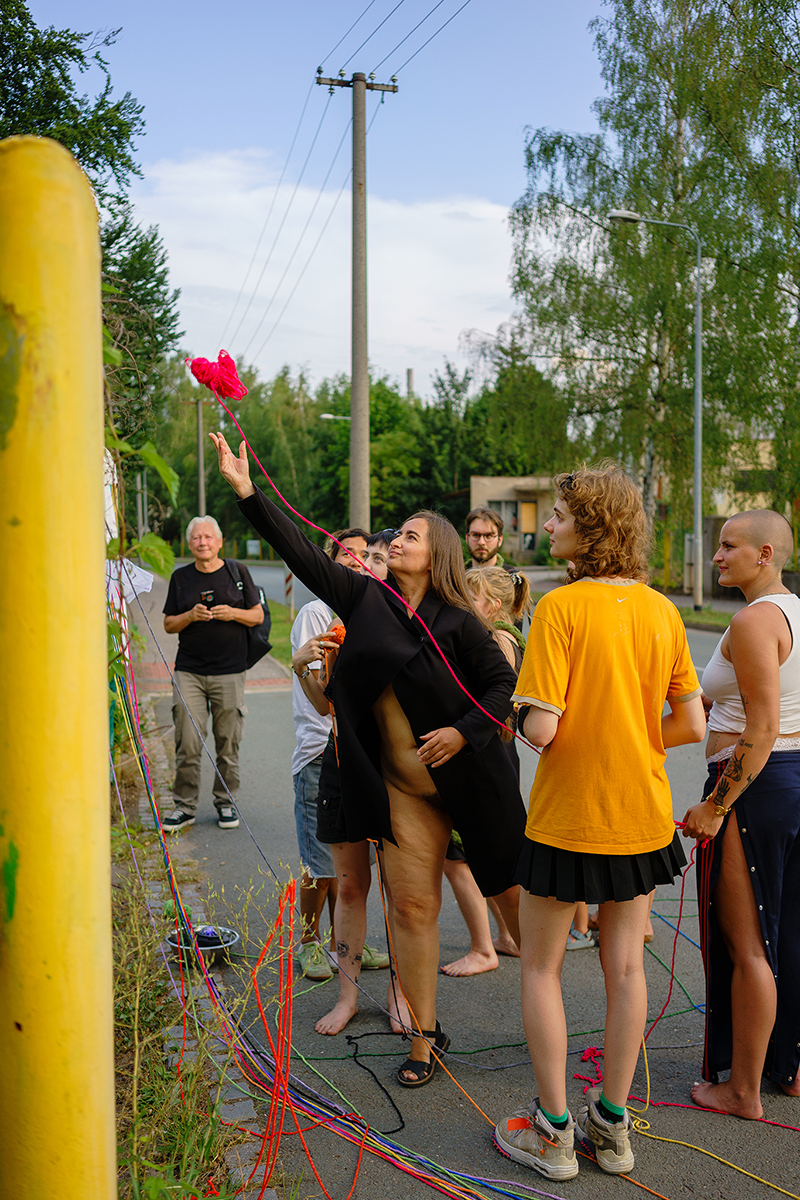
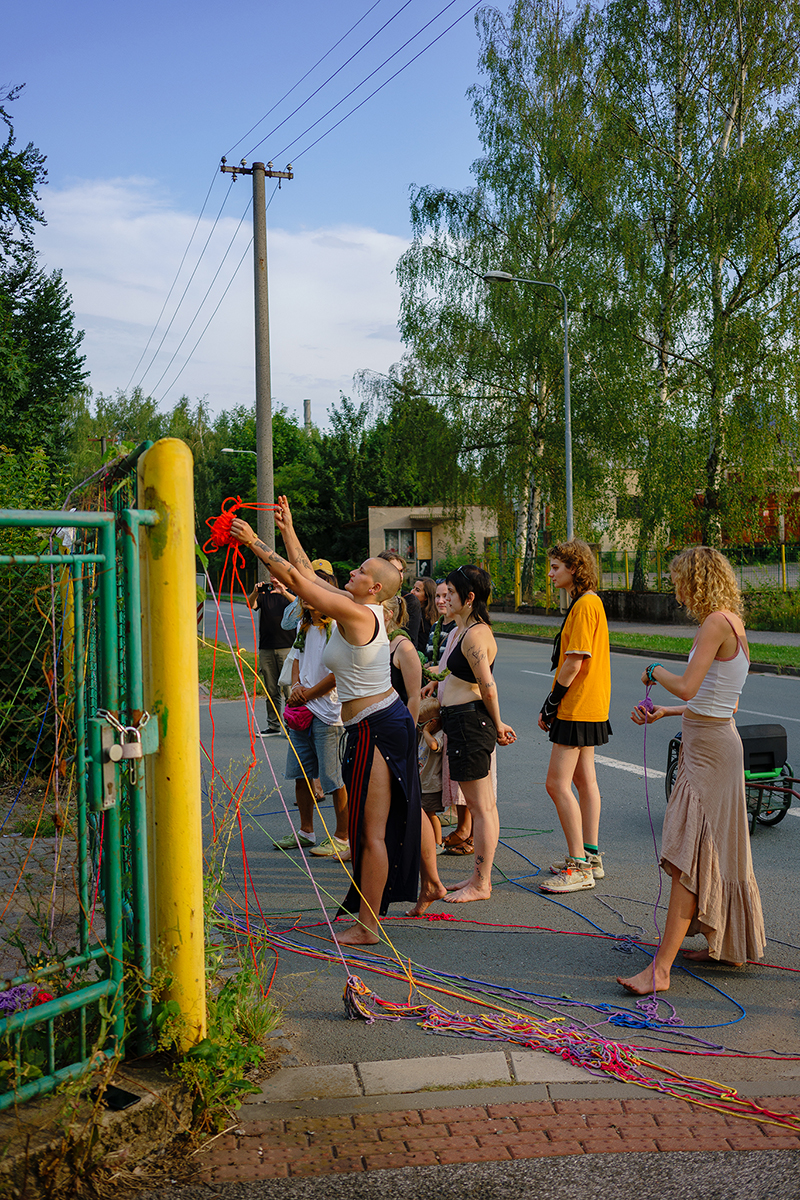
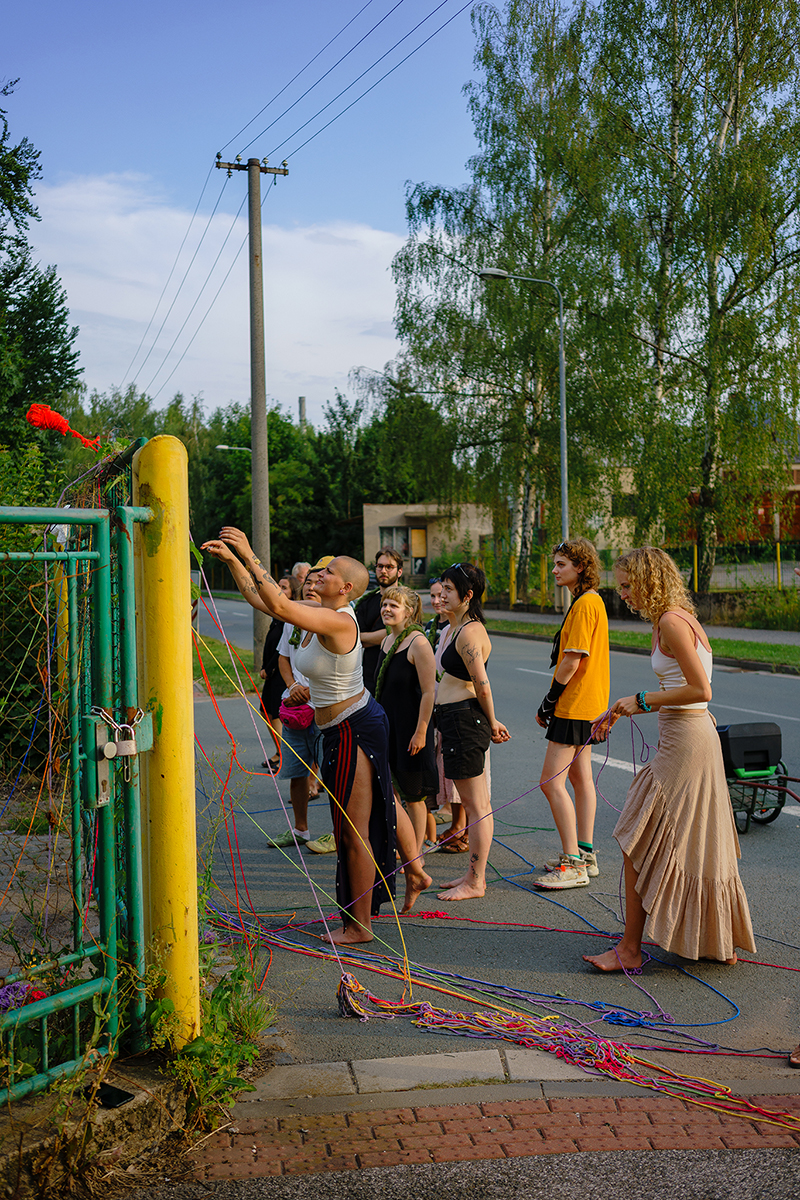
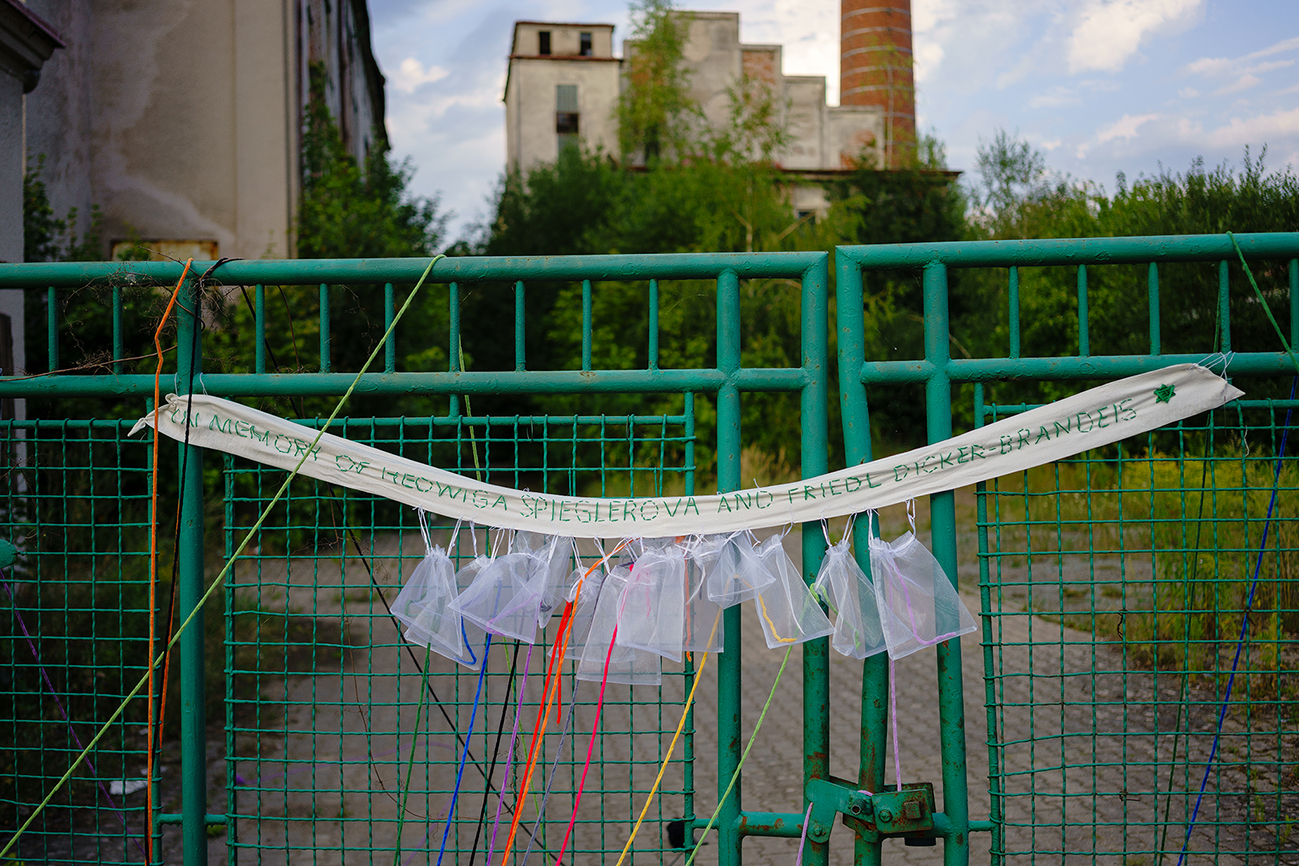
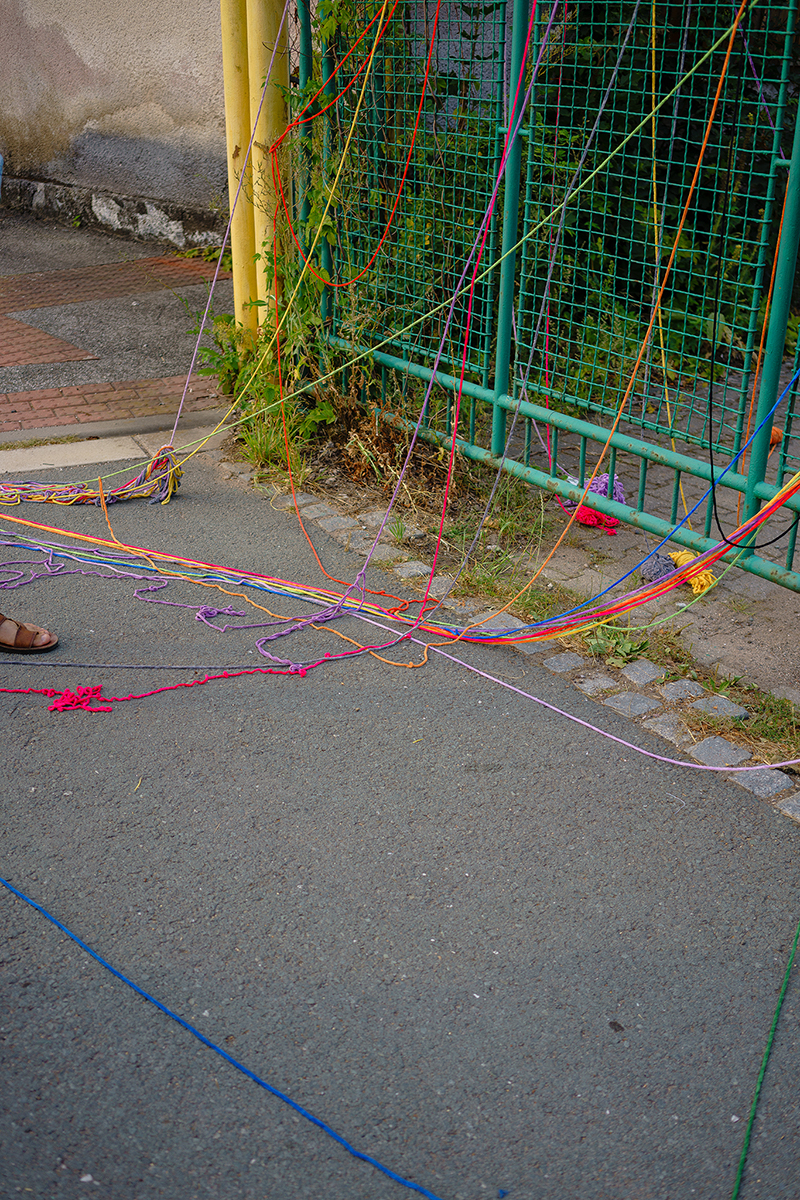
photo: Martin Gabriel Pavel, Zuzana Jirova, Gabriela Homolova