Anka Leśniak
works
biography texts contact
2026
2025
2024
2023
2022
2021
2020
2019
2018
2017
2016
2015
2014
2013
2012
2011
2010
2009
2008
2007
2006
2004
WORKS 2025
Energie
Site-specific installation
Eintopf - multicultural Festival
Endmoäne & Frakcja groups of women artists
former Karol Scheibler's Power Plant / Fuzja
Łódź, Poland
The work refers to the history of the building that housed the power plant supplying electricity to the spinning mills of cotton magnate Karol Scheibler. It was created primarily from electronic waste. The word “energie” is shared by both Polish and German and has a similar meaning. “Die Energie” in Polish means energia. It is a polysemous word whose meaning depends on the context. The work also raises the question of how a place's energy changes as its surrounding reality transforms, necessitating a change in its function. The use of non-functional cables in the artwork aligns with the idea of recycling but also serves as an ironic commentary on a wired world, even at the bottom of the oceans.
The work was created as part of the Eintopf festival, a space for exchange and encounters with both the city itself and the feminist group of German artists Endmoäne, who, for over thirty years, have been creating site-specific works in abandoned buildings and spaces that have lost their former function.
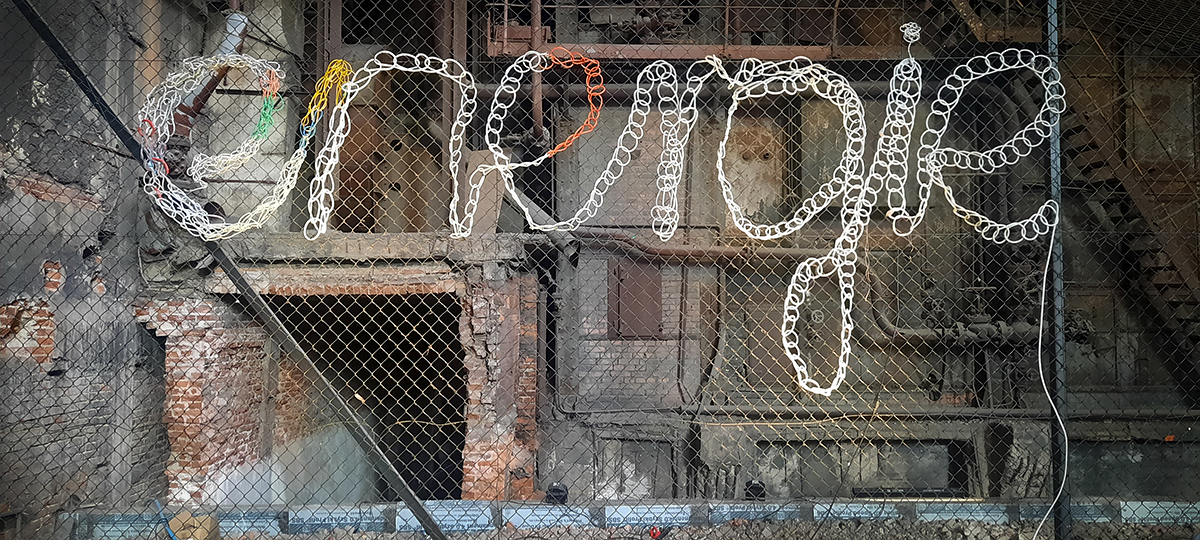
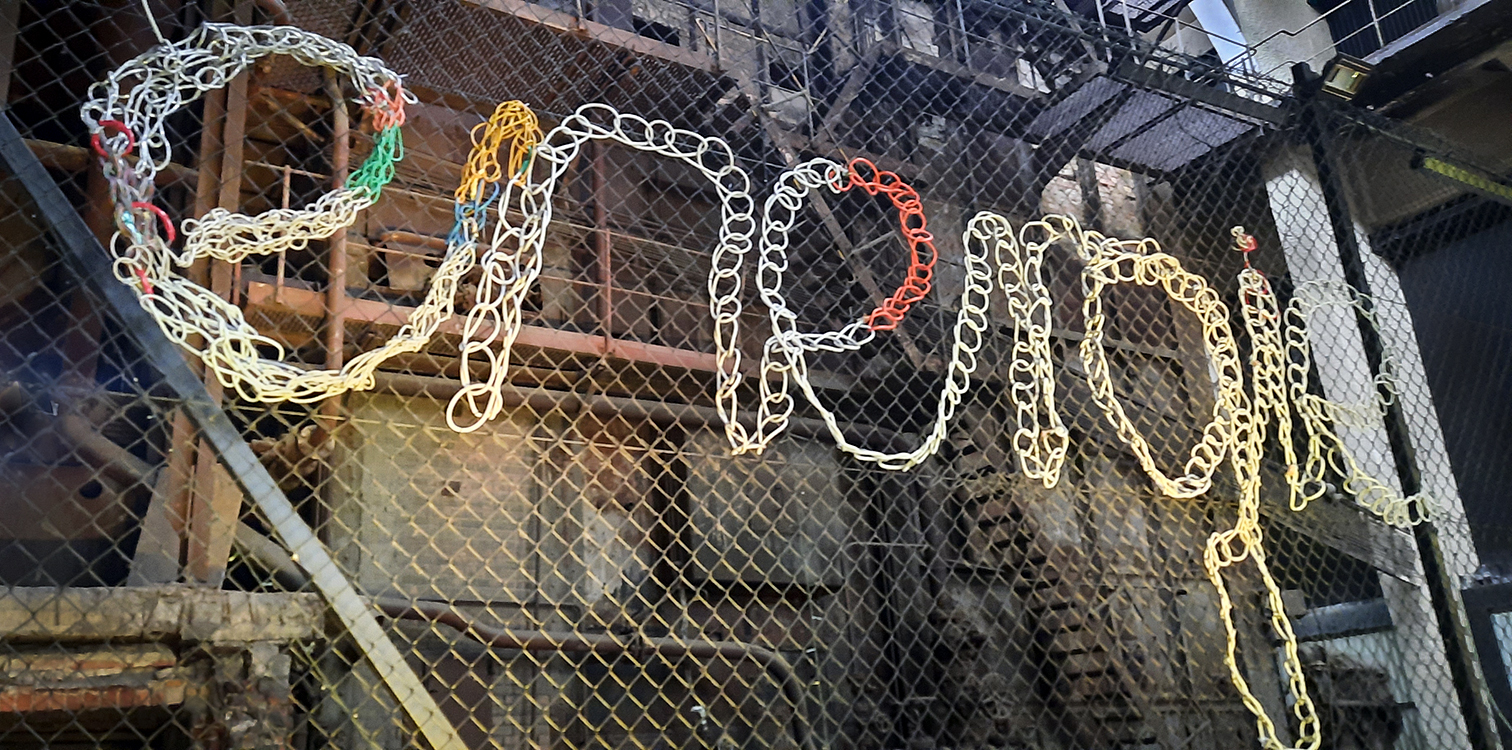
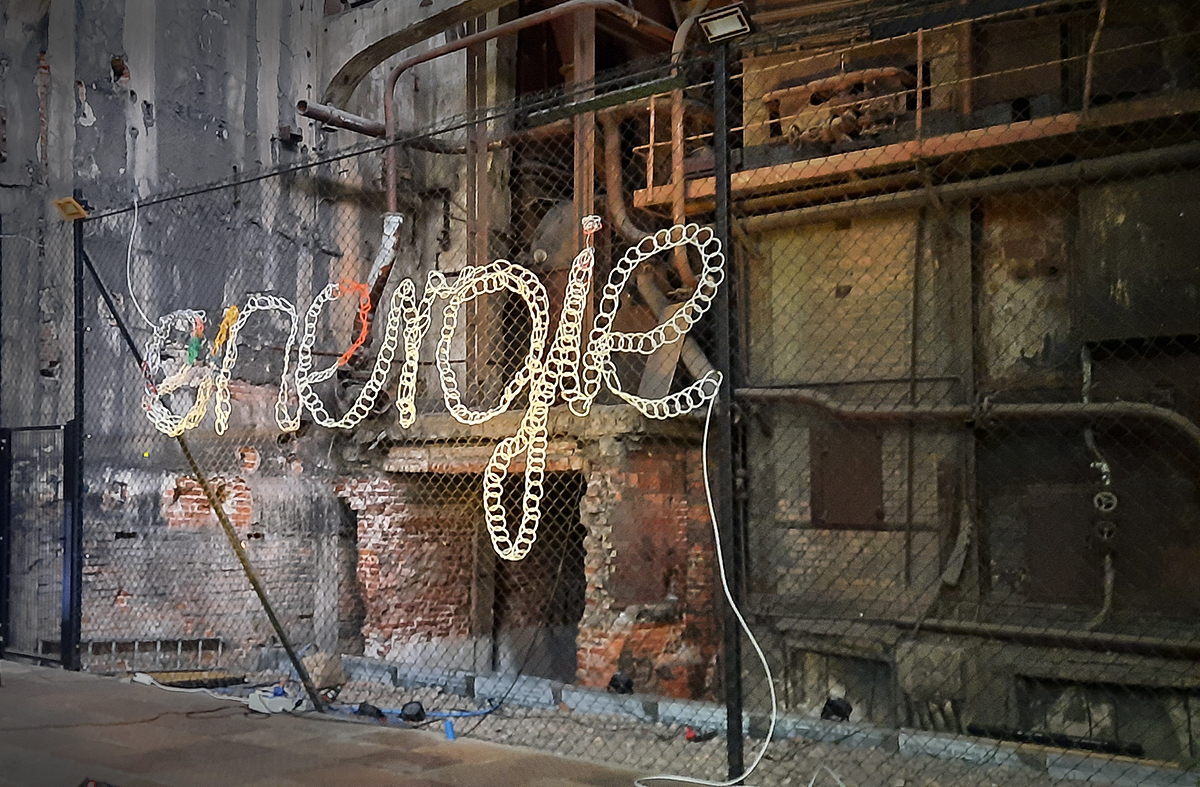
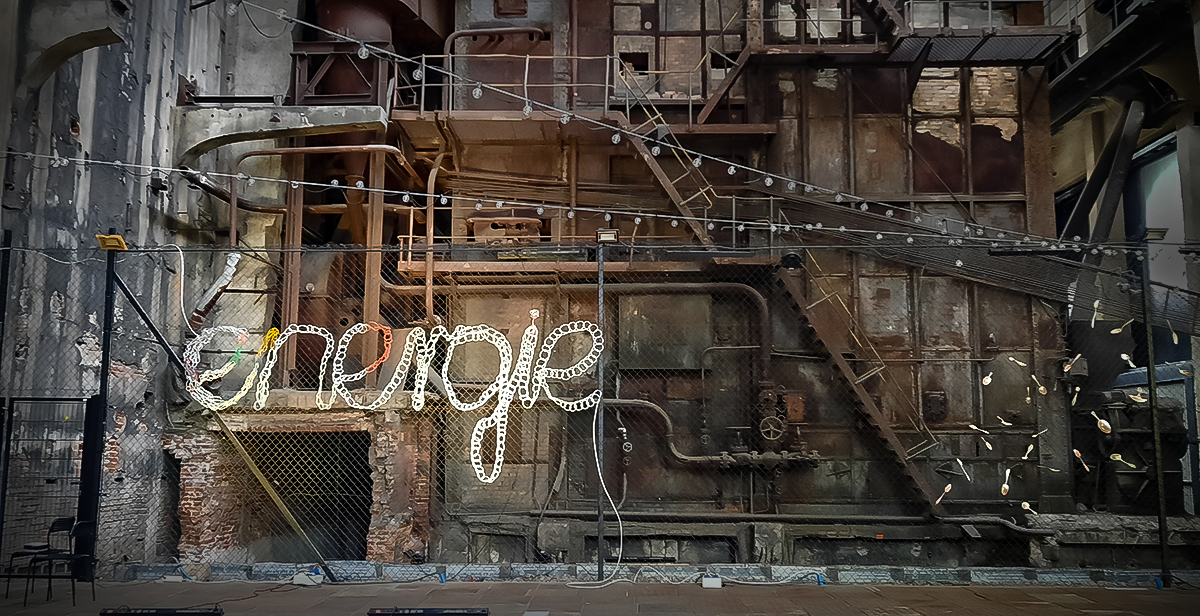
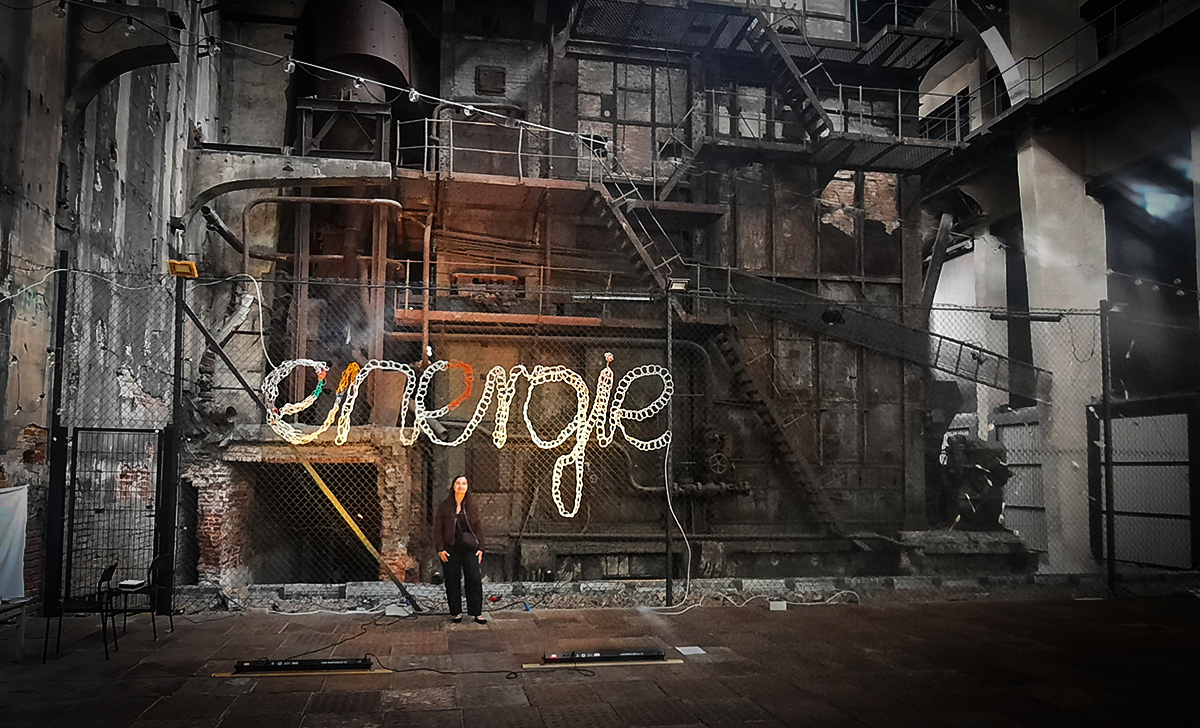
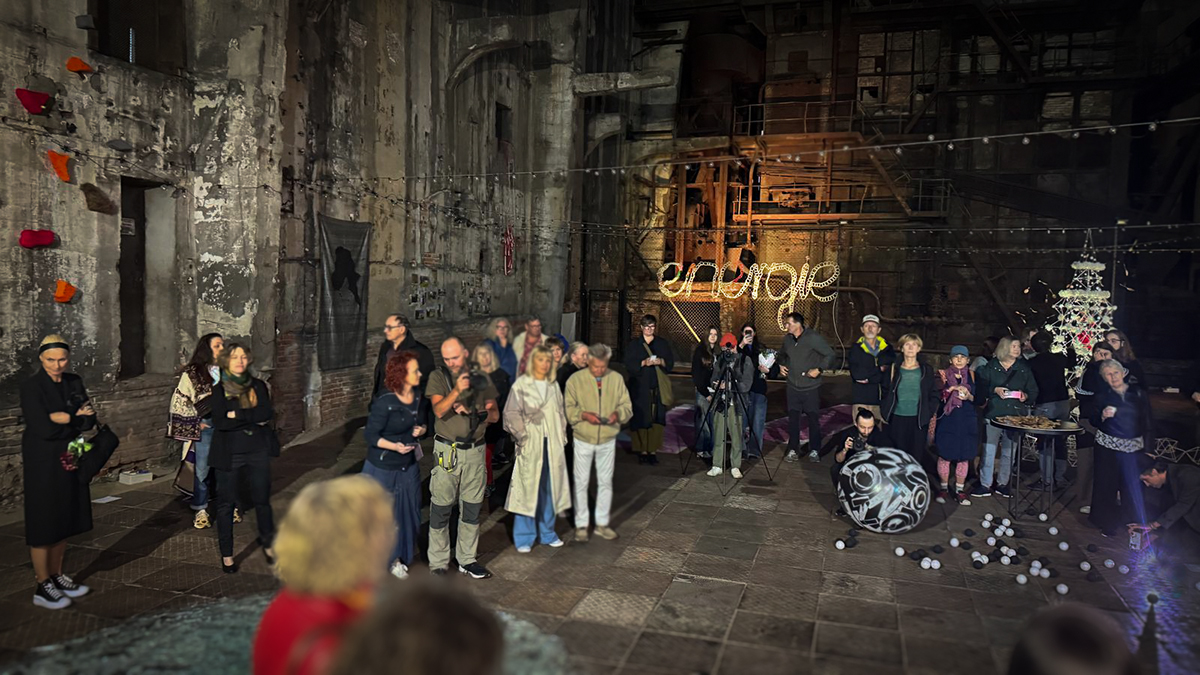
The project was realised in the city's historical context as a "promised land," where, at the turn of the 20th century, the ambitions and capital of factory owners clashed with workers' movements demanding basic rights for the proletariat. The Scheibler Power Plant – on the one hand, a jewel of industrial architecture; on the other, a site of exploitation of cheap labour – was nationalised during the communist era and incorporated into the Uniontex Cotton Industry Plant. A dozen or so years after the fall of the communist regime, it closed and fell into ruin.
This site, like other abandoned factories, was once a space for site-specific artistic endeavours. The power plant has been revitalised and now serves as an event venue, surrounded by a luxury housing estate. The project, therefore, asks not only about changing socio-political contexts but also whether gentrified and revitalised complexes offer room for non-commercial art, not always spectacular, but based on a sensitive dialogue with the place and its energies.