Anka Leśniak
works
biography texts contact
2026
2025
2024
2023
2022
2021
2020
2019
2018
2017
2016
2015
2014
2013
2012
2011
2010
2009
2008
2007
2006
2004
WORKS 2026
Re-construction of the Witch.
The transformative power of femininity
in Agnieszka Holland's films
performance
Symposium
Art, Borders, and Democracy:
The Cinema of Agnieszka Holland and the Politics of Citizenship
May 21-22, 2026
Bush House, King's College London
organizers:
Dr Krzysztof Krakowski, Dr Belén Vidal, Dr Agnieszka Piotrowska
The performance realised as part of the symposium was based on my artistic research regarding the figure of the Witch in culture, particularly in relation to a sculpture by Jewish-Austrian artist Teresa Feodorowna Ries (1866–1956). This sculpture, The Witch at Her Toilette before the Witches’ Sabbath, created in 1895, depicts a bold representation of subversive femininity that questions the patriarchal order. Similar themes can be found in the work of Agnieszka Holland, where female characters embody various forms of resistance and survival in a world dominated by oppression and violence. Among these characters are Janina Duszejko from Spoor, based on Olga Tokarczuk's novel Drive Your Plow Over the Bones of the Dead, and Julia from the Green Border. These characters can be seen as successive transformations of femininity, building upon the character of Irena from A Lonely Woman. Historically, the witch has been viewed negatively due to the femicides associated with witch hunts and the subsequent suppression of female agency. However, feminist theories reposition her as a representative of the Other, empowering marginalised and oppressed groups. The protagonists in Agnieszka Holland's films exemplify women regaining power, courage, and agency. They are complex characters who experience deeper awareness and choose to take radical actions that challenge societal power dynamics and patriarchal ethics.
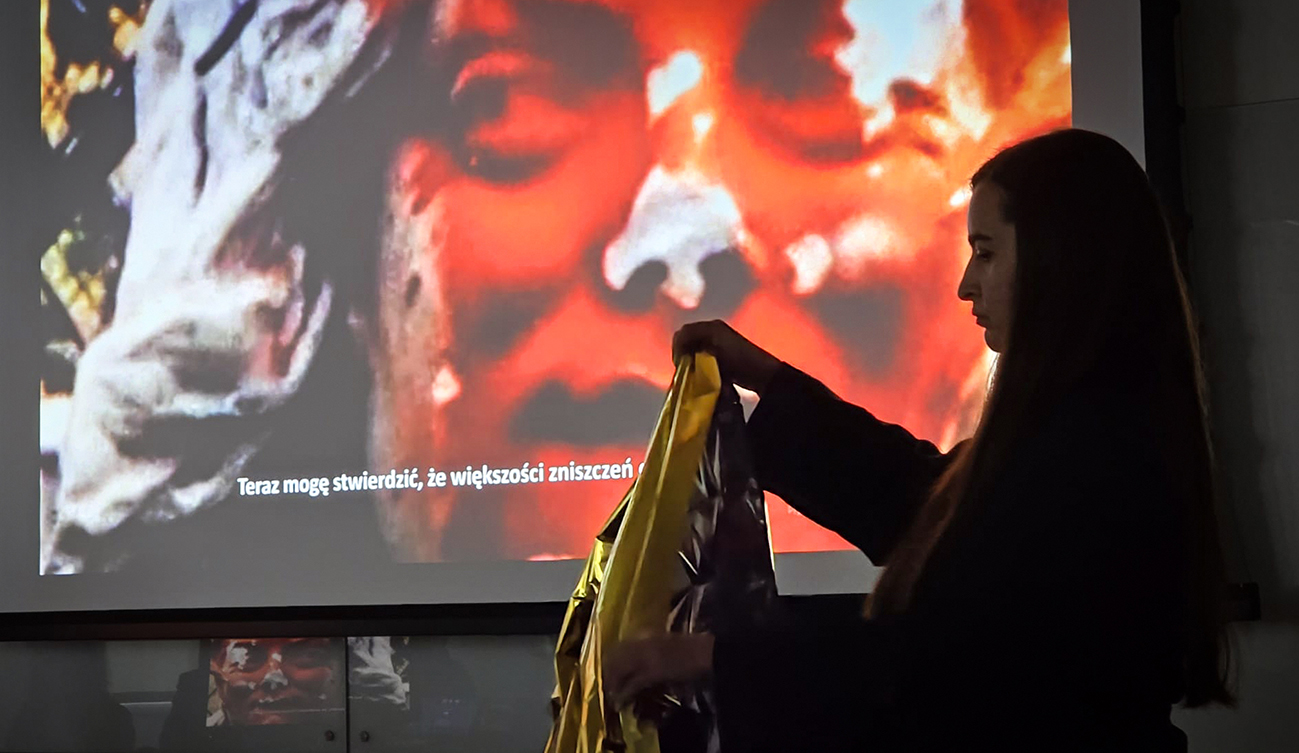
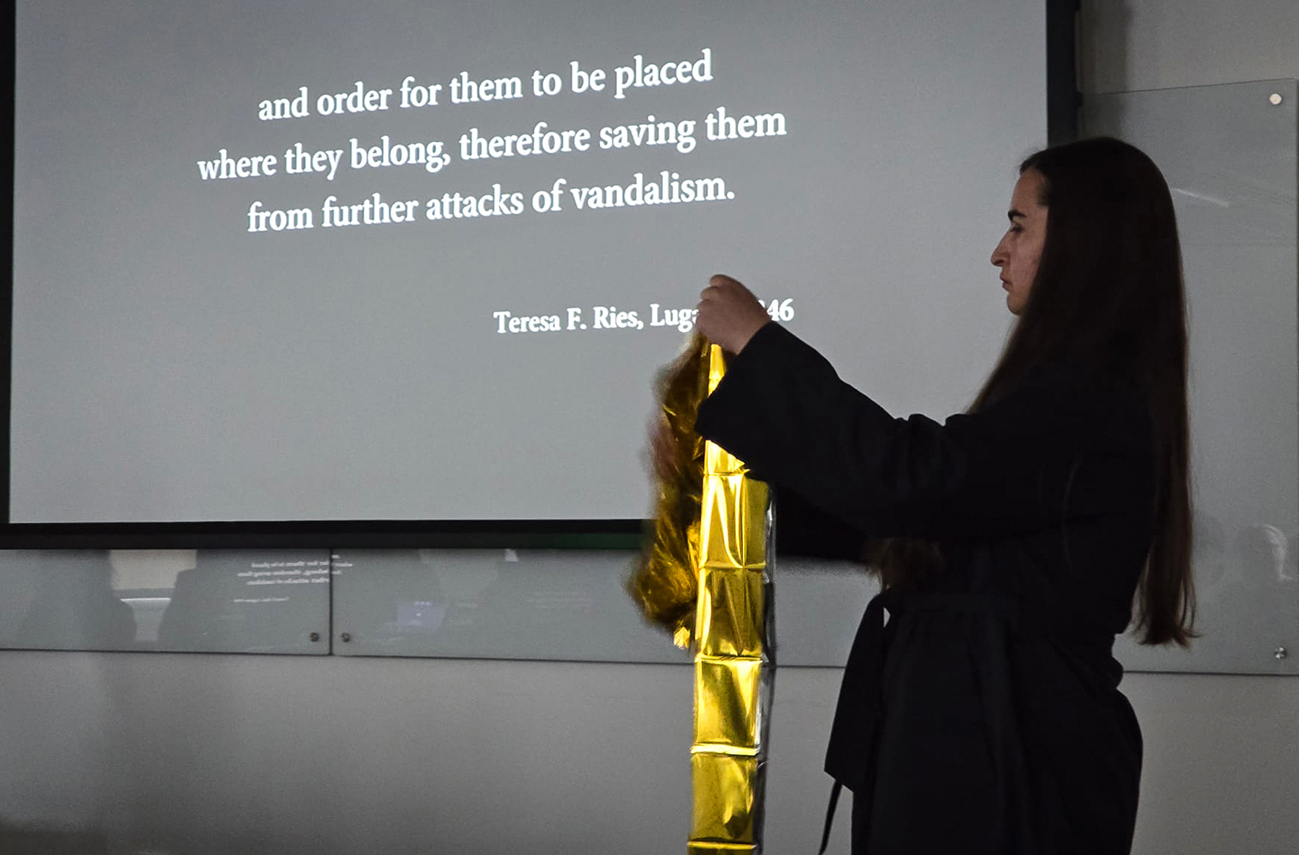
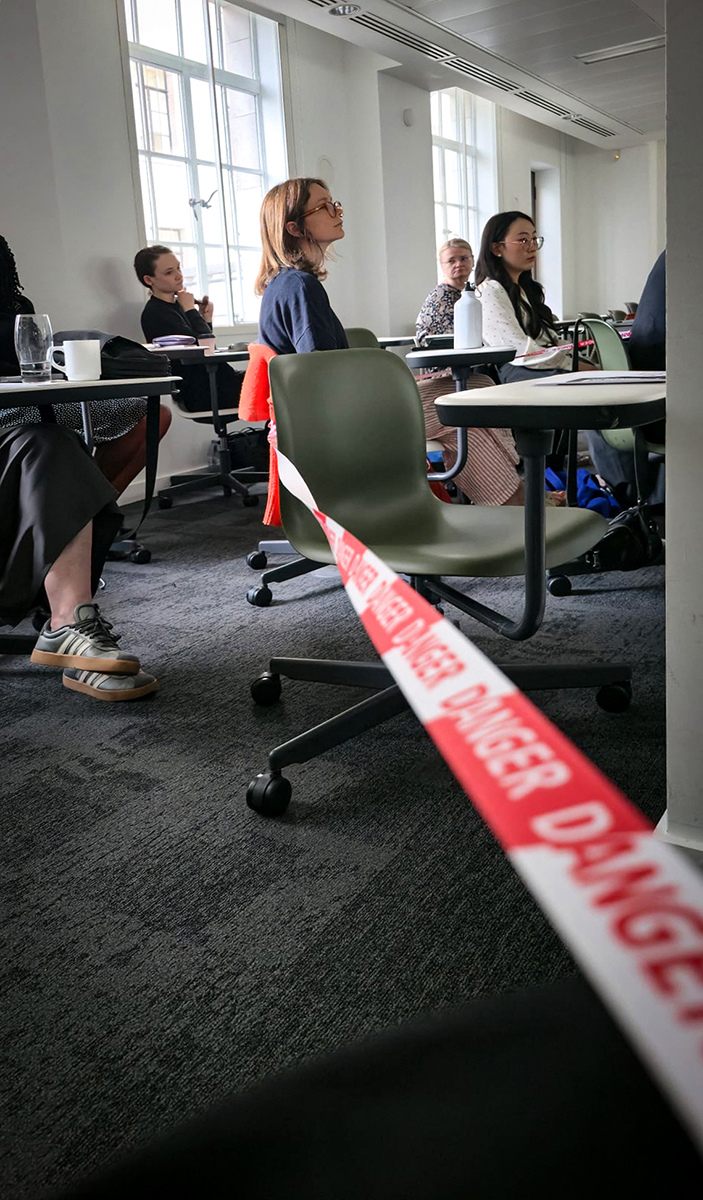
I began the performance by screening my video Lost Element, which explores the history of Teresa Ries's sculpture "The Witch" and the fate of its creator, who had to abandon her artistic legacy and flee Vienna during World War II. During the live performance accompanying the film, I performed gestures that engaged in dialogue with the video content and the stories of the women depicted in Agnieszka Holland's films, using props that I took out of my suitcase.
I referenced Irena's fate from "A Lonely Woman" with a pillow printed with a scene from the film where the protagonist awakens from a dream while lying in bed. Both Teresa Ries's and Irena's stories share a theme of emigration: Ries fled Nazi Austria to save her life, while Irena unsuccessfully tried to escape Poland, which was under Soviet control. The pillow also alludes to the tragic scene at the film's end. The gesture of tearing it open and "eviscerating" it referenced tightened border controls and the so-called "baggage shaking," which can be used not just as a security measure, but also to intimidate and humiliate those attempting to cross state borders.
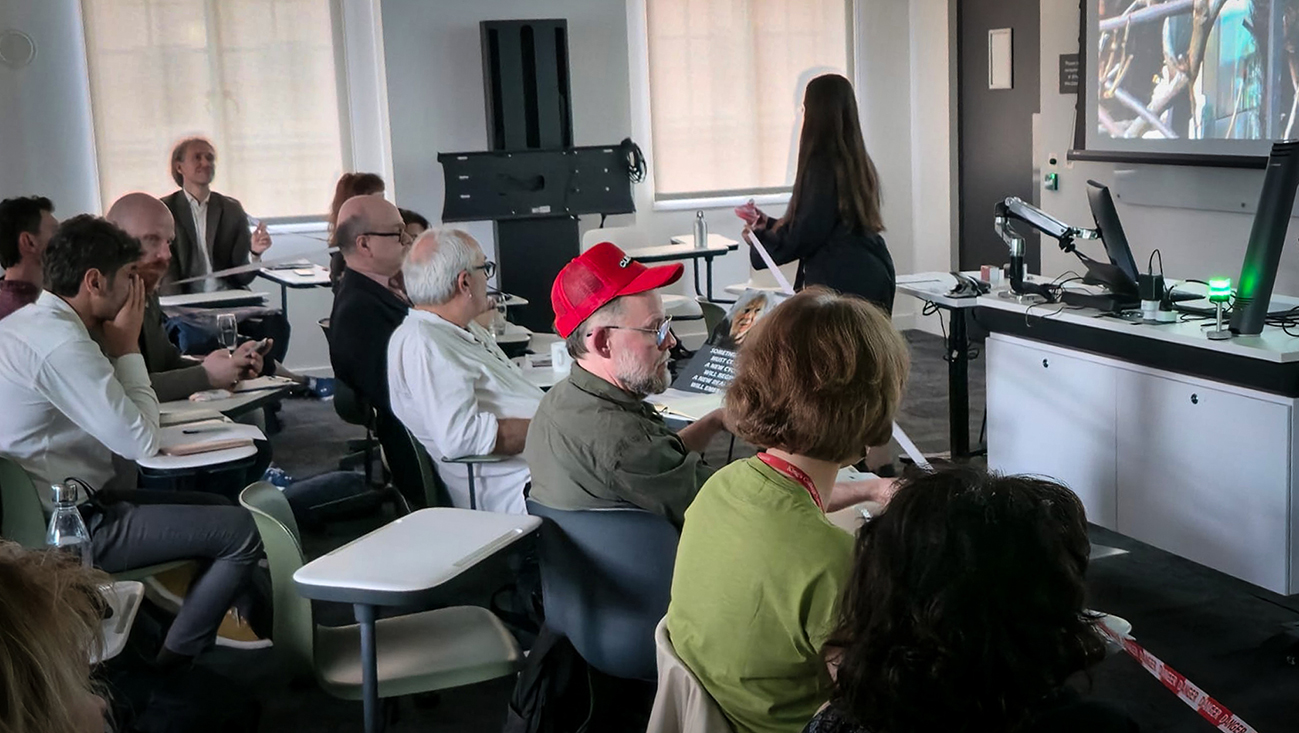
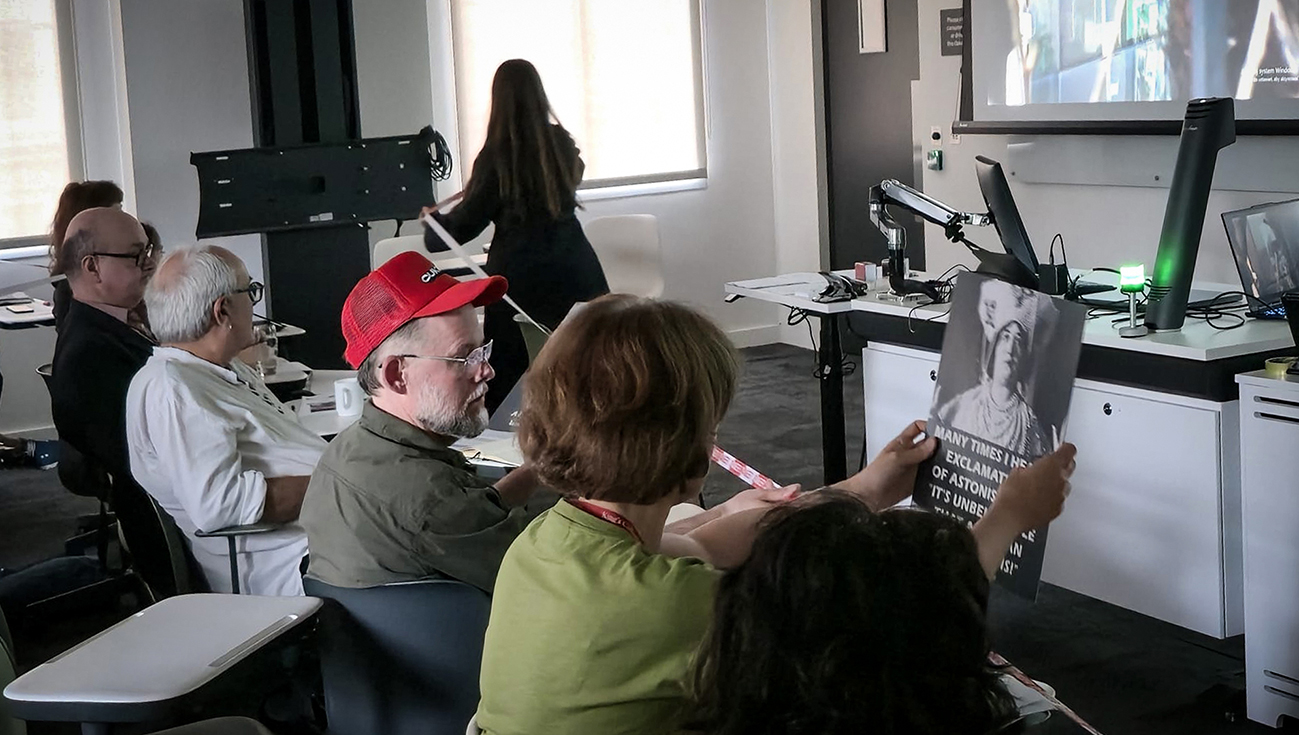
During the performance, I distributed banners to the audience featuring portraits of women from Agnieszka Holland's films, as well as a photograph by Teresa Ries (from the TFR Archive) and a photo of a vandalised witch statue. The portraits were accompanied by textual quotes.
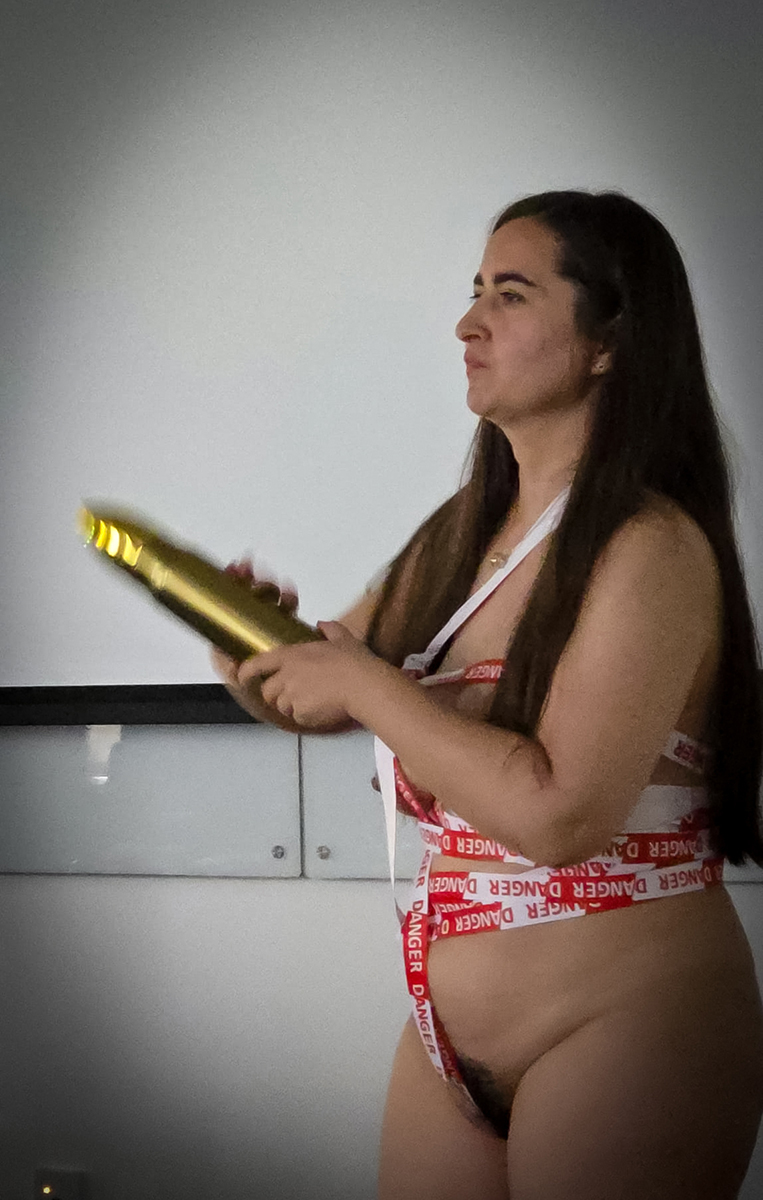
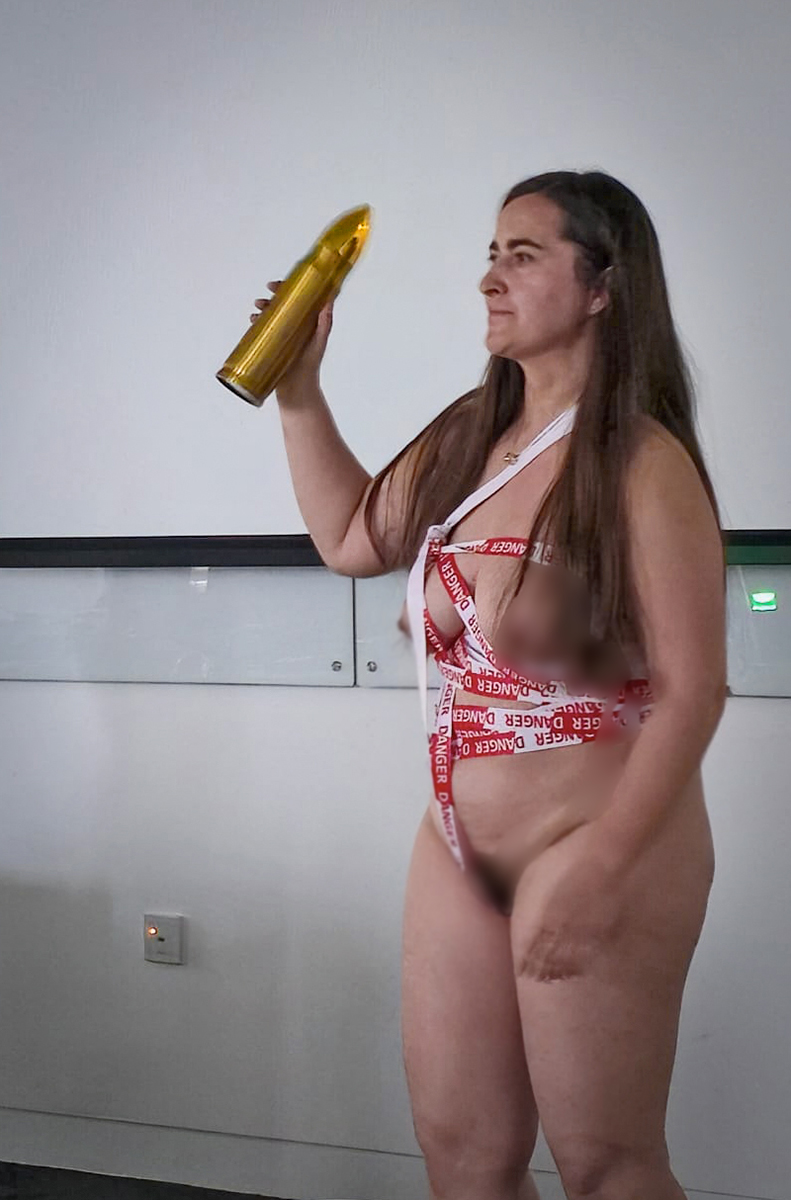
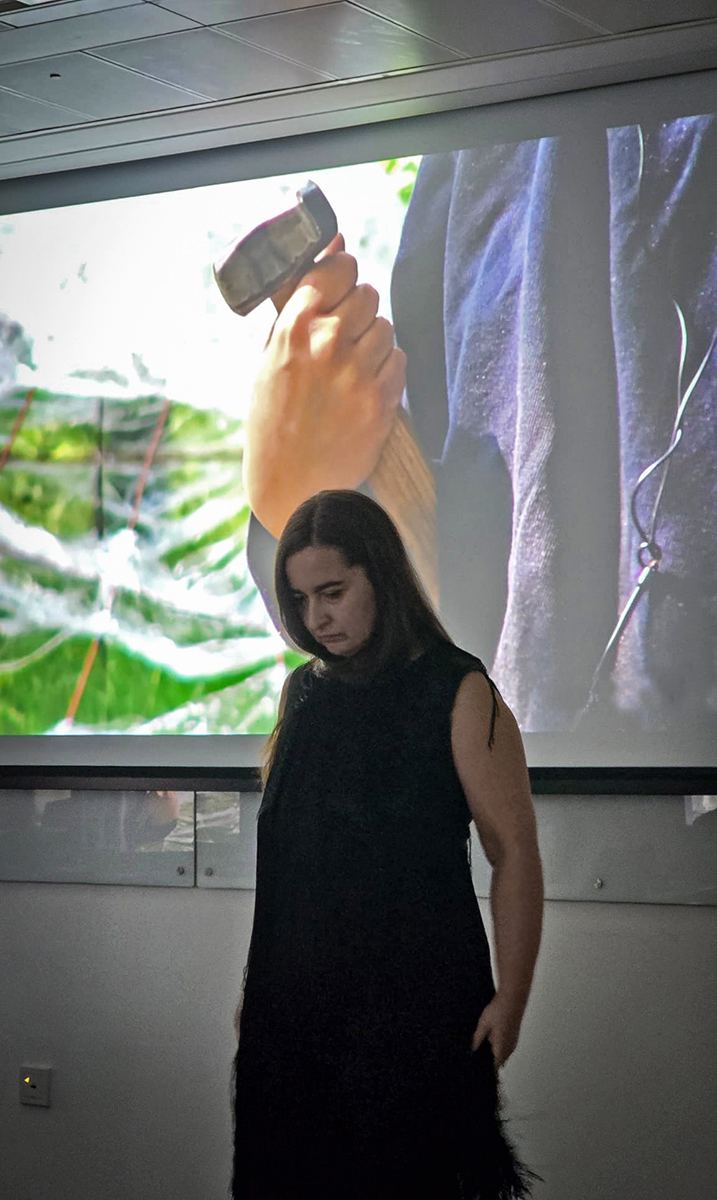

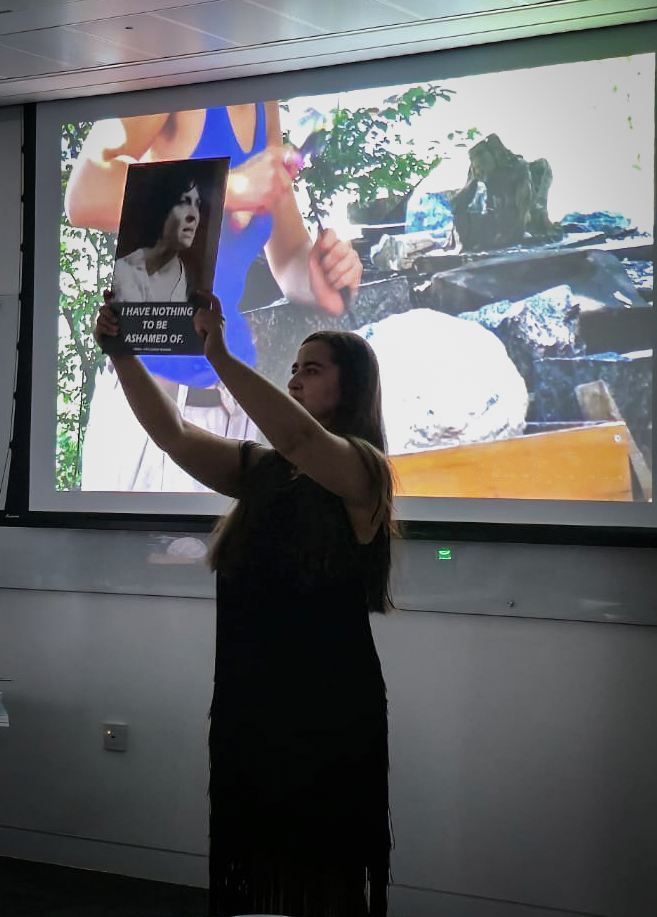
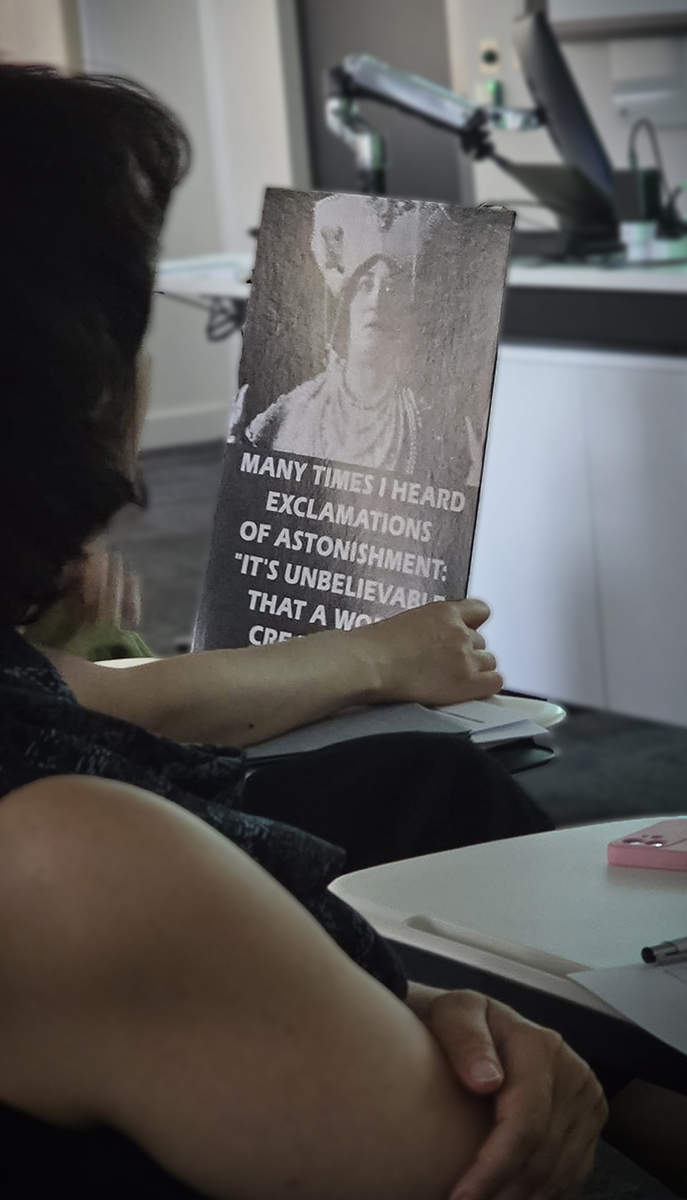
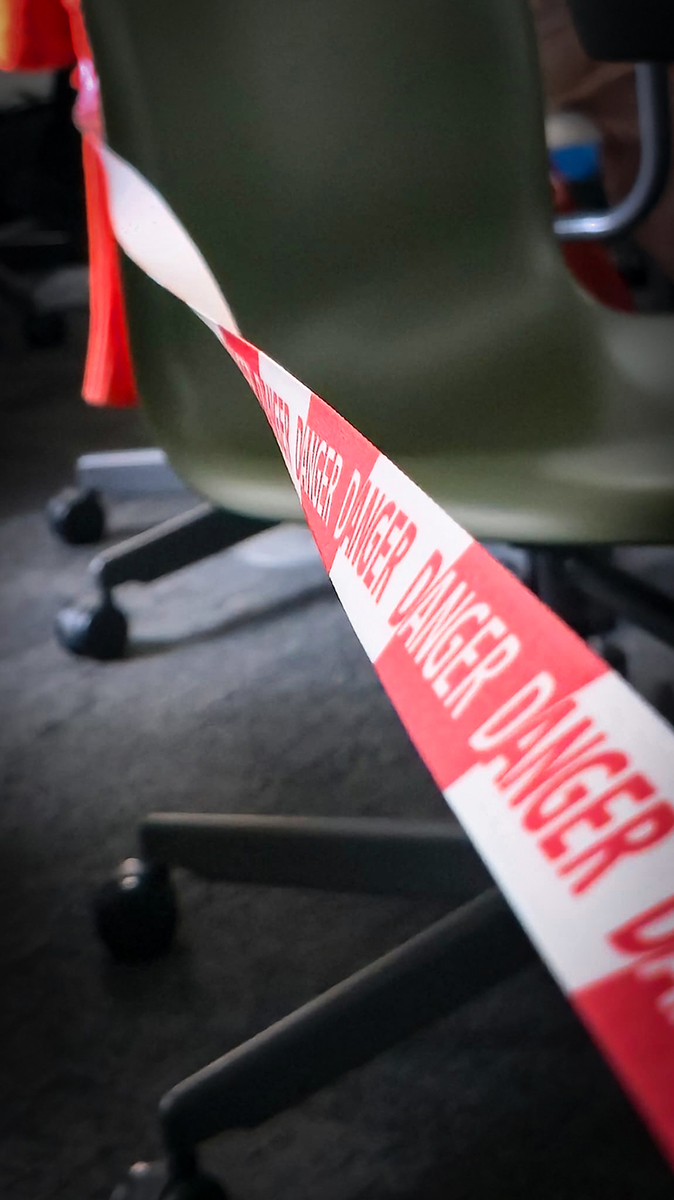
A key element of the performance involved wrapping the audience in tape marked "danger-anger," reminiscent of caution tape, while I also wrapped myself in the same tape. The phrase "danger-anger" referred to Agnieszka Holland's statement about the anger that arises in her characters in response to legally and socially sanctioned violence—both regarding the dehumanisation of refugees, as illustrated by Julia in the Green Border, and towards the cruelty faced by nonhuman beings, which Janina Duszejko opposes in Spoor. Agnieszka Piotrowska also discusses female anger in Agnieszka Holland's work in her book The Cinema of Agnieszka Holland: Anger and Ethics.
One poignant moment in the performance referenced a scene from the Green Border. A bullet-shaped thermos, advertised online as a gift for "real men," became a focal point. In the film, a refugee injures himself while trying to drink water from a thermos that a Polish Border Guard officer had smashed. The officer then "returns" the thermos after pushing a group trying to cross the border back to Belarus. I filled the thermos with shotgun pellets that served as percussion during the performance.
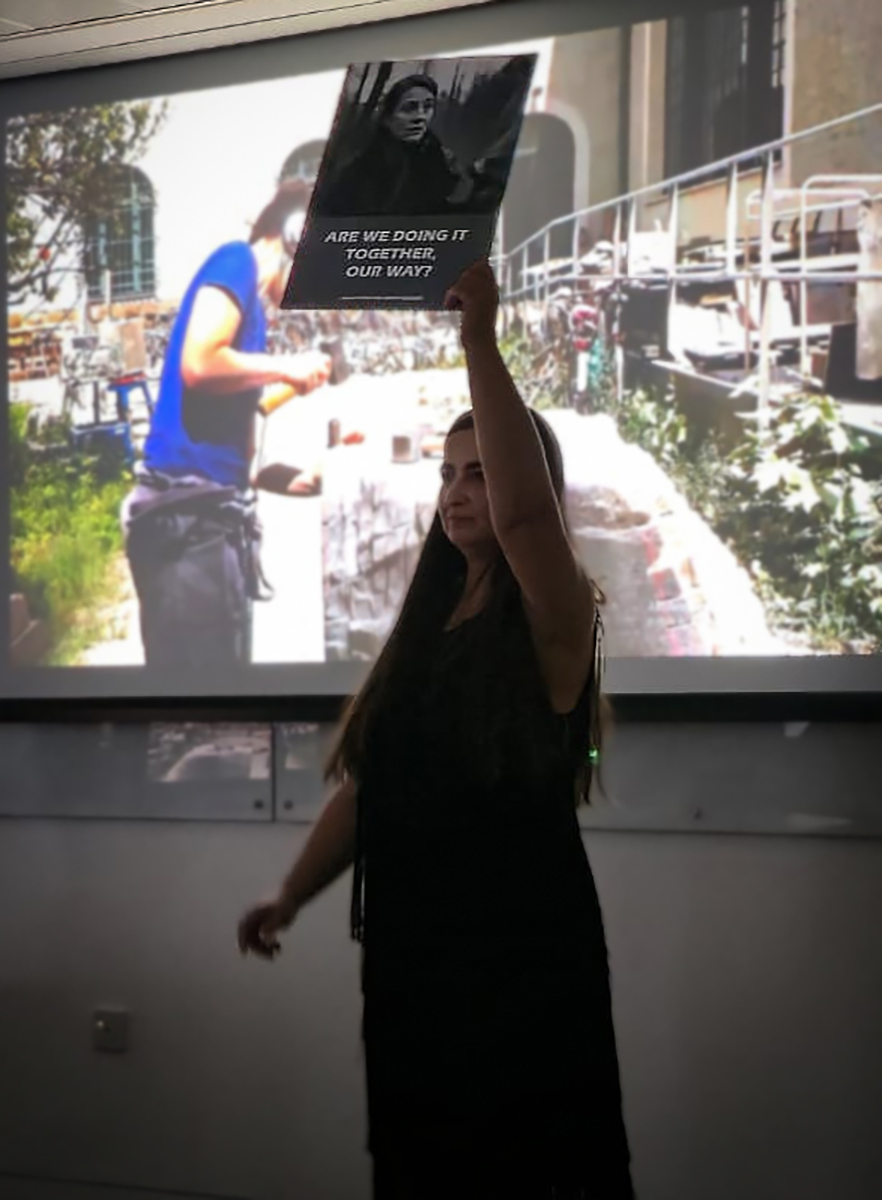
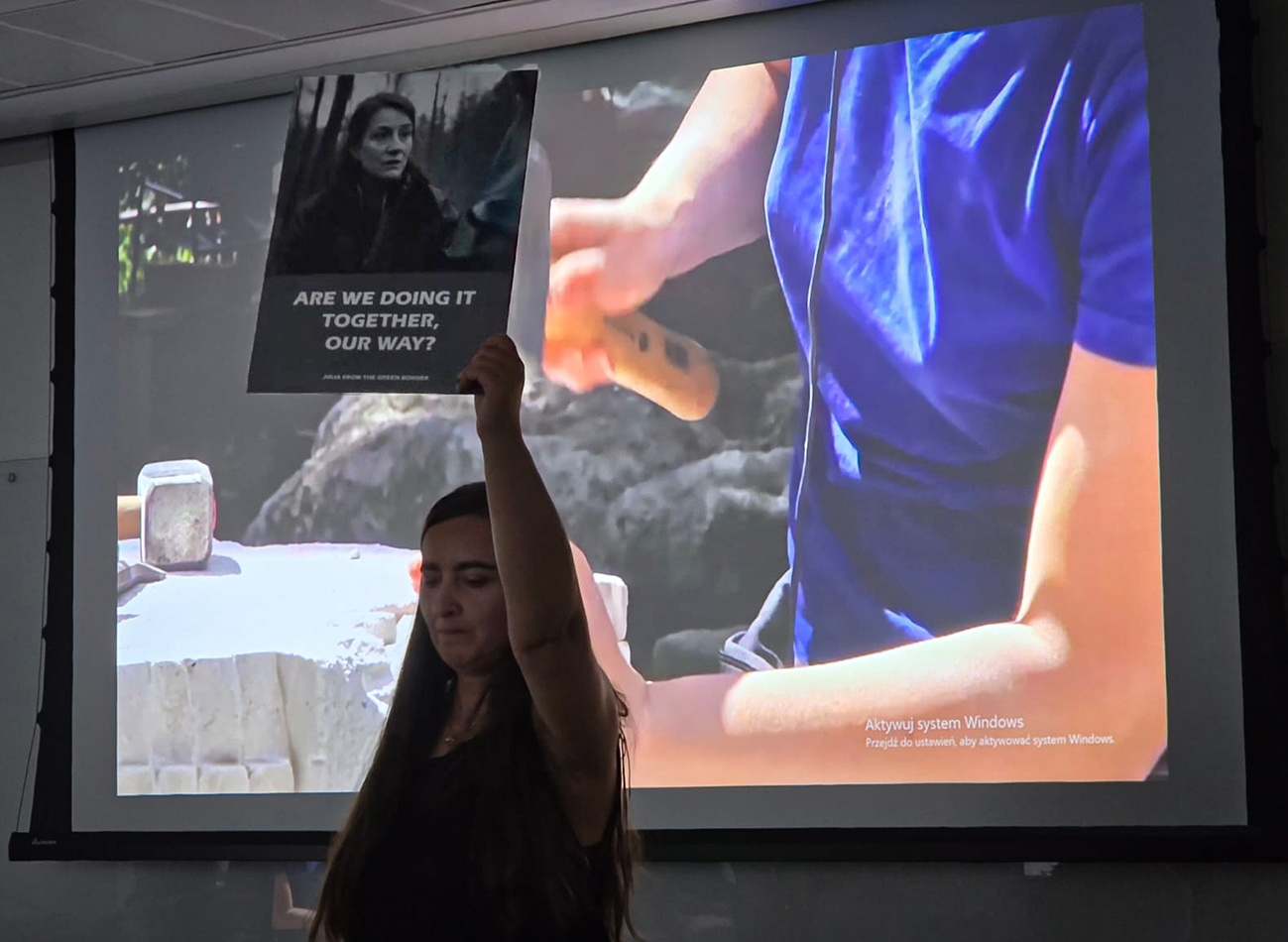
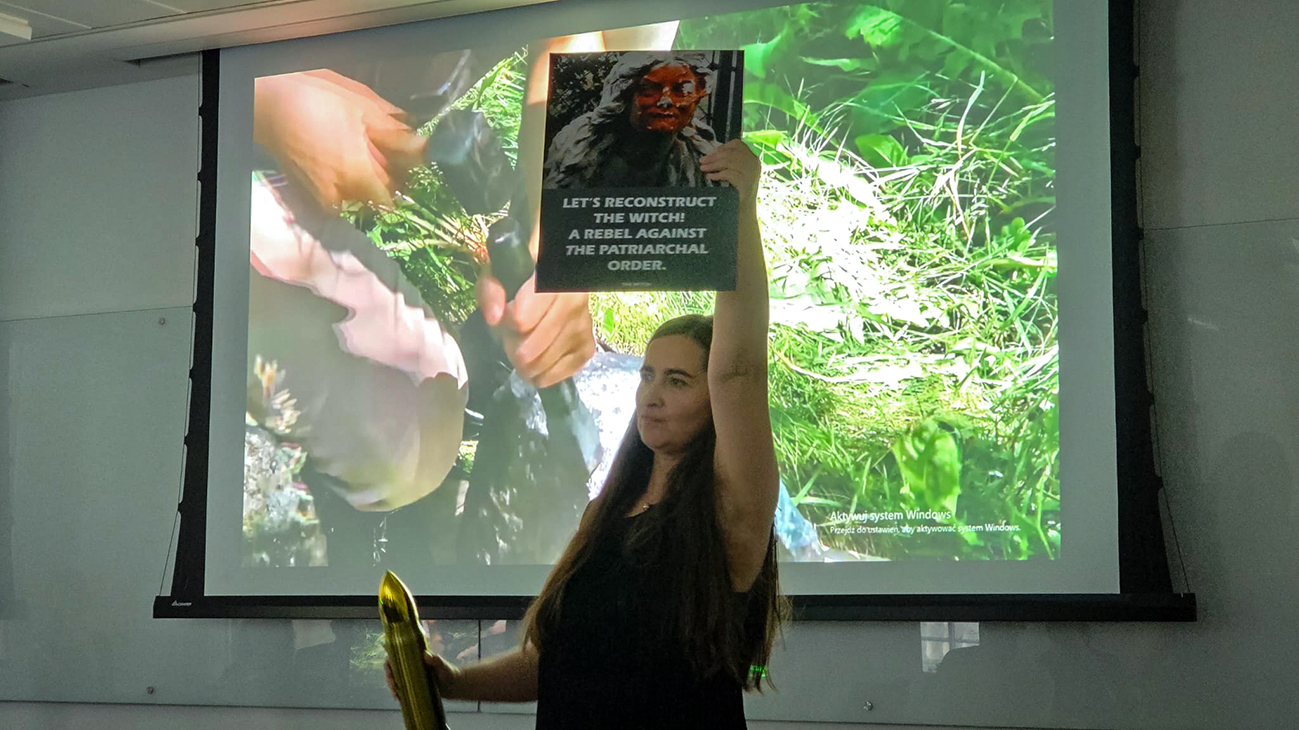
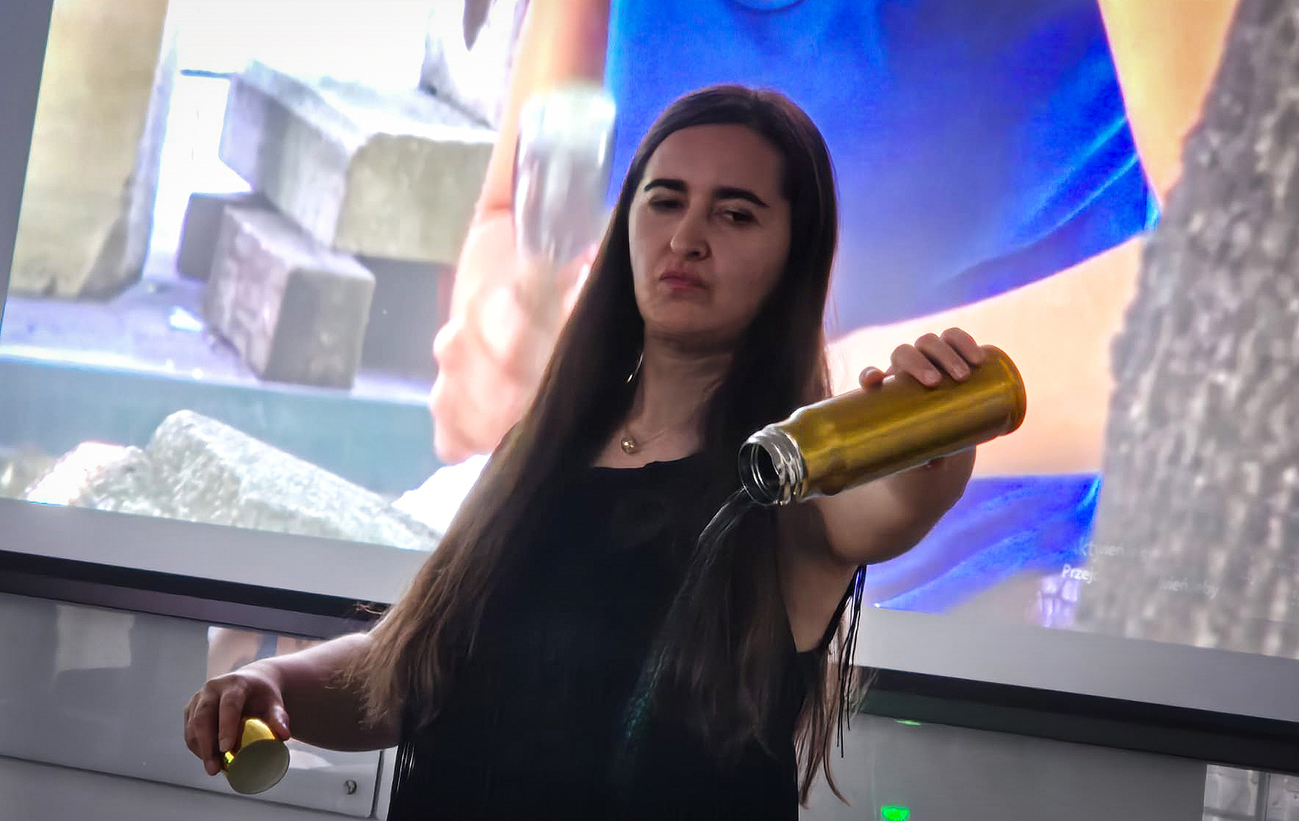
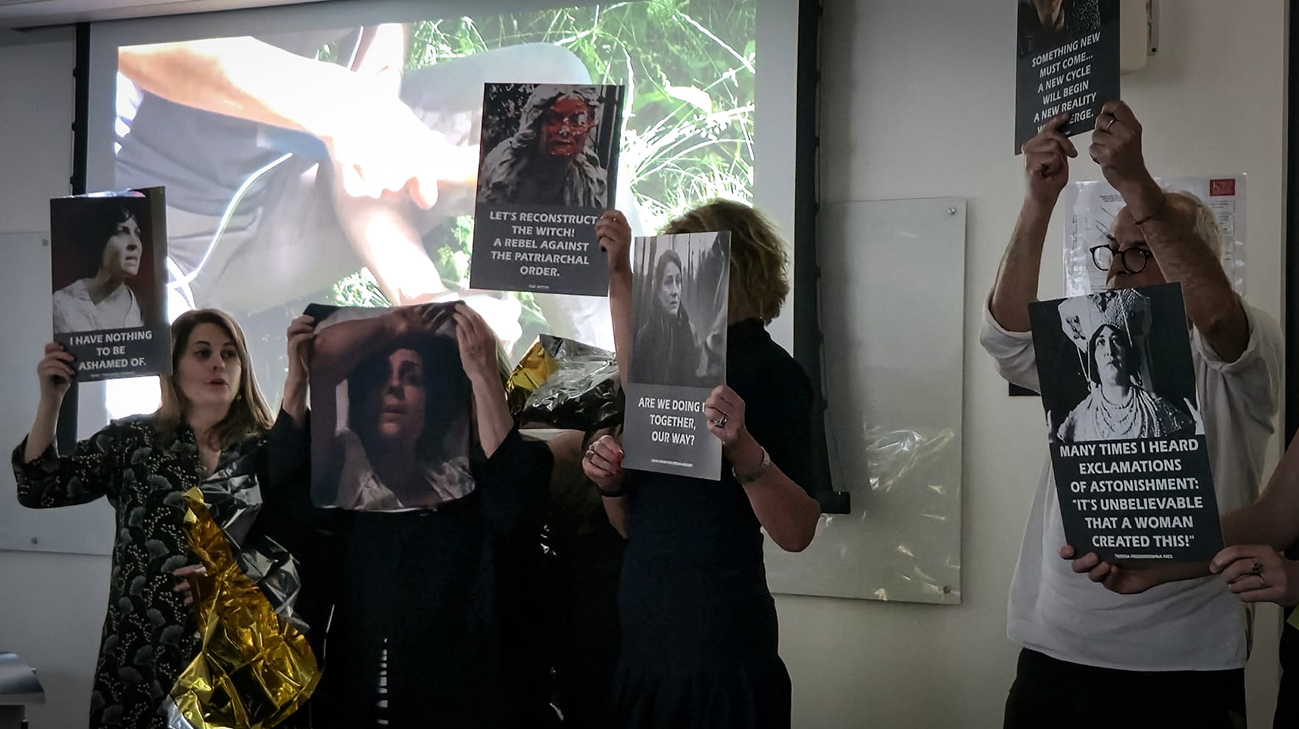
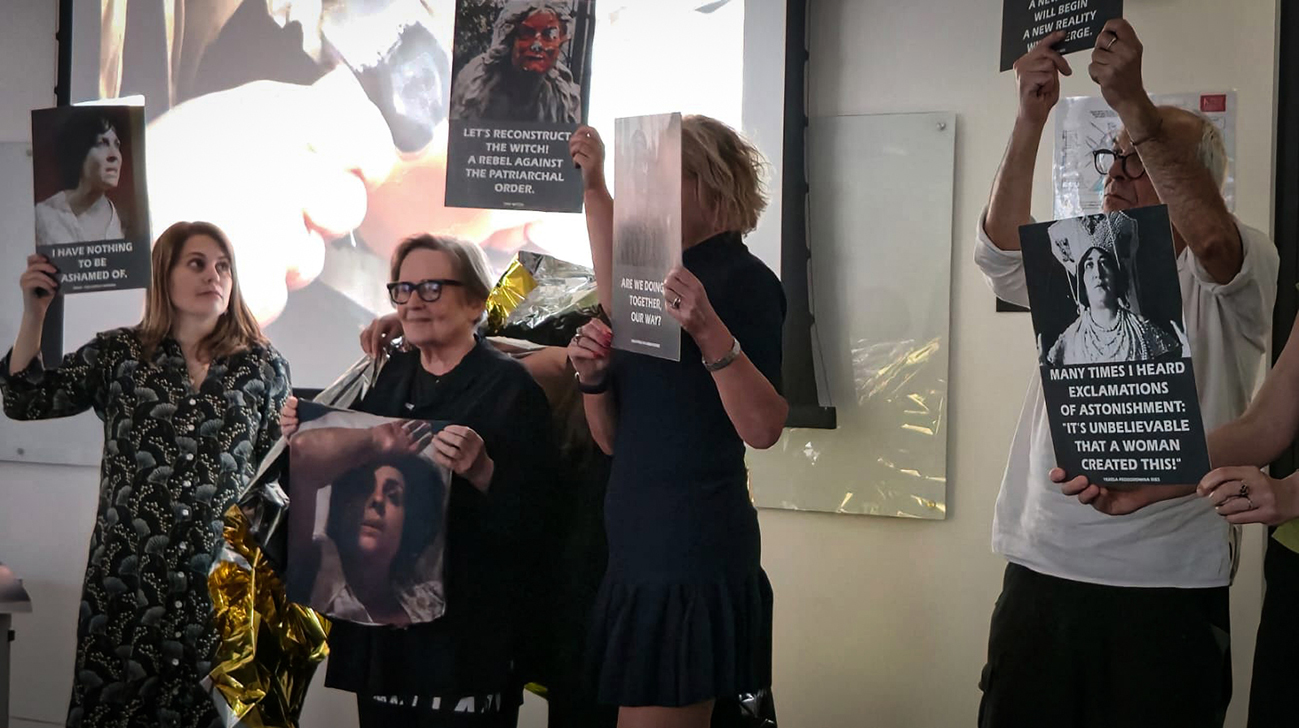
The turning point of the performance occurred when I spilt airsoft BBs from the thermos and invited each person holding a banner featuring portraits of the figures I was referencing to the centre of the stage. At the same time, my video March for the Witch was shown. This video serves as a manifesto for reclaiming female agency and the witch archetype as a source of power for those marginalised and despised in a patriarchal society. The epilogue of the performance came when I attempted to gather the fluff from a torn pillow into my suitcase. With a thermal blanket draped over me, I left the room, while the audience worked to disentangle themselves from the tape I had wrapped around the space.
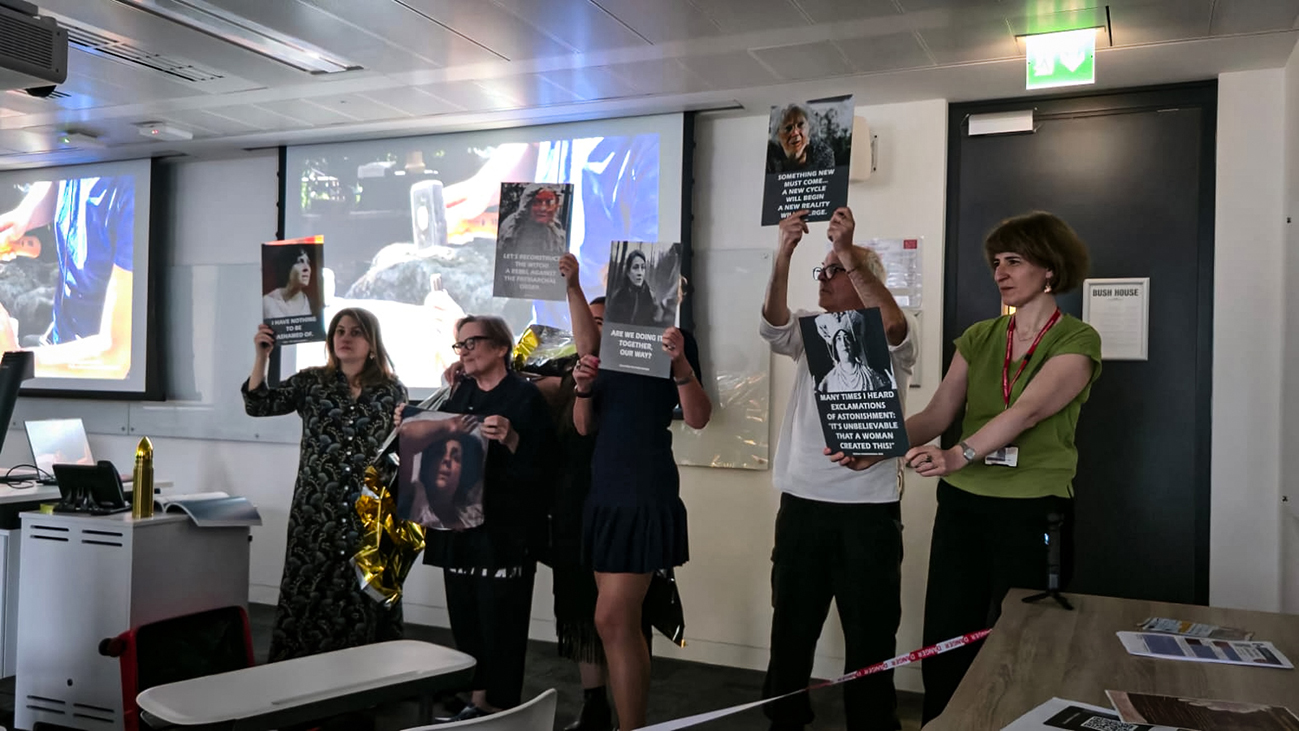
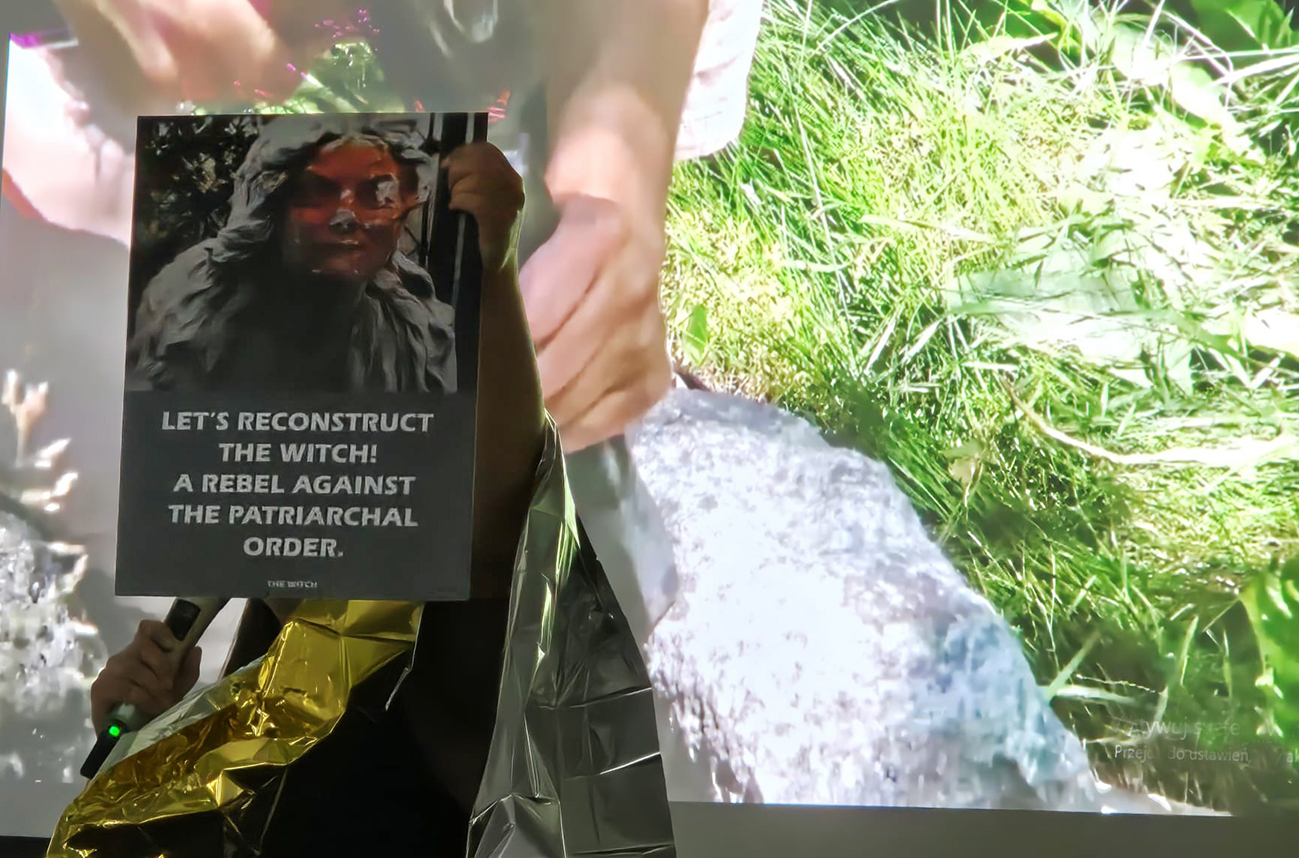
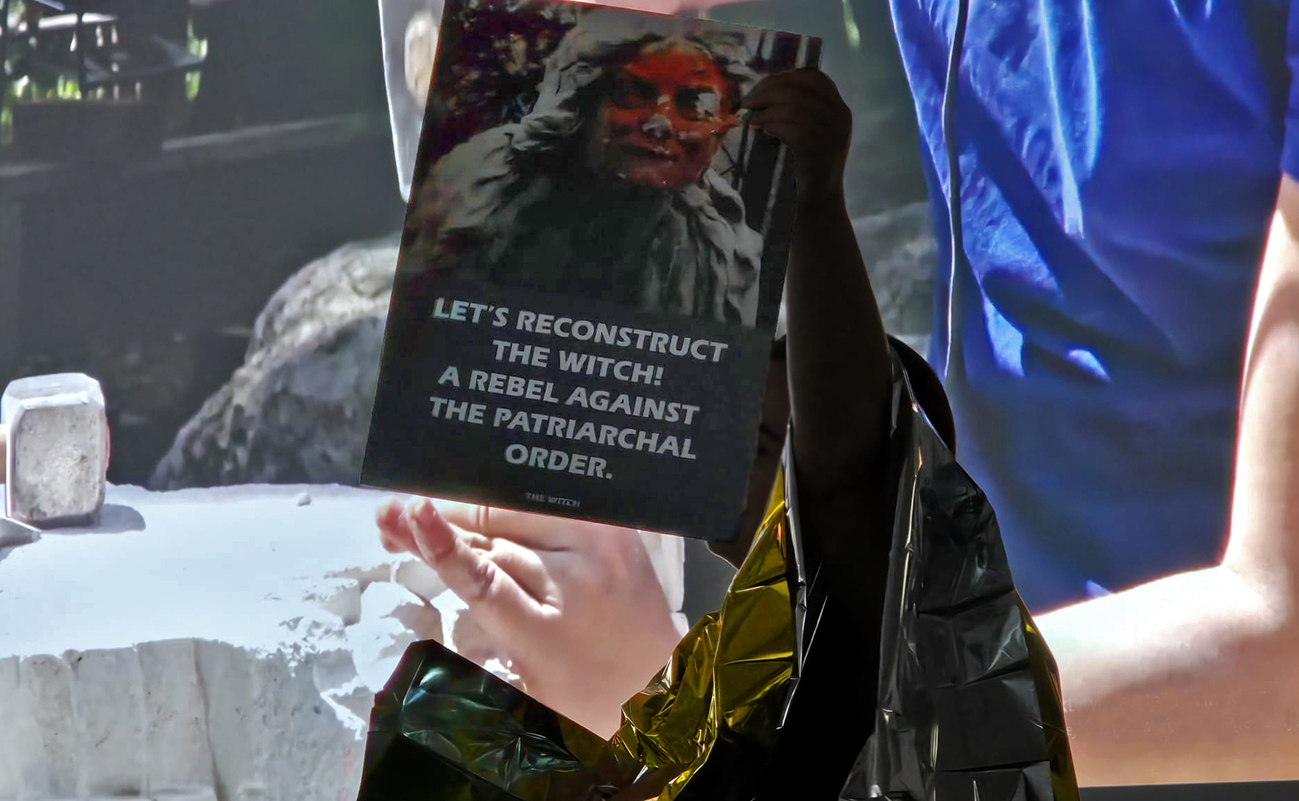
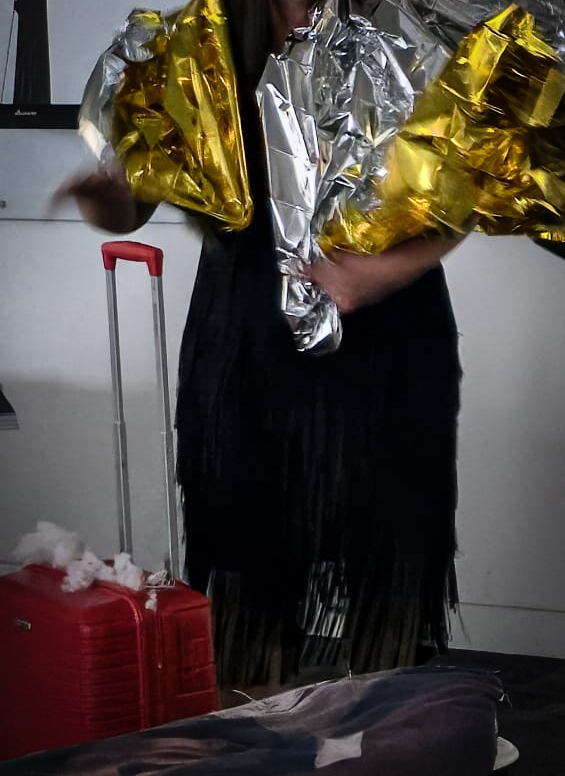
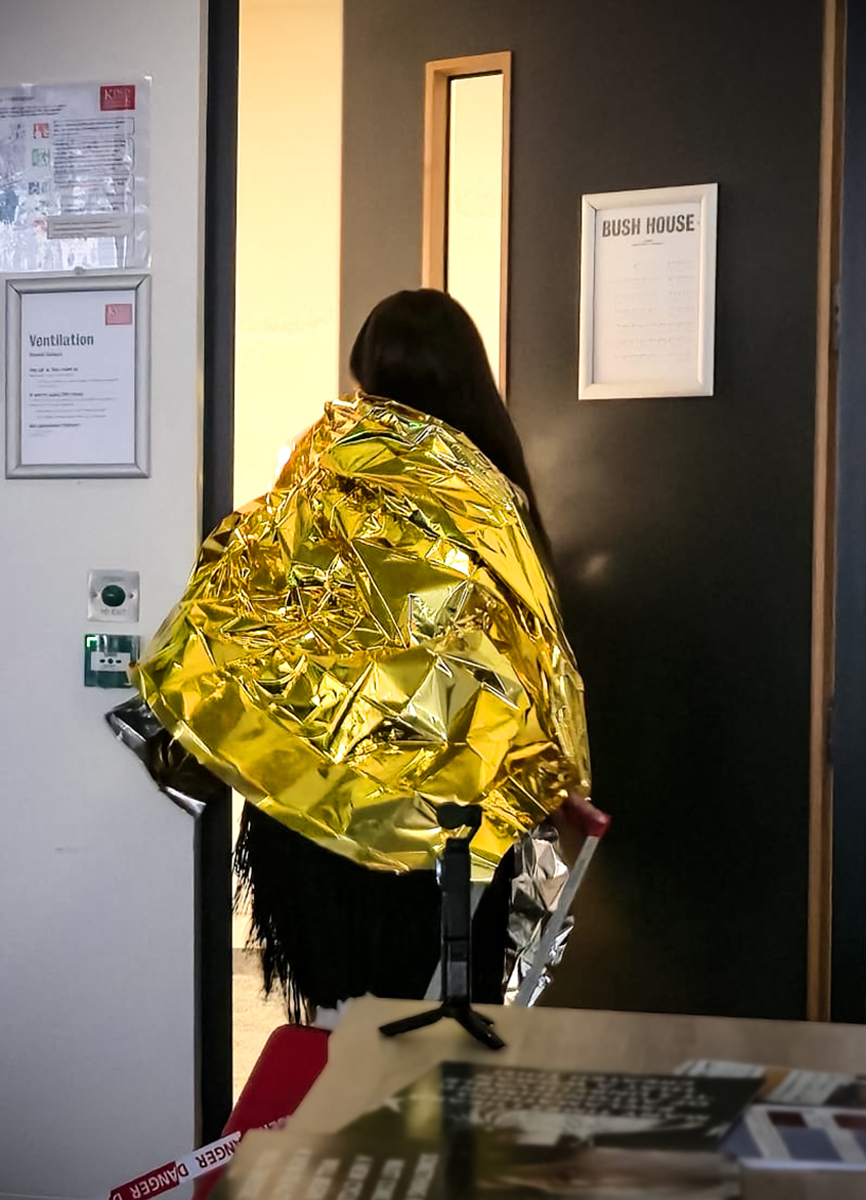
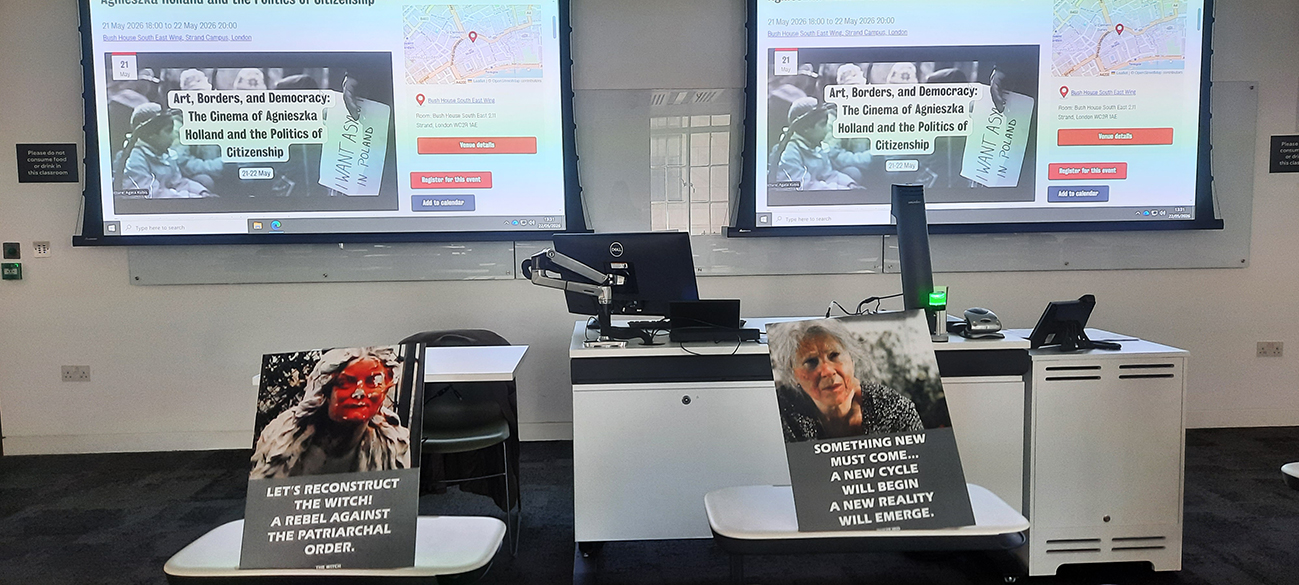
photo: Filip Ignatowicz