Anka Leśniak
works
biography texts contact
2026
2025
2024
2023
2022
2021
2020
2019
2018
2017
2016
2015
2014
2013
2012
2011
2010
2009
2008
2007
2006
2004
WORKS 2025
Apples from the Garden of Eden
performance
performance evening by:
Lenka Klodova and Anka Leśniak
The Bodies of Women Artists / Těla umělkyň
accompanying the exhibition
Body to body / Tělo na tělo
Dum Umeni Opava
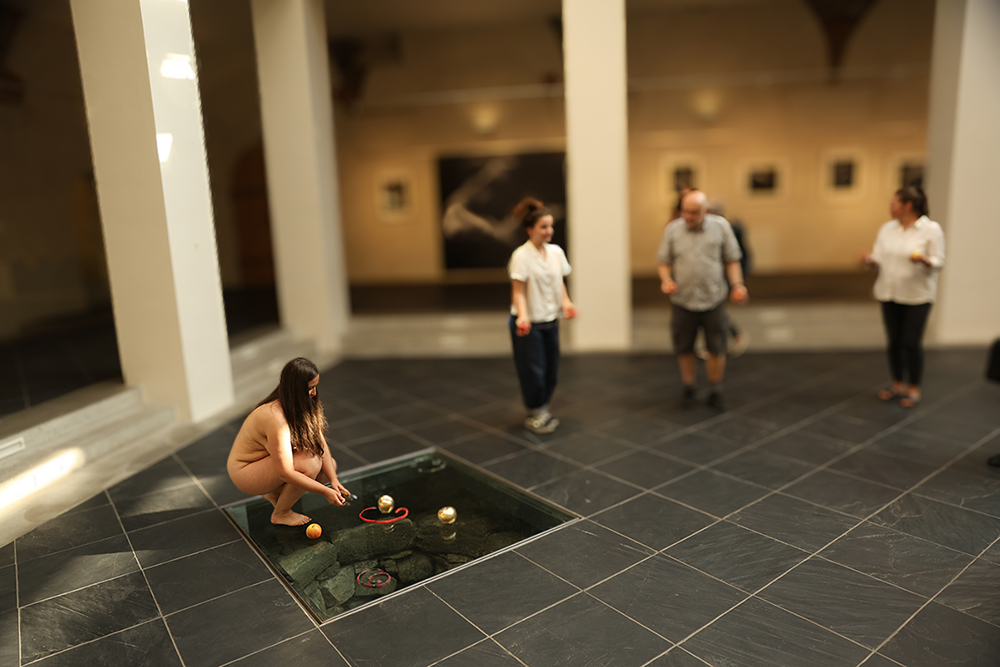
The performance involved a dialogue with the gallery space in Opava, situated in former monastery buildings that include a desacralized church and a former cloister garden symbolising the Garden of Eden. Today, this garden serves as a covered patio, which, like the church, functions as an exhibition space.
The Garden of Eden inspired performative reflections on the perception of women in both Christian and pre-Christian cultures. A central element of the narrative was an apple. The performance unfolded across three locations: the church, the patio (the former Gardens of Eden), and outside the gallery.
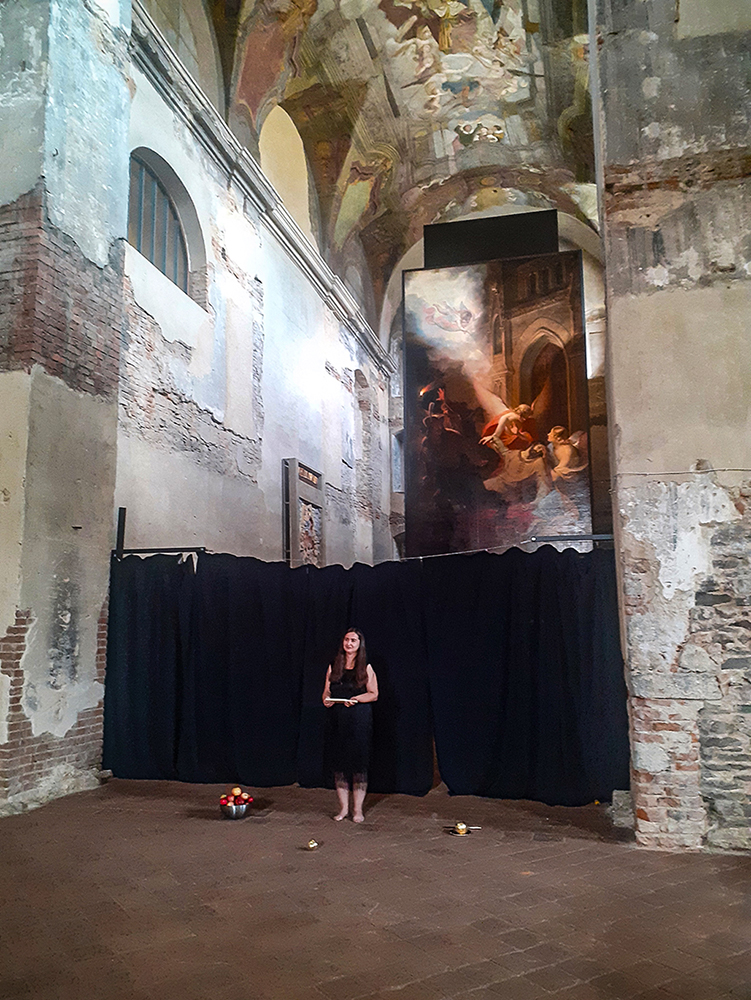
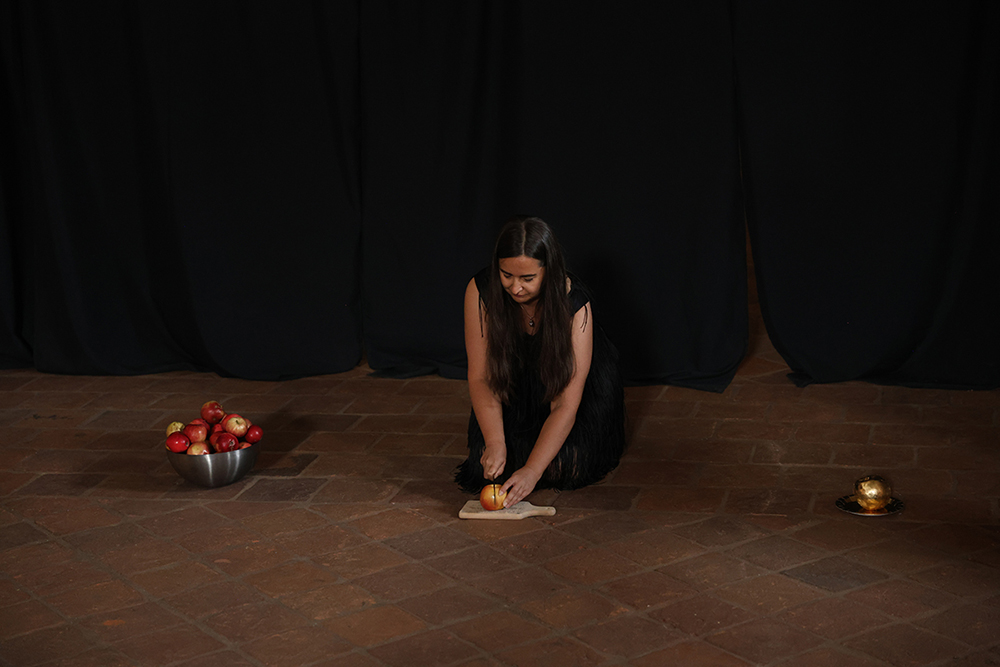
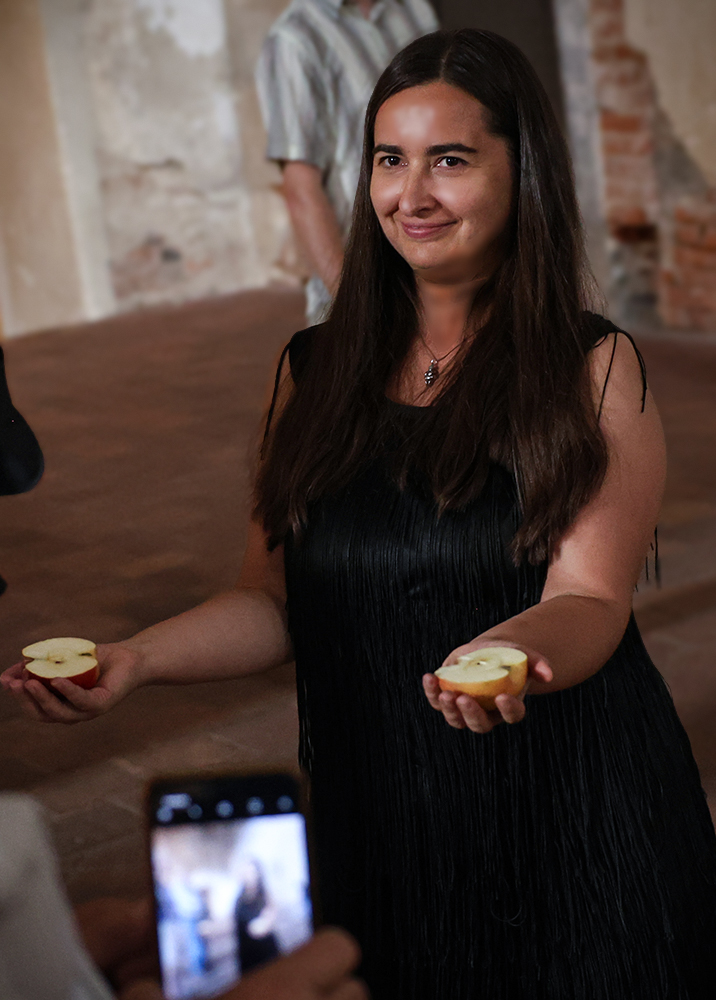
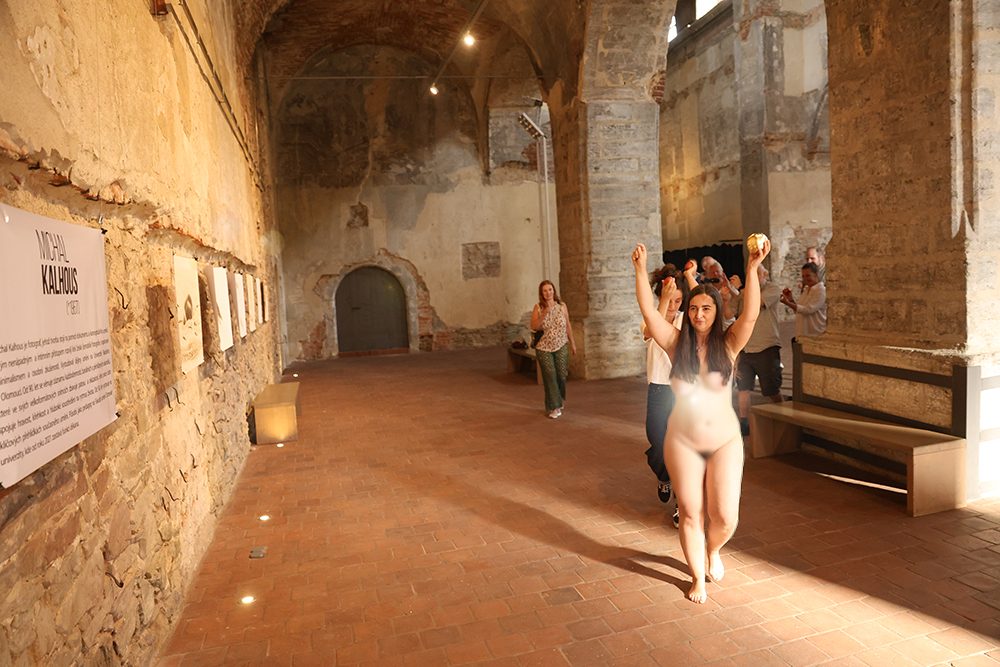
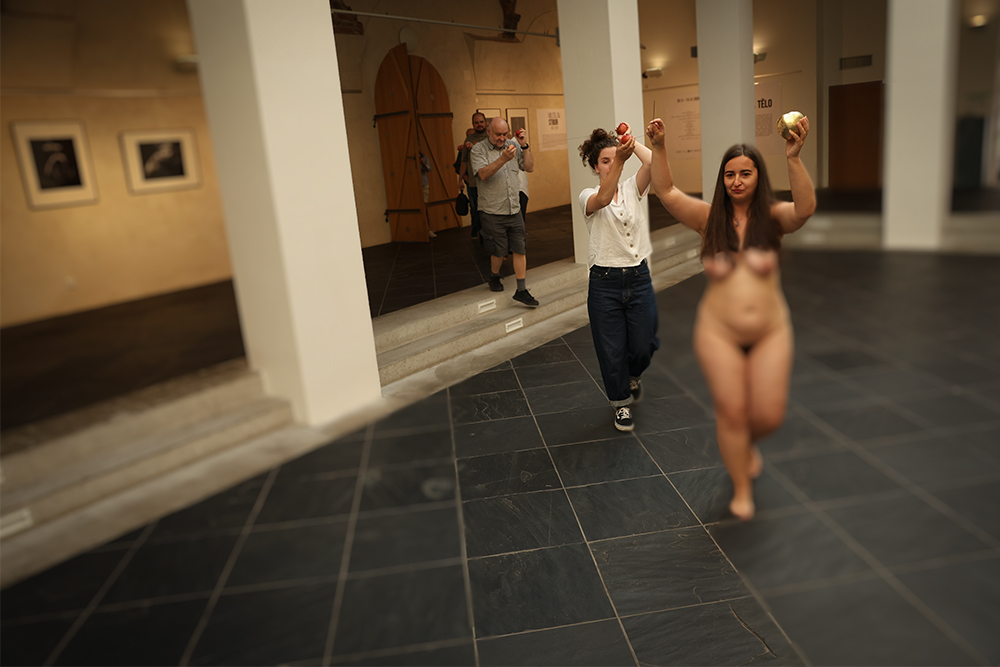
I began in the church, positioned against the backdrop of the former altar, now obscured by a curtain. There, I read excerpts from Anne Marie Mol's essay "I Eat an Apple" from a wooden kitchen board. This text referenced Eve, who reached for the forbidden fruit from the Tree of Knowledge, resulting in her exile from Paradise and sealing the fate of all women, who continue to face discrimination in the Catholic Church. The reading also alluded to the mythological golden apples of the Garden of the Hesperides and the apple of Discord associated with the goddess Eris.
A significant aspect of the performance was the tension between the naked and clothed body, as both nudity and clothing carry distinct meanings. This is particularly relevant to women's bodies, which are sexualized, disciplined, and judged in both culture and religion. Women, including female artists, are now reclaiming their bodies—previously seen as objects of the male gaze and patriarchal power—as a medium for their own expression.
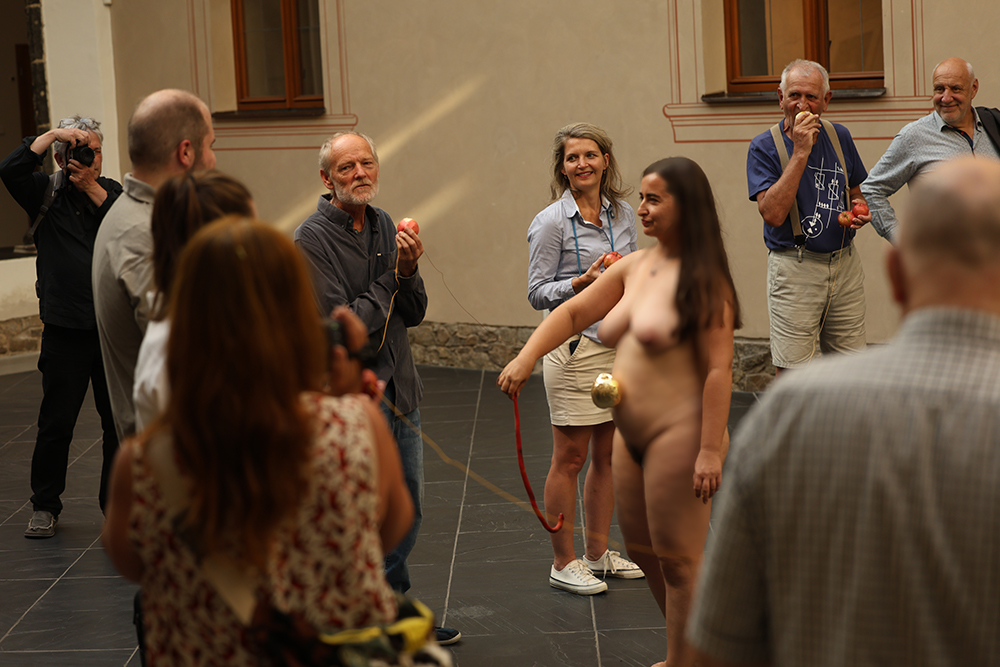
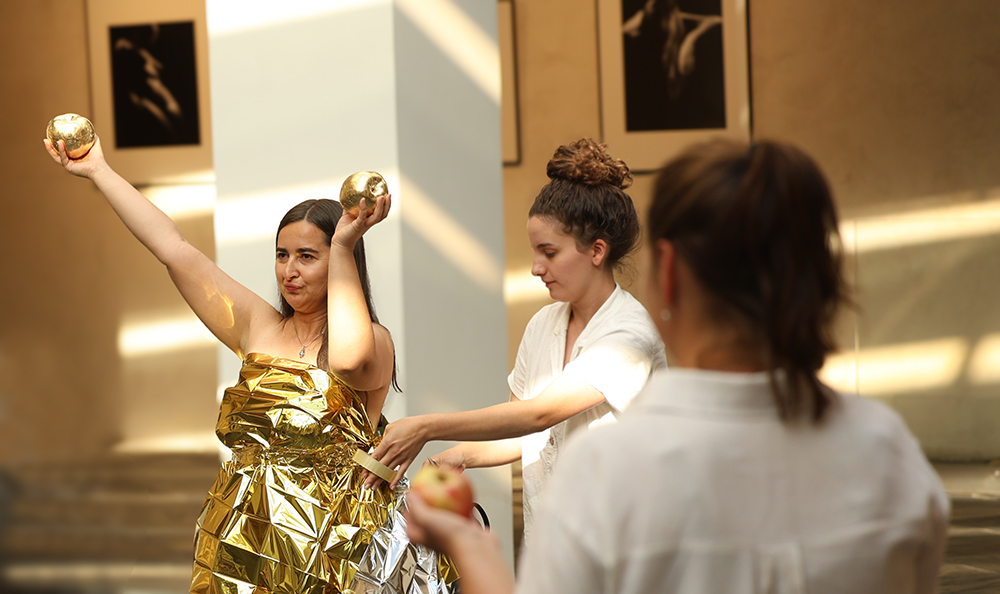
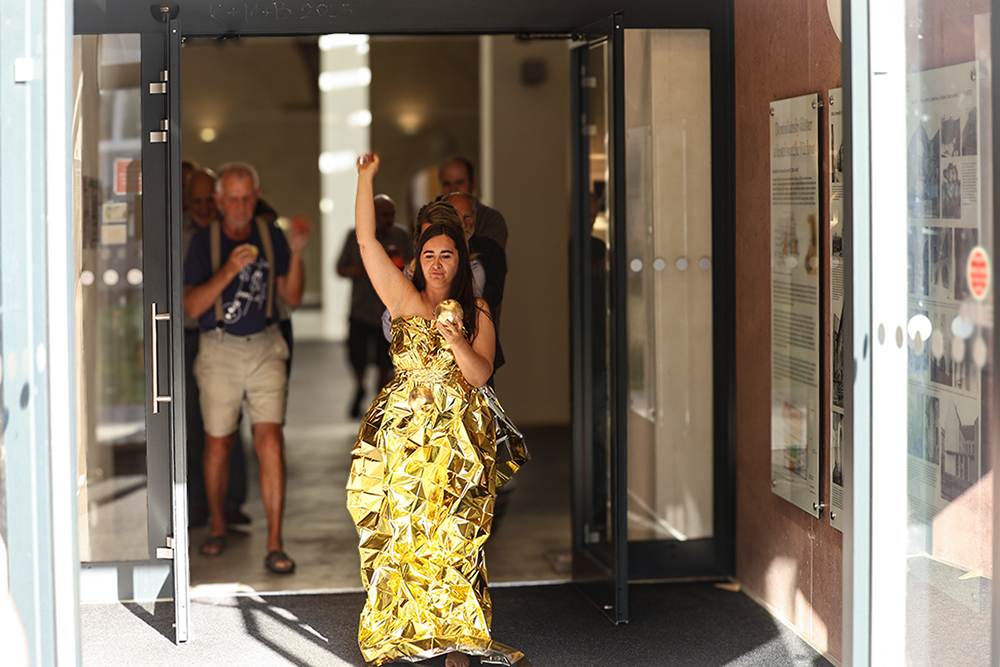
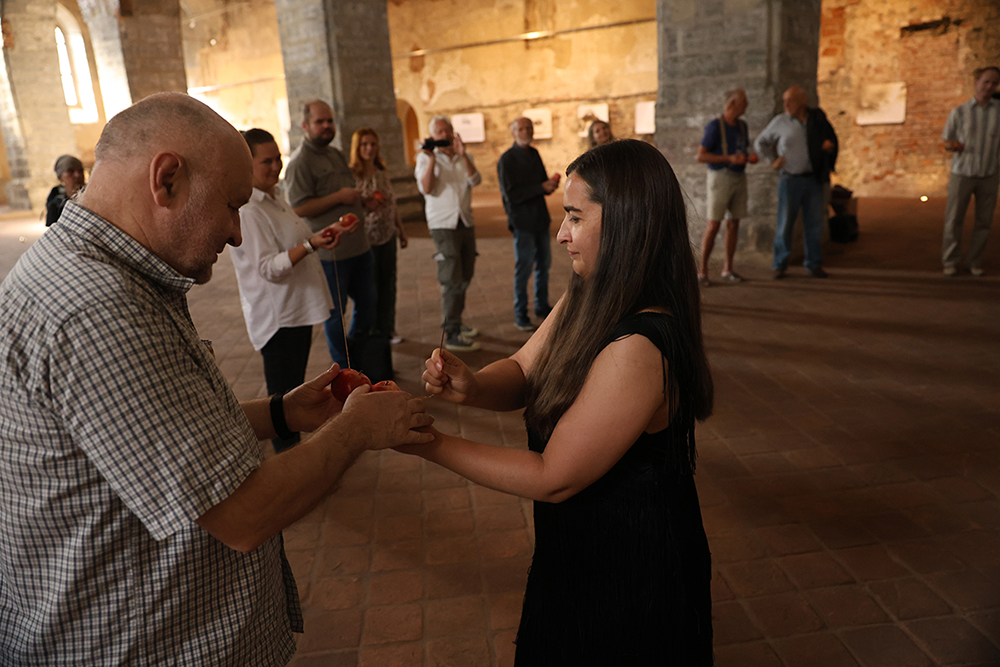
The introduction to a series of audience-participation activities was framed by the words:
“Let's reenact the history of apples and femininity. Let's contemplate, eat, and digest the body of an apple.”
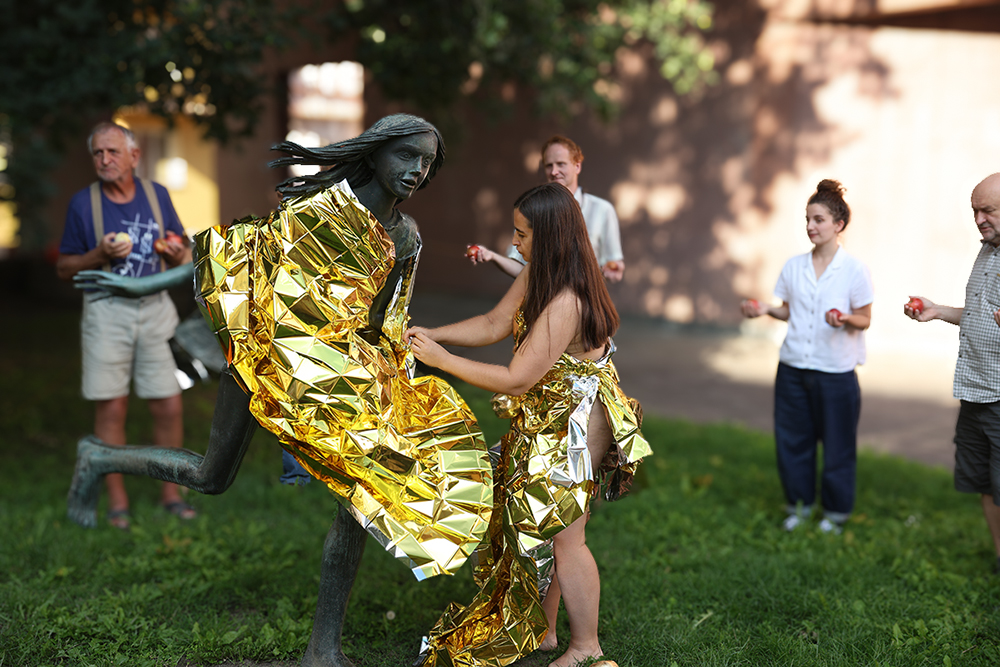
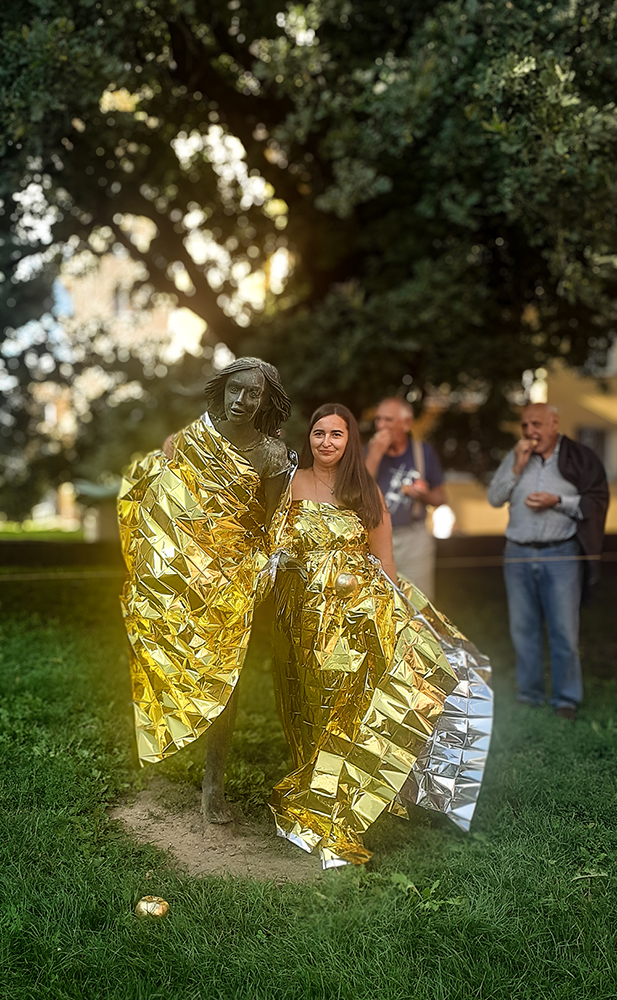
Throughout the performance, the apples were cut, pricked and eaten. The participants took part in a procession to the former well in the cloister garden and to the front of the gallery, where Kurt Gebauer's sculpture "Running Girl" stands. This sculpture evokes ambiguous associations; it is unclear whether the girl is running joyfully and freely or fleeing from something or someone. Especially in contemporary political and social contexts, the figure of the girl can evoke associations with refugees. I approached her and wrapped her in a thermal blanket.
photo: Ales Honus and from the artist's archive