Anka Leśniak
works
biography texts contact
2026
2025
2024
2023
2022
2021
2020
2019
2018
2017
2016
2015
2014
2013
2012
2011
2010
2009
2008
2007
2006
2004
WORKS 2025
Everything under control
site-specific installation with signs
Gdańsk Shipyard outdoors at the Grid ArtHUB
group exhibition:
Wyspa 4.0 Place of Ideas / Idea of Place / Adaptive Practices
on the occasion of the 40th anniversary of
the Wyspa Gallery / Wyspa Progress Foundation
The project draws inspiration from reflecting on the function and significance of the former Gdańsk Shipyard area within the context of a changing political and social landscape. The shipyard is a symbol of the overthrow of the communist regime and a post-industrial space that became the subject of speculation in the early decades of the transition to a young democratic system, characterised by a capitalist economy and a neoliberal value system.
This site was also a hub for a number of artistic initiatives; in contemporary terms, it became home to grassroots movements, artist-run spaces, and squat studios that sprang up spontaneously in former office buildings and production halls. During this transitional period marked by both construction and destruction, artists played a crucial role in preserving the shipyard's significance and material heritage, while also contextualising and problematizing it through their work..
Once an increasingly inefficient behemoth under state control, the former shipyard site has since been divided among multiple owner-investors. Some of the original halls have been revitalised and repurposed for cultural initiatives, events, and art studios. These studios, unlike the earlier spontaneous and often illegal ones, are now legally rented creative spaces incorporated into companies' business strategies and branding.
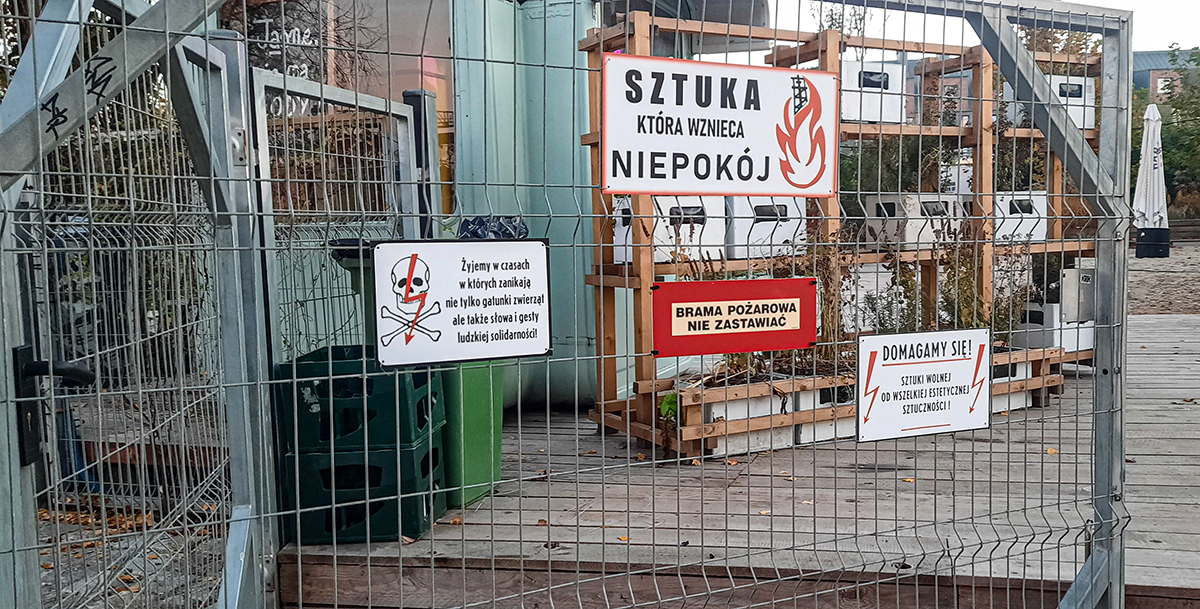
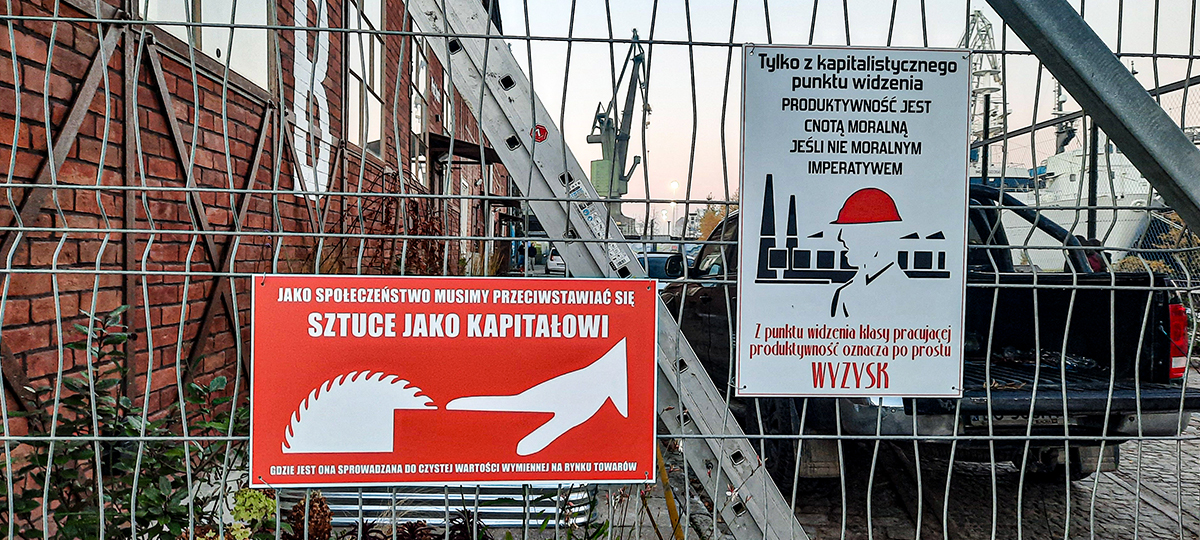
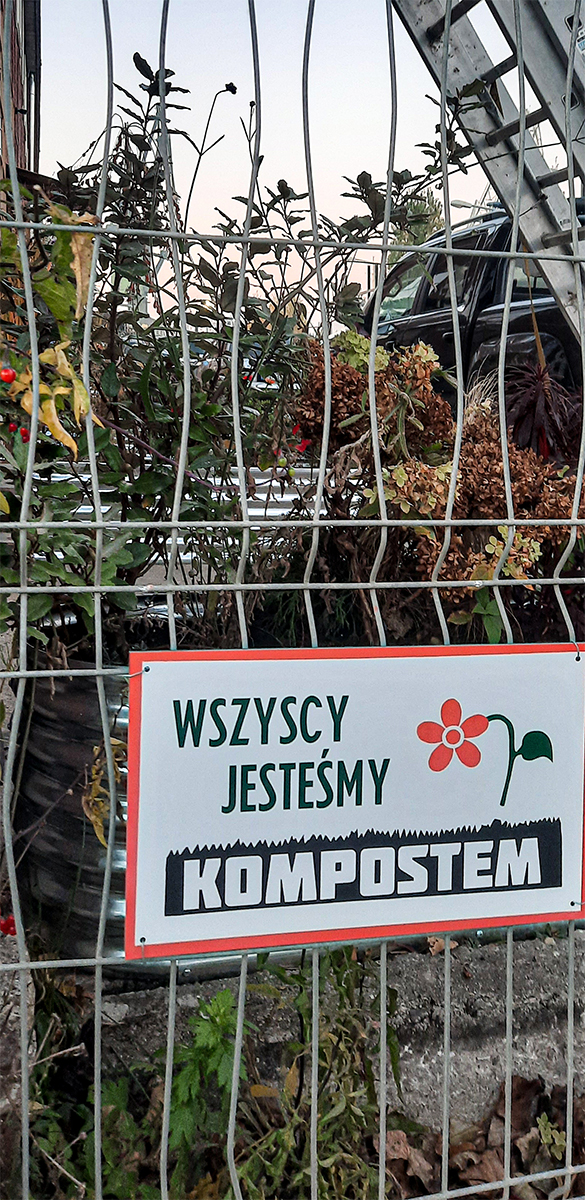
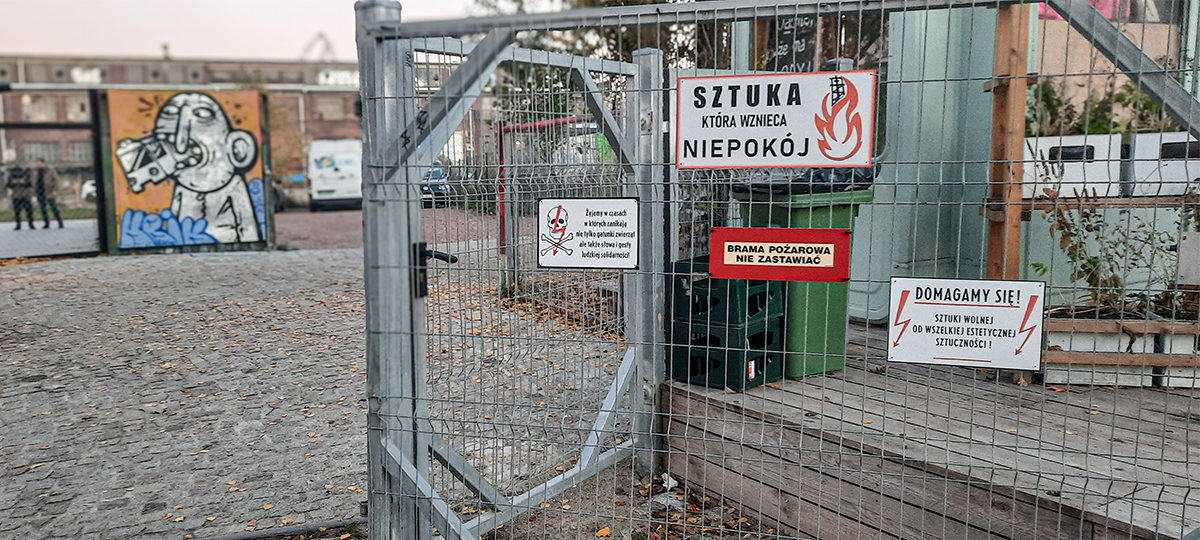
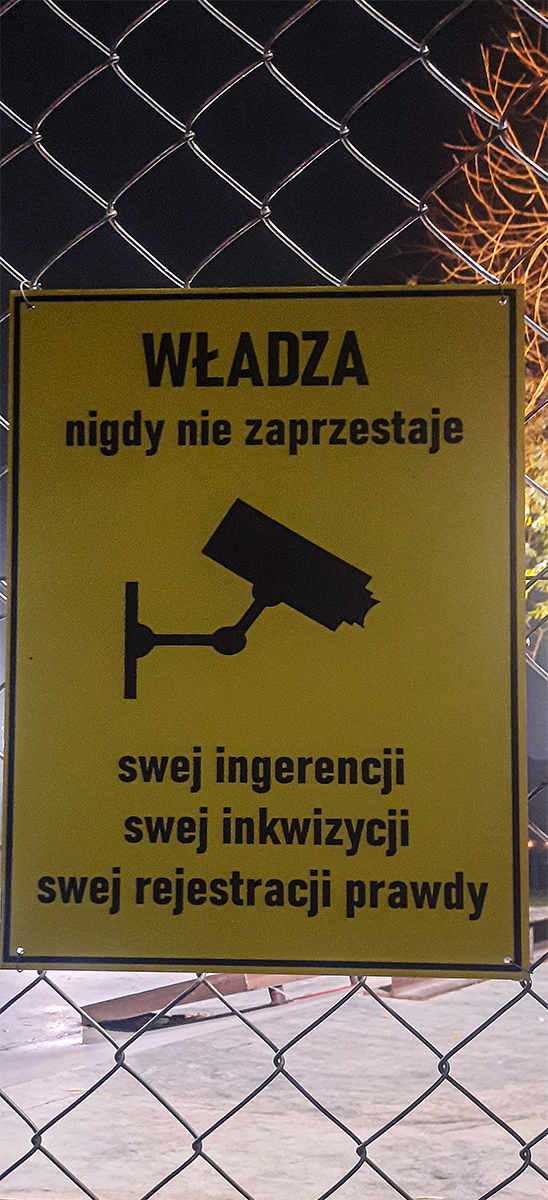
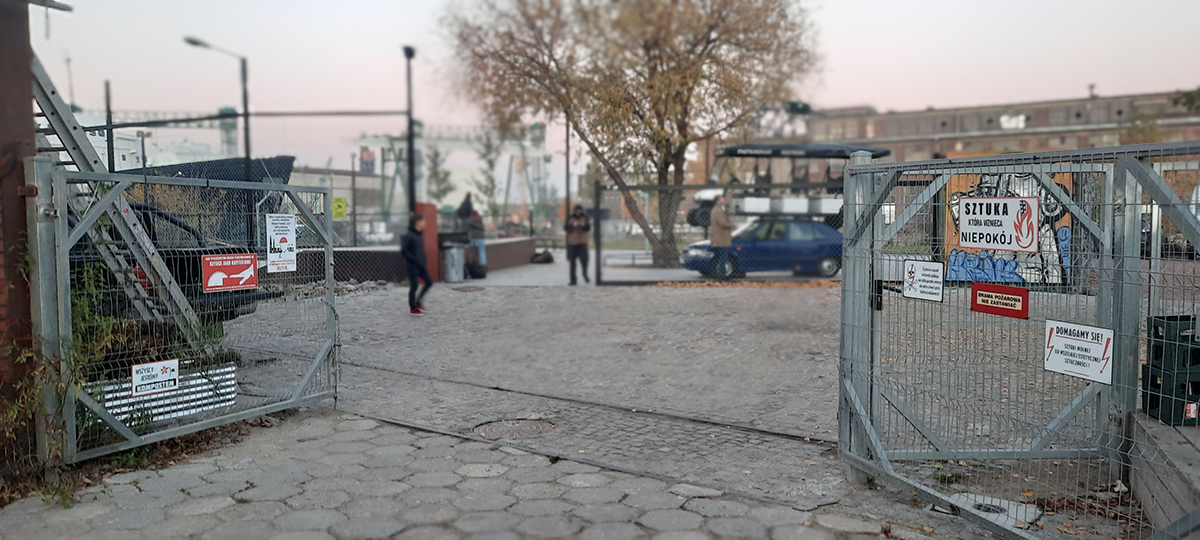
One might argue that an ideal situation has been achieved—harmonising business and art, in which each supports the other and occupies its rightful place. Furthermore, the concept of creativity, which previously referred mainly to artistic expression, has been integrated into business practices. This echoes Joseph Beuys's idea that "Every Human is an Artist," suggesting that individuals, as creative beings, can resist a world dominated by values of profit maximisation. Today, creativity has become a highly sought-after trait among managers and freelancers, who can operate without full-time employment, thereby reducing costs.
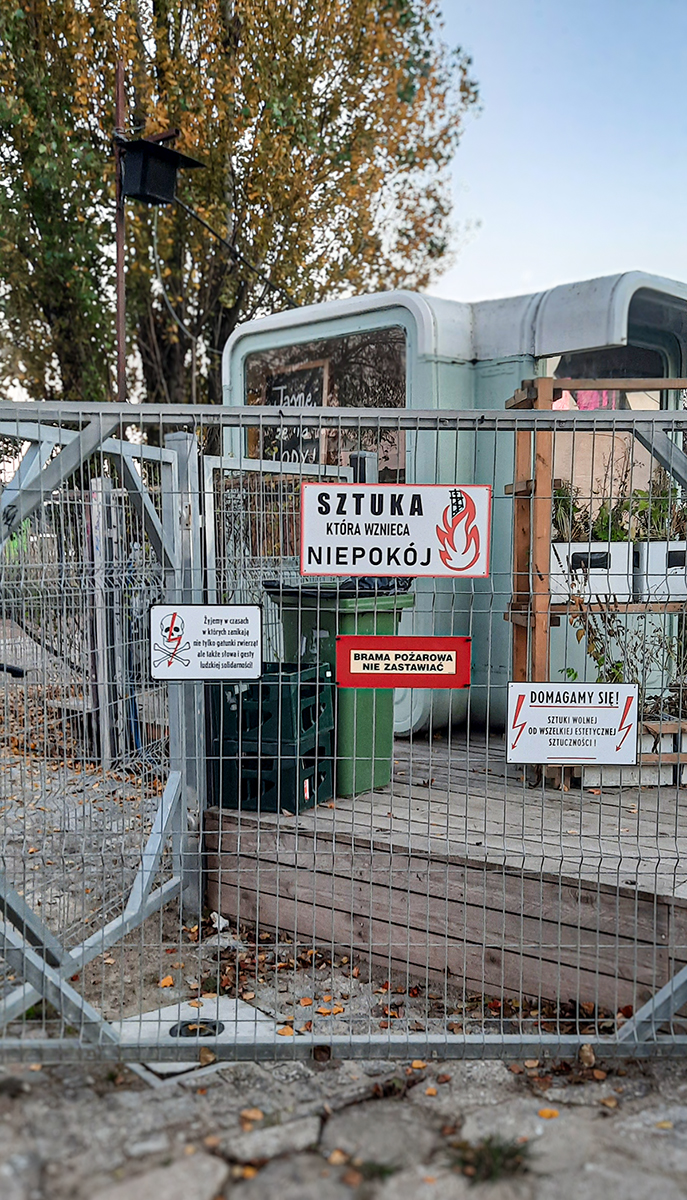
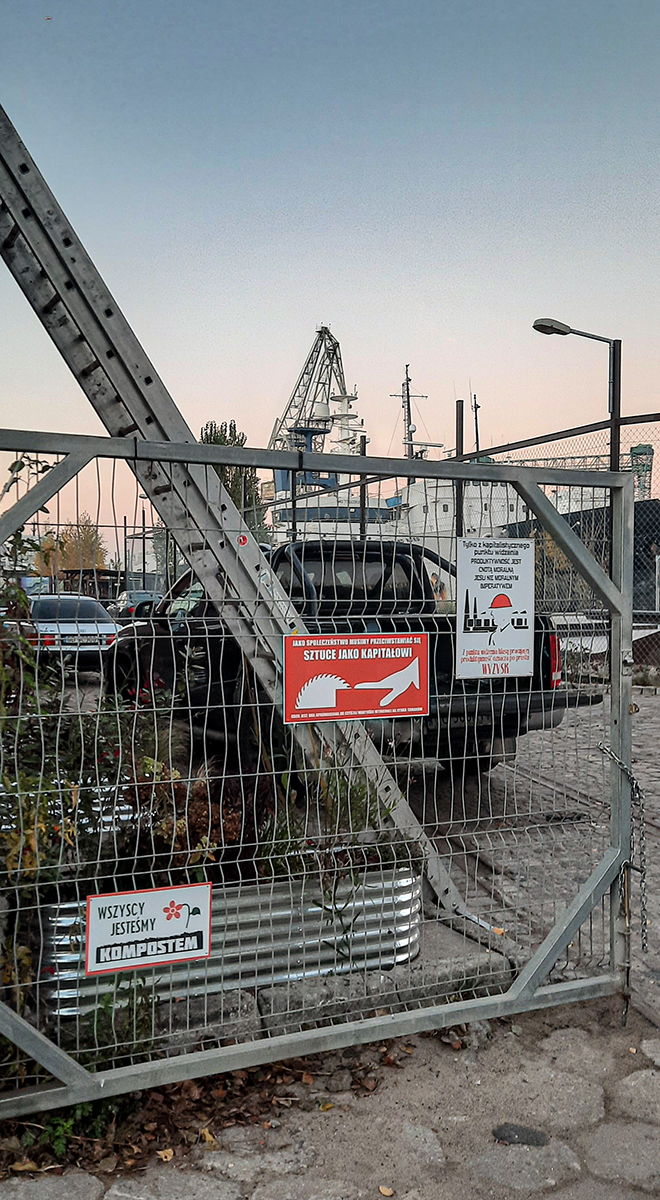
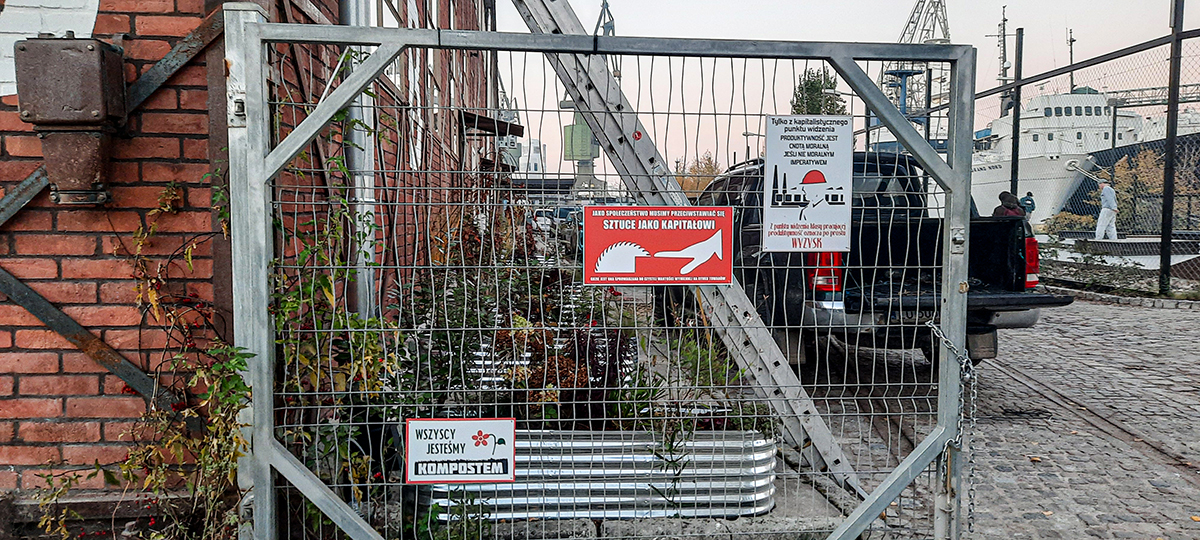
The installation's visual aspect serves informative or persuasive functions—acting as warnings, commands, or prohibitions. Some works within the installation reference the aesthetics of signs from the communist era, similar to those displayed at the Gdańsk Shipyard. Others mimic contemporary signage, such as video-surveillance indicators in buildings.
These visual elements are accompanied by slogans that reference the work of cultural theorists such as Félix Guattari, Michel Foucault, Silvia Federici, Donna Haraway and Andrzej Turowski, addressing issues like power relations, control, the climate crisis, art, and society. My site-specific works, based on the concept of mimicry, are installed adjacent to signs indicating rules of conduct in specific spaces, such as "Staff Only," "Do Not Obstruct Gates," and "Emergency Evacuation Route."
The texts on the signs include:
As a society, we must oppose art as capital, where it is reduced to the extraction of pure exchange value in the commodity market.
Only from a capitalist perspective is productivity a moral characteristic, if not a moral imperative. From the perspective of the working class, productivity simply means exploitation.
Art that incites unrest. We demand art free from all aesthetic artificiality!
Power never ceases its interrogation, its inquisition, its registration of truth.
We live in a time when not only animal species are disappearing, but also words and gestures of human solidarity.
We are all compost.