Anka Leśniak
works
biography texts contact
2026
2025
2024
2023
2022
2021
2025
2024
2023
2022
2021
2020
2019
2018
2017
2016
2015
2014
2013
2012
2011
2010
2009
2008
2007
2006
2004
WORKS 2025
Departure for the Witches Sabbath
photograoh on textile, objects
form the series Toilette of the Witch
Pleasures
exhibition ot the Frakcja group of Women Artists and guests
Wschodnia Gallery, Łódź
I became interested in the subject of the witch several years ago when I came across a sculpture depicting "A Witch at her Toilette Before the Witches' Sabbath" by Teresa Feodorowna Ries (1866-1956), a Jewish-Austrian sculptor. Ries's "Witch at her Toilette" (1895) depicts a woman sitting with her legs apart, clipping her toenails while boldly looking the viewer in the eye and smiling mischievously — for me, a pastiche of "Venus at her Toilette" — a popular motif in the art of the Old Masters. It thus challenges the patriarchal ideal of femininity.
The belief in witches, possessing supernatural powers that could harm people and who flocked to the Sabbath to participate in orgies with the devil, most likely evolved from earlier pagan beliefs and rituals. For example, the cathedral in Schleswig-Holstein houses a 12th-century depiction of the goddess Phrygia flying on a distaff. Meanwhile, in Sicily, the cult of Donne de Fora existed. They were perceived as supernatural beings, described as "part witch, part fairy." According to the beliefs of the time, the spirits of women accused of witchcraft left their bodies during sleep to meet these figures possessing extraordinary powers.
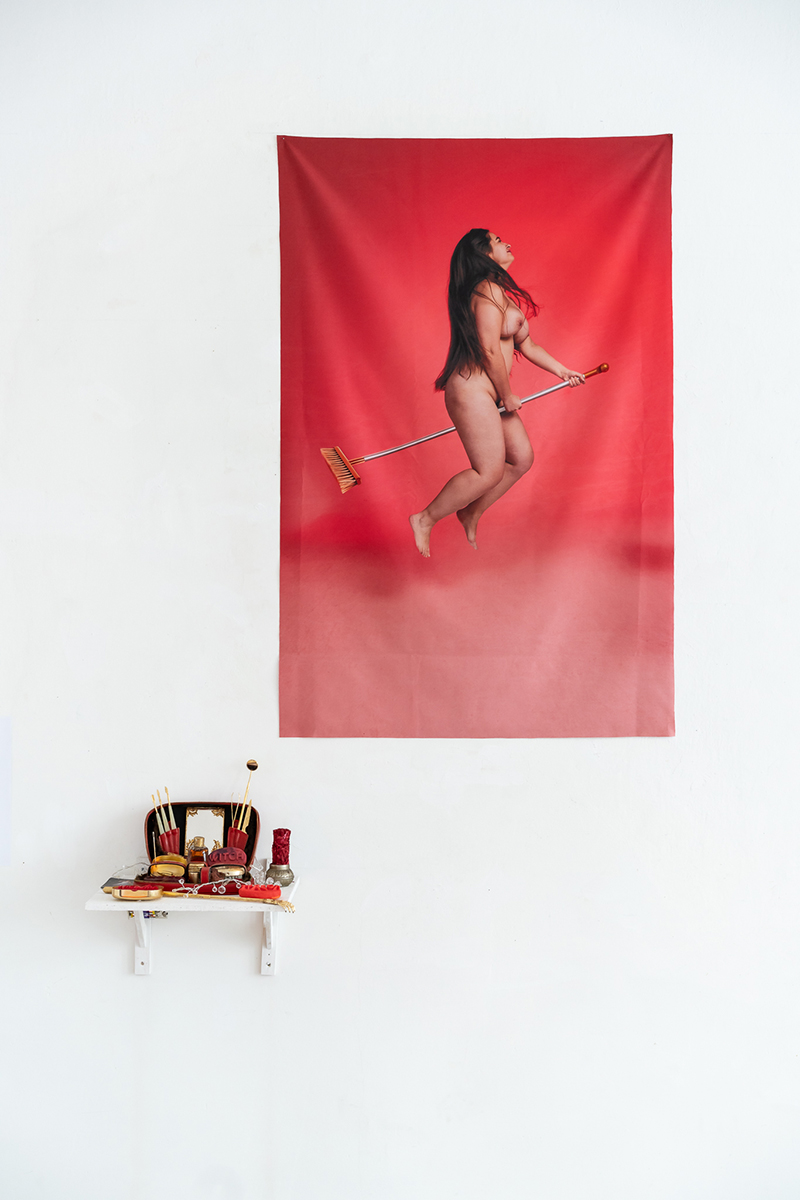
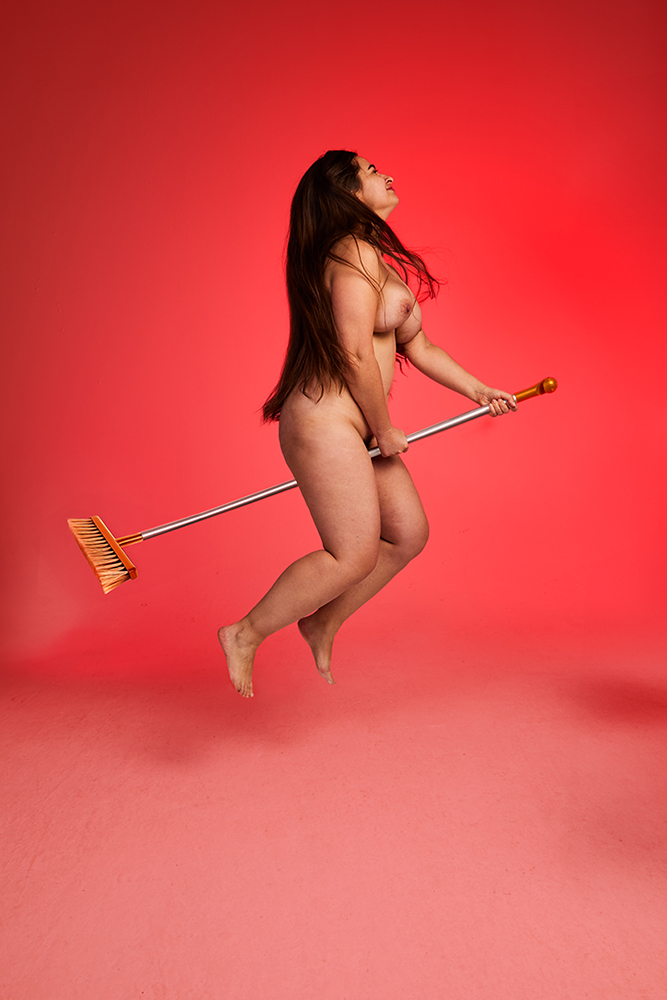
Fantasies of secret journeys and encounters with magical female figures may also have been related to the erotic restrictions imposed on women by patriarchy. According to Christian authors—doctors of the church—a woman was not allowed to be idle or indulge in sensual pleasures. And burning so-called "Witches"—as Silvia Federici argues in her book "Caliban and the Witch"—was a prelude to capitalism, where women were reduced to cheap, productive, and free reproductive power. A woman deprived of power in society, treated more like a commodity, becomes "useless" in this system when she leaves reproductive age. Therefore, we women are disgusted by the "Witch stage" in life, when, by liberating ourselves from many constraints, we can experience full sensuality.
Let us give ourselves the right to pleasure and "uselessness" at any age!
Let's reclaim our power!
Pleasure is also a form of resistance!
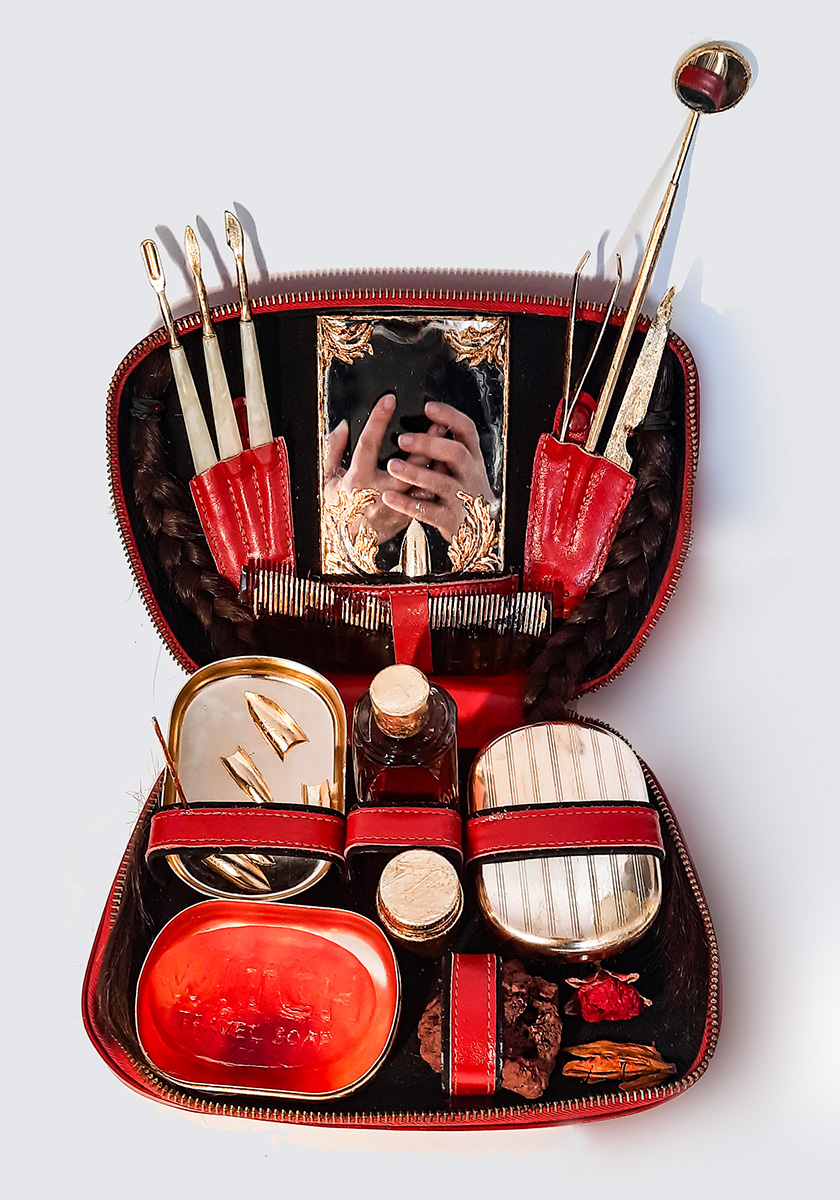
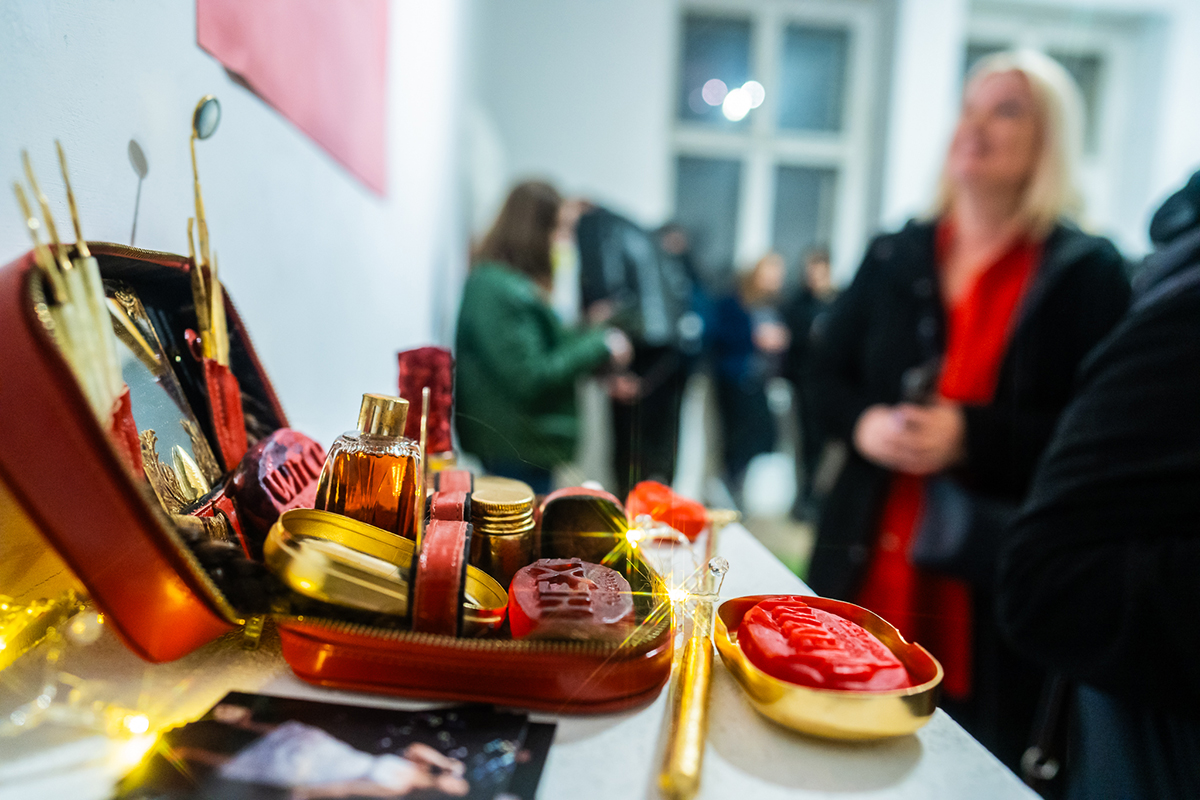
The work comprises Witch's toiletry accessories: a fabric towel that evokes representations in art of witches departing for their covens and a cosmetics case containing objects that can evoke ambivalent associations, bordering on pleasure, anxiety, or disgust.
Special thanks to Magdalena Czajka for the photo session for this project.
Photograph of the work at the exhibition: HaWa